



Metal Trading Scales
Metal trading scales are utilitarian instruments that combine precision engineering with rugged durability, offering both historic utility and striking industrial character to any interior.
Metal Trading Scales
Metal trading scales encompass balance scales, beam balances, and standard weight sets utilised for commerce, science, and measurement across the nineteenth and twentieth centuries. These pieces represent the rigorous standards of municipal authorities, merchants, and apothecaries through durable construction in brass, cast iron, and bronze.
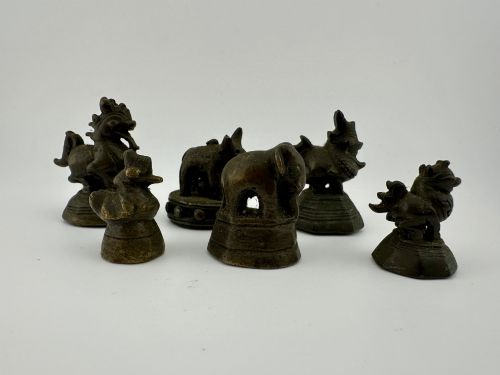
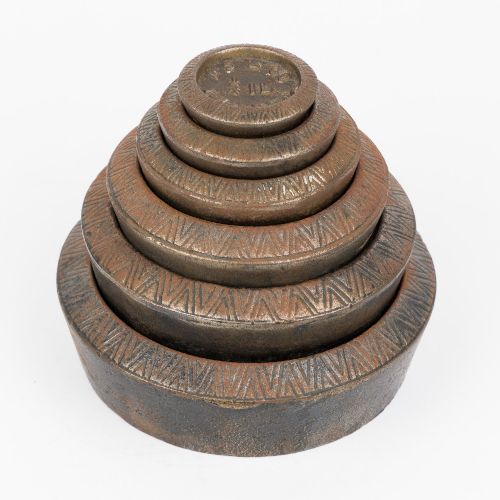
The versions most frequently encountered on this page date from the Victorian and Edwardian eras, alongside pieces from nineteen-twenty and nineteen-forty. They range from massive beam balances and egg graders to sets of imperial stacking weights, avoirdupois standards, and Southeast Asian animal trade opium weights.
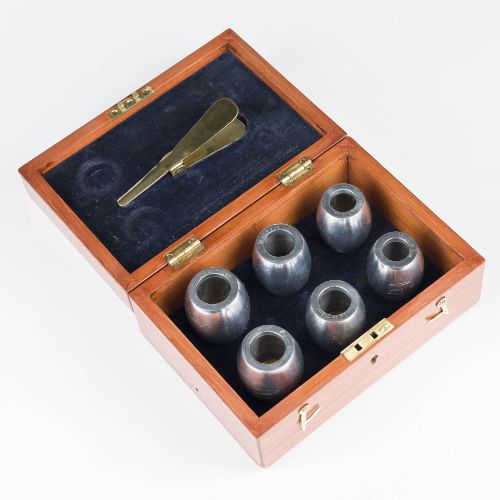
Originating from British makers and municipal contracts in London, Liverpool, Northamptonshire, and Lancashire, these scales also stretch internationally to Burmese and Thai traditions. The forms vary from working balance mechanisms in original block stands to heavy calibration and trade weights housed in fitted wooden cases.
Materials and construction
Makers utilised cast iron, wrought iron, and brass to build the structural frames and balance beams required for heavy commercial and scientific weighing. These metals provided the rigidity and heft necessary to maintain calibration under demanding daily use.
Smaller components, individual weights, and delicate indicator parts often employed bronze or finely turned brass, sometimes complemented by fitted mahogany bases and velvet linings. These contrasting textures protected precision instruments while adding a refined finish to utilitarian equipment.
Metal Trading Scales Retail Price Guide 2026
Typical asking prices for metal trading scales among the pieces listed under this phrase on Sellingantiques today, from the lower quarter to the upper quarter. They describe what is for sale here now, not the wider market.
Materials documented across the inventory include brass, cast iron, bronze, wrought iron, mahogany, and velvet.
Evaluating craftsmanship and condition
The distinction between ordinary utility items and exceptional pieces rests in the clarity of maker signatures, municipal stampings, and regional provenance. Sets retaining their original block stands, complete weight sequences, and documented local government associations demonstrate a higher degree of historical integrity.
Finishing details such as polished brass surfaces, intact velvet linings, and legible cast lettering on beams and weights elevate certain examples above standard workshop output. The survival of matching serial numbers across scales and their corresponding standard weights further distinguishes the finer pieces in this category.
De Grave Short And Co·W And T Avery·Fairbanks
The Metal Trading Scales Glossary
- Avoirdupois
- A system of weights based on a pound of sixteen ounces. It formed the standard basis for commercial trade throughout the British Empire.
- Beam balance
- A scale consisting of a horizontal lever with arms of equal length and a central fulcrum. This design allows precise comparison of masses suspended from each end.
- Tical
- A traditional unit of weight used in Southeast Asia, frequently associated with cast bronze animal-shaped trade weights. These currency and weight units reflect regional trading systems.
- Apothecary weights
- Small standard masses used by chemists and pharmacists for measuring medical doses. They are typically housed together in fitted wooden block stands.
Metal Trading Scales: Frequently Asked Questions
What are metal trading scales?
Metal trading scales are historical weighing devices and standard weight sets used in commerce, science, and local government administration. They encompass large beam balances, delicate apothecary sets, and heavy commercial weights.
Built from robust materials like cast iron, brass, and bronze, these instruments served to regulate trade and measure goods accurately across the nineteenth and twentieth centuries.
How were trading scales used?
These scales and weights were employed by merchants, apothecaries, and municipal authorities to measure commodities, verify marketplace standards, and ensure honest trade. Inspectors utilised local standard weights to check commercial transactions in boroughs and counties.
In specialised trades, such as the grading of eggs or the weighing of valuable goods like opium, specific balance scales and calibrated weight sets maintained strict commercial uniformity.
How do I date these scales?
Dating relies on stamped municipal inscriptions, maker names, and stylistic details associated with Victorian, Edwardian, and later twentieth-century manufacturing periods. Many regional sets bear specific dates and geographic locations pressed directly into the metal or wood.
The presence of prominent British manufacturing firms, alongside specific imperial standard markings, helps place pieces within precise manufacturing decades.
How do I display them at home?
Metal trading scales and weight sets offer strong industrial character and sculptural presence for interior display. Large beam balances fit well on robust surface tops, while stacking weights and boxed apothecary sets suit cabinet or shelf placement.
Their combination of patinated brass, cast iron, and fitted mahogany or velvet cases provides visual contrast that complements both traditional and modern spaces.