


Metal Hall Table
These metal hall table pieces range from wrought iron console frames to marble-topped Victorian designs, offering sturdy surfaces for your hallway.
Metal Hall Table
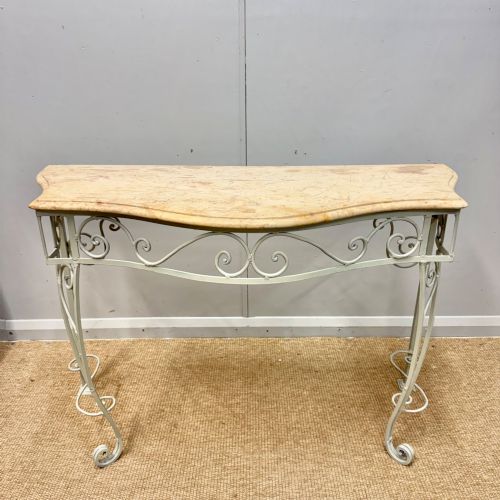
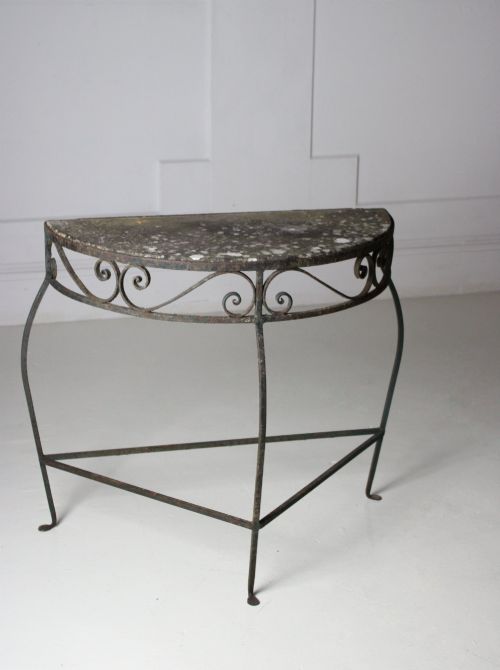
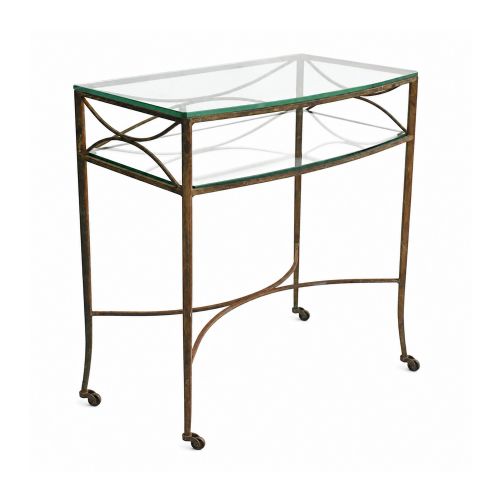
A metal hall table provides a narrow surface for an entranceway, utilising console and side table forms to fit tight spaces. You will most frequently meet console tables featuring stone or glass tops supported by iron frames.
The materials span wrought iron, cast iron, and nickel silver alongside burr walnut and marble, reflecting periods from the Victorian era through the 1930s. Styles range from French country and industrial to baroque and neoclassical revival.
These pieces serve practical functions in domestic interiors, acting as display surfaces or serving points in hallways and conservatories.
Construction and Materials
Makers shaped iron through forging and casting, producing both the linear frames of industrial styles and the ornate curves of baroque and French chateau designs. Wrought and cast iron provide the structural strength required for supporting heavy stone surfaces.
Marble and glass insertion creates contrasting tabletops, whilst silver plate and nickel silver provide metallic decorative accents on specific forms. Burr walnut timber sometimes supplements the metal framework to add warmth to the design.
Object forms include console tables, side tables, and tea urns reflecting industrial, art deco, and French chateau styles.
Assessing Quality
The refinement of the metalwork separates standard utility pieces from high-end decorative examples, particularly where hand-forged details or cast embellishments like rams and maiden heads appear. Finer items demonstrate superior handling of junctions, scrolls, and surface patination.
The choice and thickness of the tabletop material dictate the overall weight and permanence of the piece, with solid marble inserts outperforming lighter alternatives in terms of stability and period character.
Walker And Hall
The Metal Hall Table Glossary
- Console table
- A table designed to be fixed against a wall, often supported by brackets or legs at the front only. These pieces suit narrow hallways and entrance spaces.
- Wrought iron
- Iron that has been heated and shaped with tools by a smith. It offers fibrous strength and distinctive surface texture.
- Cast-iron
- Iron poured into a mould to create complex shapes and repeating patterns. This technique enabled mass production of decorative frames in the nineteenth century.
- Baroque
- A style characterised by exaggerated motion and clear detail used to produce drama. In these tables, it appears through ornate sculptural heads and heavy carving.
- Tea urn
- A large heated vessel used for boiling water, sometimes found alongside console furniture in period settings. These items often feature silver plate over base metals.
Metal Hall Table: Frequently Asked Questions
Where should a metal hall table be placed?
These tables fit best against a flat wall in an entrance hall, corridor, or conservatory where floor space is limited.
Their narrow profile ensures they do not obstruct walkways while providing a convenient surface for everyday items.
How do I care for a marble top?
Wipe the marble surface regularly with a soft, damp cloth and mild soap to prevent staining from moisture.
Avoid abrasive cleaners and harsh chemicals that can dull the polished stone finish over time.
Are iron tables heavy?
Iron frames combined with stone tops create considerable weight, making these tables stable against walls.
This mass requires careful handling during placement to protect delicate flooring.
How do I identify a Victorian piece?
Victorian metalwork often incorporates heavier casting techniques and distinct revival styles like baroque or neoclassical details.
Examining the construction joints and material patination helps confirm the nineteenth-century origin.