

Iron Console Table
An iron console table combines industrial metal bases with stone or timber tops for narrow hallways and living spaces.
Iron Console Table
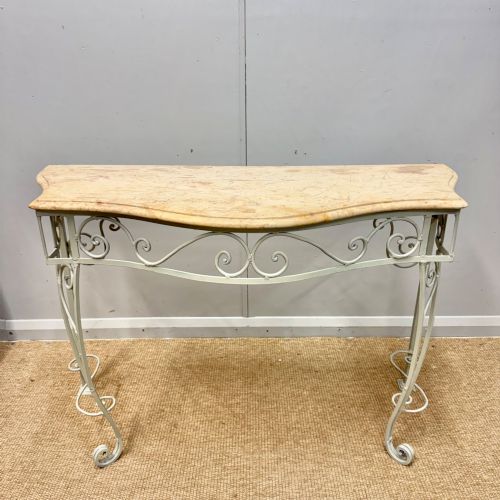
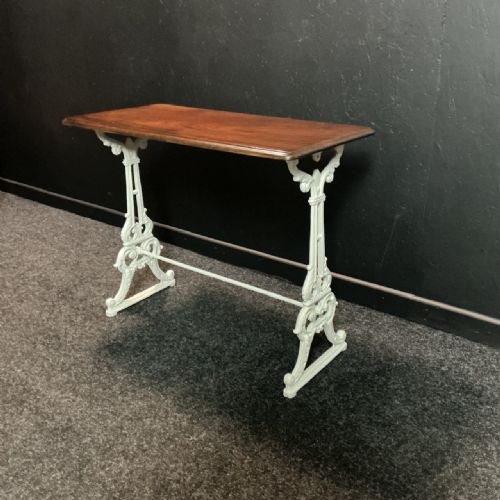
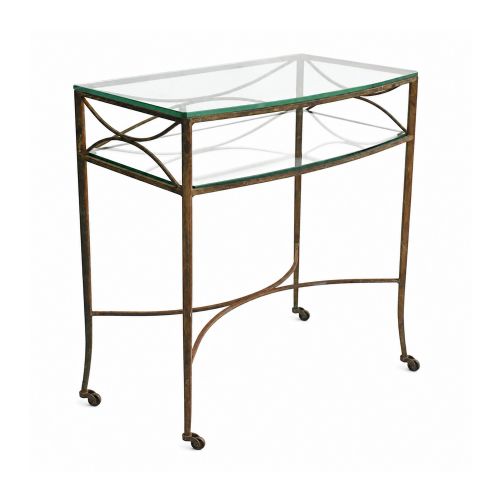
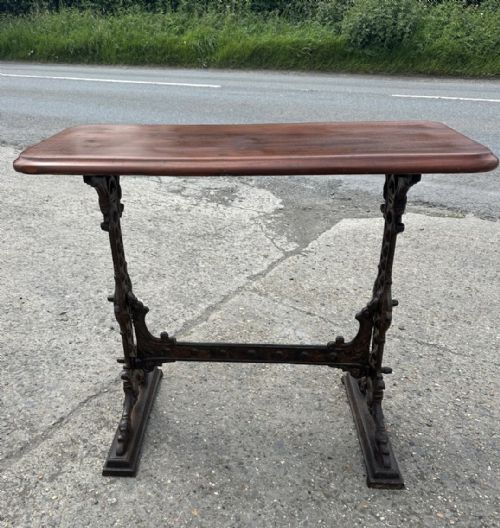
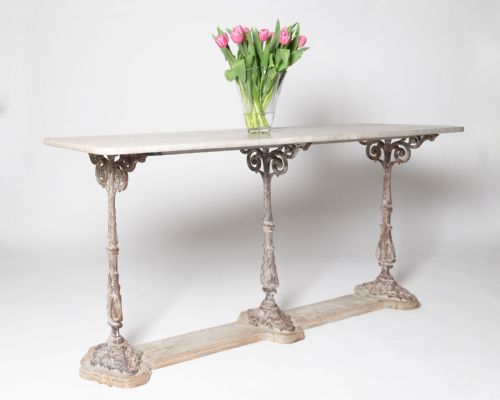
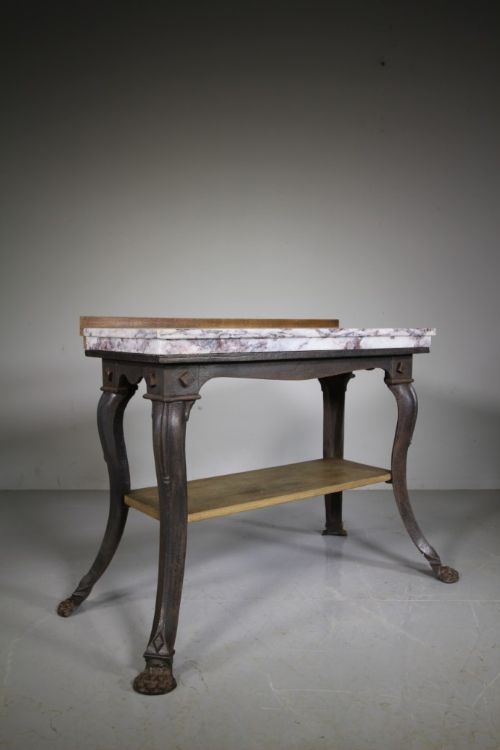
When searching for an iron console table, buyers encounter a robust mix of nineteenth and twentieth-century utility furniture repurposed for domestic interiors. The most common examples pair sturdy cast or wrought metal frames with cool stone, marble, or timber surfaces.
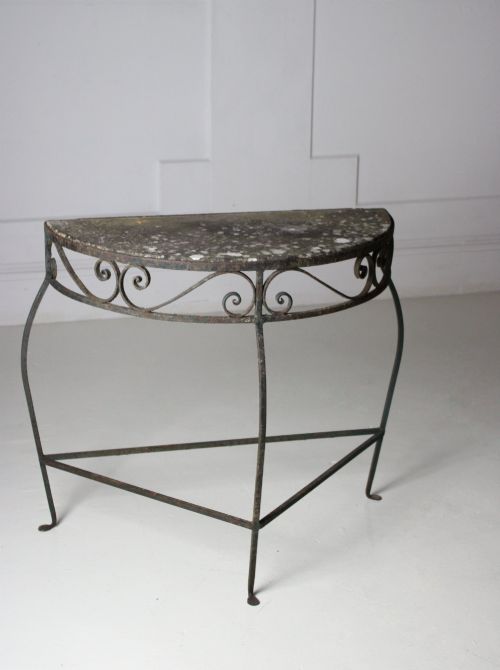
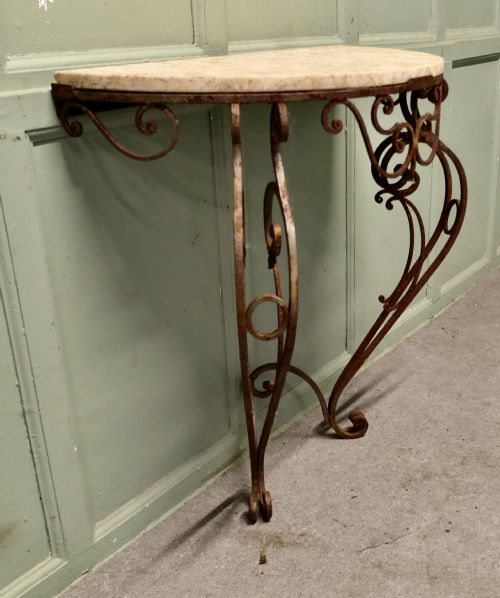
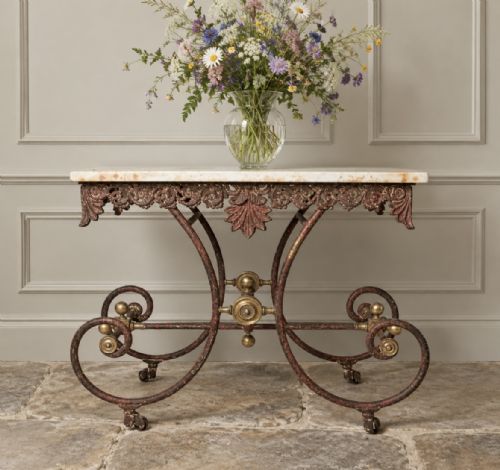
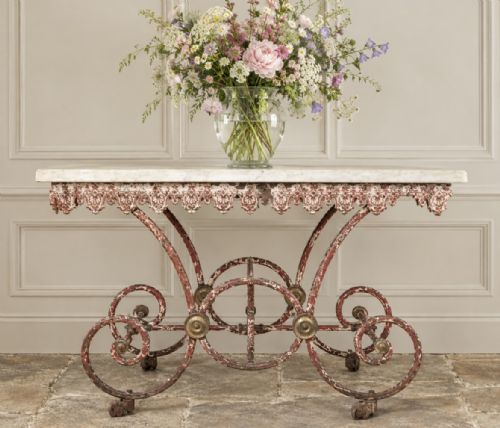
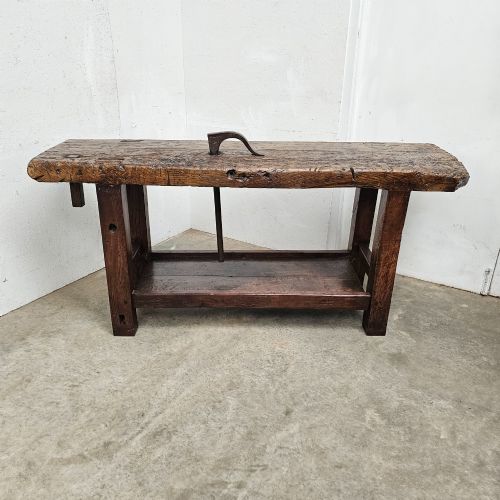
Originating frequently from French workshops, patisserie settings, and English gardens, these pieces bridge the gap between heavy industrial function and decorative elegance. Styles range from simple Victorian garden supports to ornate French provincial scrolls and industrial workbenches.
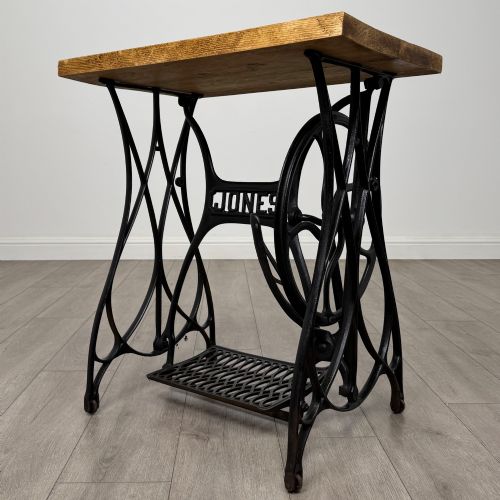
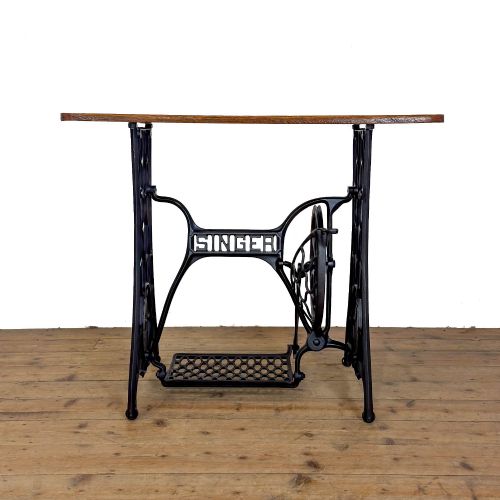
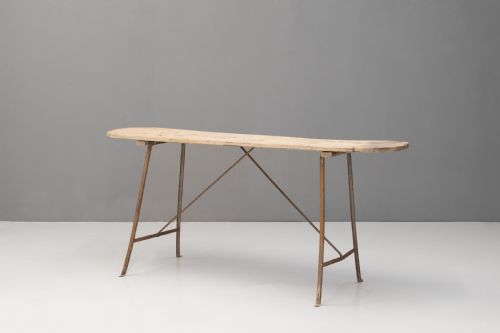
The category encompasses not only traditional hall furniture but also adapted butcher tables, pub tables, and sewing machine bases fitted with new or period tops. This variety allows collectors to select pieces that function equally well as serving tables or decorative side pieces.
Construction and Materials
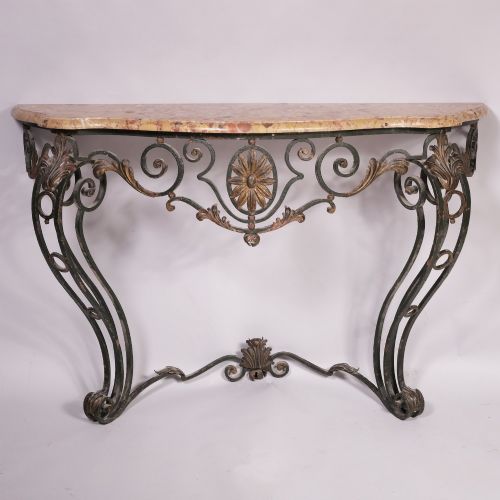
Makers utilised durable metals such as cast iron and hand-forged wrought iron for the structural bases, often incorporating brass or bronze details for decorative contrast. These frames provide exceptional weight and stability, supporting heavy surfaces without timber warping.
Tops were fashioned from dense materials designed for heavy work, including white and black marble, granite, slate, and solid hardwoods like oak, walnut, and pine. The surfaces were chosen for their practical utility in kitchens, bakeries, and conservatories, ensuring long-lasting daily use.
Several tables started life as heavy-duty sewing machine bases before finding retirement holding porcelain lamps and hallway keys.
Assessing Quality
Quality rests in the harmony between the metal base and the top, where period-matching materials indicate a more cohesive and authentic piece. Hand-hammered wrought iron work demonstrates superior artisan skill compared to mass-produced cast variants.
The integrity of the surface stone or timber defines the upper tier of the range, with original marble slabs and good patinated oak commanding higher appreciation. Fine details such as parcel gilding, original paint, and intact maker integration elevate the piece.
Singer
The Iron Console Table Glossary
- Cast iron
- Molten iron poured into a mould to create rigid, decorative, or structural furniture bases. It is known for its weight and ability to hold intricate relief patterns.
- Wrought iron
- Iron heated and hammered into shape by hand by a blacksmith. This technique produces fibrous, resilient structures with unique surface textures.
- Demi-lune
- A half-moon shape characteristic of console tables designed to sit flush against a wall. This profile saves floor space in narrow hallways.
- Patina
- The surface sheen and colour acquired through age, handling, and use. Good patina reflects the authentic history of the wood or metal.
- Vitrolite
- An opaque pigmented glass used for table tops during the art deco period. It offers a smooth, hygienic surface similar to marble.
Iron Console Table: Frequently Asked Questions
Where should I put an iron console table?
These narrow tables suit hallways, landings, and entrance spaces where floor area is restricted. Their sturdy construction also makes them practical additions to kitchens and conservatories.
The stone or wooden tops withstand daily placement of keys, lamps, and decorative objects while maintaining a strong visual presence against interior walls.
How do I clean a marble top?
Wipe the marble surface regularly with a soft cloth dampened in warm water and mild soap. Avoid acidic cleaners that can etch the stone.
Dry the surface thoroughly after cleaning to preserve the natural polish and prevent water marks from settling into the porous stone.
Are these tables suitable for outdoor use?
Many iron tables originated as garden or conservatory pieces designed to withstand weathering. However, marble and wood tops require protection from harsh frost and prolonged moisture.
Storing timber and stone surfaces indoors during winter months prevents weathering damage while keeping the metal frames secure.
How do I date an iron table?
Dating relies on examining the manufacturing marks, the method of iron production, and the wear patterns on the top. Cast iron components often feature registry numbers or foundry stamps from the Victorian era.
Hand-forged wrought iron work combined with period marble points towards nineteenth-century French origins, whereas clean geometric lines suggest twentieth-century art deco influence.