
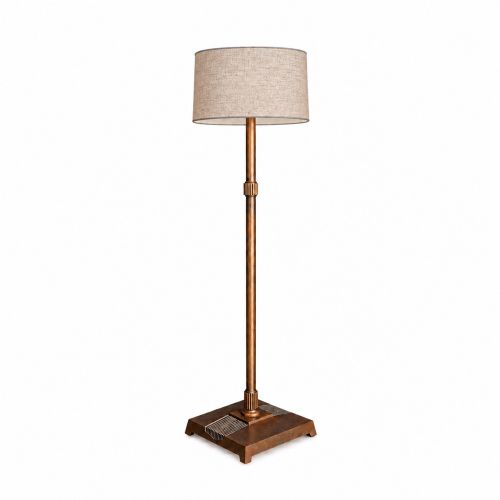
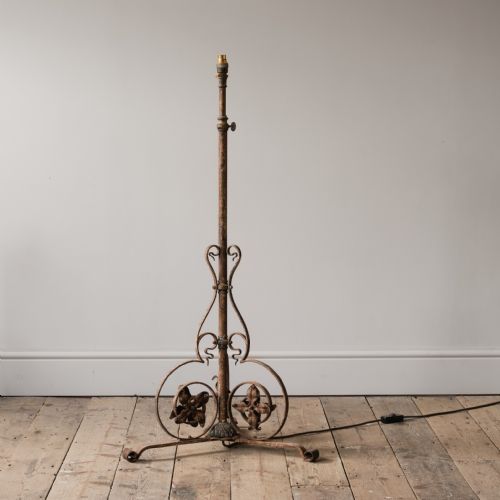
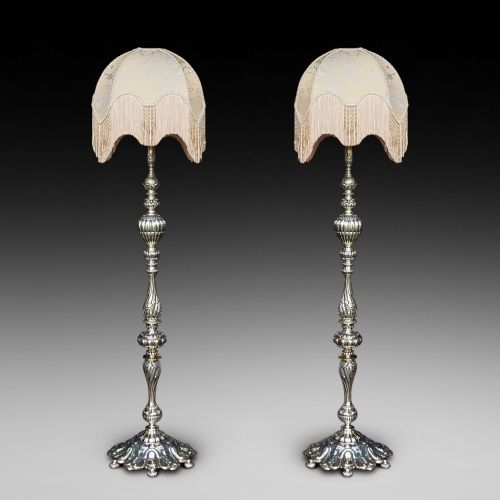
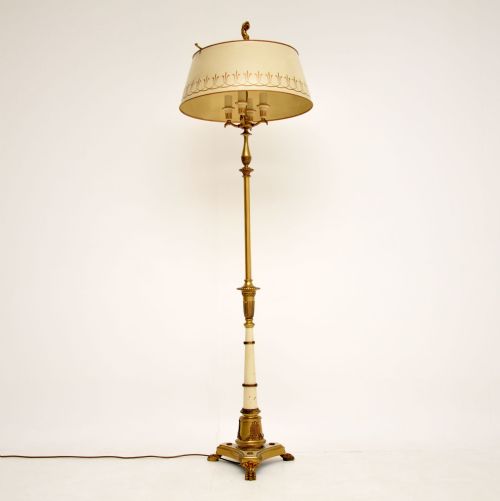

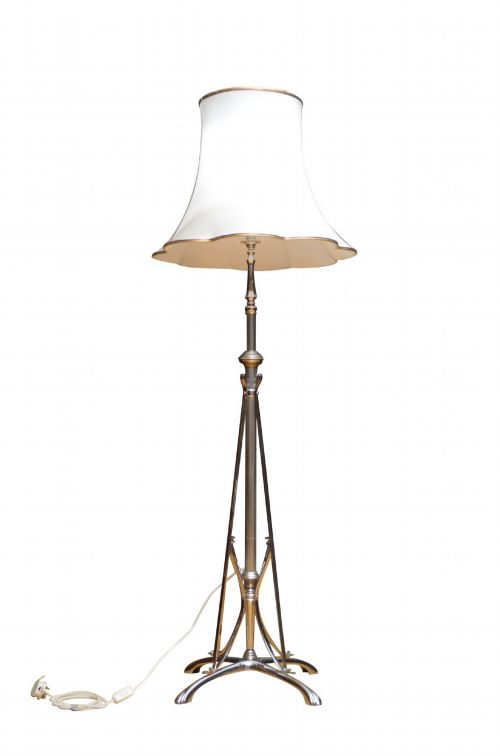


Metal Floor Lamp
A metal floor lamp brings height and focused illumination to a room, drawing the eye upwards while providing practical light.
Metal Floor Lamp
A metal floor lamp serves as a substantial vertical lighting fixture, often taking the form of a standard lamp, lantern stand, or torchiere. When searching for a metal floor lamp, buyers encounter pieces ranging from Victorian telescopic designs to streamlined Art Deco uplighters.
The selection leans heavily toward adjustable brass and wrought iron pieces from the nineteenth and early twentieth centuries. Makers utilised heavy bases and extending stems to position light precisely where needed in large reception rooms.
Forms vary from utilitarian blacksmith-made iron stands to decorative French neoclassical and Art Nouveau standards incorporating copper, bronze, and gilt metal. Many examples adapt older technologies like oil lamps and gas standards for modern electrical use.
Materials and construction methods
Construction relies primarily on durable metals such as brass, cast iron, wrought iron, and copper, frequently combined with onyx or glass. Blacksmiths and metalworkers shaped these materials through forging, casting, and spinning.
Adjustable mechanisms, including telescopic stems and rise-and-fall arms, demonstrate precise engineering from periods like the Edwardian era and the 1920s. Surface finishes range from polished brass and silvering to bronzed or gilded ormolu.
Fabric shades and heavy weighted bases complete the construction, ensuring stability for tall standards carrying heavy scroll arms or searchlight heads.
The archive includes French gilt metal standards alongside British Arts and Crafts copper oil lamp conversions.
Assessing quality in metal standards
Quality rests on the integrity of the metalwork and the robustness of any adjustable mechanisms. Superior pieces display crisp casting details, hand-forged joinery, and substantial gauge metals that prevent wobbling in tall telescopic shafts.
The sophistication of the design distinguishes standard production pieces from exceptional works featuring sculptural bases or complex articulated arms. Original surface treatments and patination also elevate a piece above later refinishing or replacement components.
W A S Benson·Rene Mathieu
The Metal Floor Lamp Glossary
- Standard lamp
- A tall floor-standing lamp designed to support a shade and illuminate a room from height. This term appears frequently in British listings alongside floor lamp.
- Torchiere
- An ornate floor lamp directing light upwards toward the ceiling rather than down through a shade. These often feature in Art Deco and neoclassical interiors.
- Telescopic
- A descriptor for a shaft that extends vertically to adjust the overall height of the light source. Victorian and Edwardian examples often utilise this mechanical feature.
- Cairoware
- Metalwork inlaid with silver and copper, originating from Egyptian revival styles popular in the early twentieth century. These lamps add distinct textural contrast to standard brass and iron.
- Onyx
- A banded variety of chalcedony used frequently as a decorative column section in turn-of-the-century standard lamps. It provides a contrasting plinth or stem beneath gilt metal mounts.
Metal Floor Lamp: Frequently Asked Questions
How do I operate a telescopic metal floor lamp?
Telescopic standards feature a central key, screw mechanism, or internal spring that allows the upper shaft to slide up and down securely. Adjusting the height requires loosening this fixing gently before setting the desired level.
Care must be taken to support the weight of the upper stem and any attached light fitting while altering the height to avoid damaging internal threads.
Were these floor lamps originally electrified?
Many nineteenth-century and early twentieth-century examples began life as oil lamps, gas standards, or candle supports before later conversion to electricity. This history is evident in the wiring paths and burner galleries retained on standard lamps.
Professional rewiring is standard practice for older metal lamps to ensure modern safety standards while preserving the original metalwork and switches.
Where should I place a heavy brass standard lamp?
A heavy brass standard lamp suits corners of reception rooms or beside reading chairs where its height and directional reach can be utilised. The weighted base provides stability on wooden floorboards or carpets alike.
Keeping the lamp clear of high-traffic walkways protects both the trailing flex and the extended arms found on adjustable models.
How do I distinguish Art Deco uplighters from Victorian models?
Art Deco uplighters from the 1930s typically feature streamlined chrome or painted metal surfaces with geometric silhouettes, often focusing light straight up toward the ceiling. Victorian standards lean toward ornate wrought iron, twisted brass shafts, and Gothic or classical revival motifs.
Examining the construction joints and decorative detailing reveals whether a piece belongs to the industrial revival of the nineteenth century or the machine age of the interwar period.