

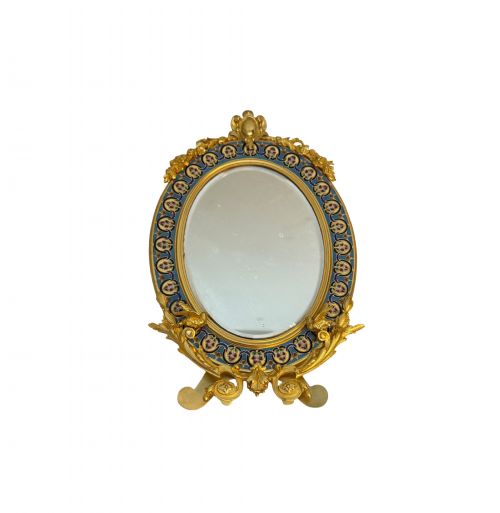


Metal Dressing Table
A metal dressing table accessory brings tabletop utility and decorative polish, ranging from ornate Victorian mirrors to sleek Art Deco chrome.
Metal Dressing Table
A metal dressing table piece encompasses tabletop mirrors, jewellery boxes, vanity sets, and picture frames designed for the boudoir or dressing room. These items originate from periods spanning the nineteenth century through to the mid-twentieth century, capturing the shifting tastes of Victorian, Art Nouveau, Art Deco, and French Empire aesthetics.
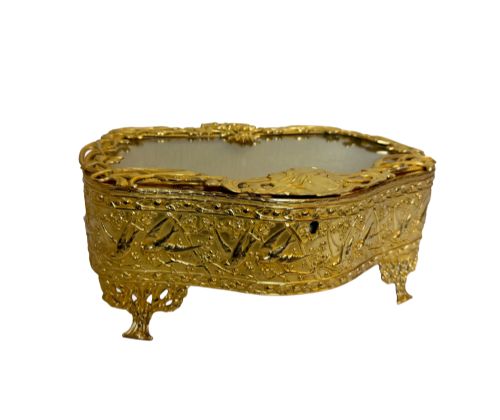
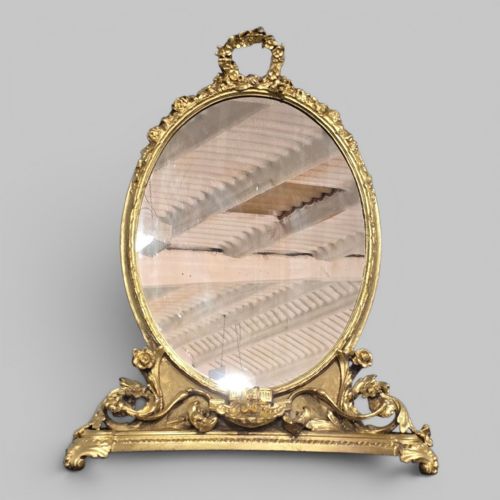
The most common forms encountered on this page are table mirrors and vanity mirrors, frequently rendered in brass, gilt metal, bronze, or silver-plated finishes. Alongside mirrors, buyers will find trinket boxes, champleve enamel boxes, and fitted dressing sets intended to organise personal accessories.
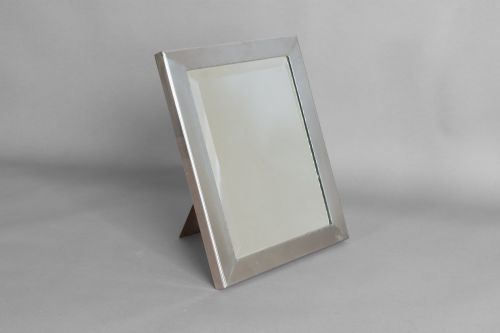
Origins stretch across British, French, and continental workshops, with notable nineteenth-century French output featuring prominently alongside later twentieth-century chrome and silver-border designs. Each object serves both a functional purpose on the dressing table and acts as a decorative metalwork artefact of its era.
How they were made
Metal dressing table pieces rely on casting and forging techniques, utilising brass, bronze, spelter, and cast iron to form sturdy structural frames and stands. Artisans shaped molten metals into intricate decorative motifs, applying gilt, ormolu, or silver plating to achieve polished reflective surfaces.
Decoration often incorporates champleve enamel, bevelled glass plates, and inset marble bases, requiring precise assembly by hand. Details such as stylised plant motifs or figurative supports demonstrate the distinct craftsmanship of periods like Art Nouveau and the Arts and Crafts movement.
Metal Dressing Table Retail Price Guide 2026
Typical asking prices for metal dressing table among the pieces listed under this phrase on Sellingantiques today, from the lower quarter to the upper quarter. They describe what is for sale here now, not the wider market.
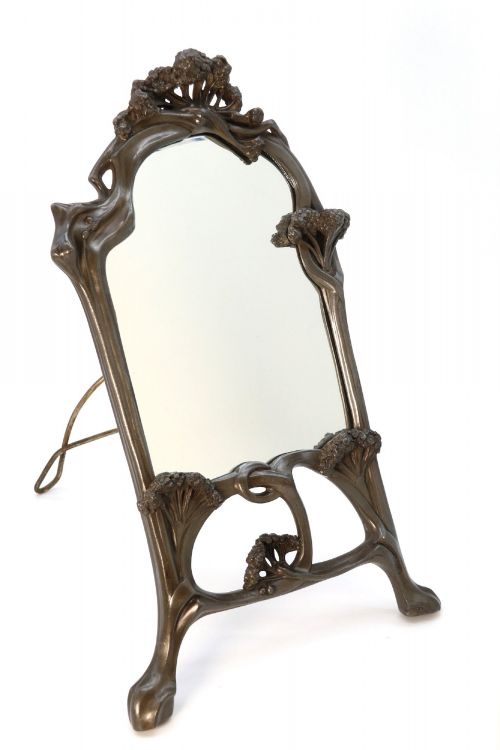
One piece includes stylised honesty seed pods, proving that even a dressing mirror needs a touch of botanical optimism.
What varies in quality
The standard of a metal dressing table accessory is defined by the crispness of its casting and the depth of its original gilding or plating. Finer examples display sharp relief work on cast bronze, brass, or spelter mounts, whereas simpler pieces show softer details and smoother, unadorned surfaces.
Materials and secondary components also dictate distinction, with heavy bronze frames, genuine champleve enamel work, and thick bevelled mirror glass sitting at the upper end of the range. The integration of structural elements like marble bases or fine wooden backs further separates standard production items from masterwork vanity pieces.
Louis Auguste Moreau·Cartier London
The Metal Dressing Table Glossary
- Champleve
- An enamelling technique where troughs are carved into the metal surface and filled with vitreous enamel powder before firing. This method creates colourful decorative patterns on bronze and brass boxes and mirror frames.
- Ormolu
- A metallic application of finely ground high-carat gold-mercury amalgam to a bronze object. It gives nineteenth-century French table mirrors their rich, durable golden lustre.
- Spelter
- A zinc alloy commonly utilised as a substitute for bronze in nineteenth and twentieth-century decorative castings. It allowed makers to produce figures and frames with intricate detail at a lower weight.
- Bevelled glass
- Mirror glass with edges cut and polished at an angle to create a framed, prismatic border. This feature is standard on better quality dressing table mirrors.
Metal Dressing Table: Frequently Asked Questions
Are these vintage mirrors suitable for daily use?
Most antique vanity mirrors function well for everyday routines, though older mirror glass may show natural foxing and slight distortion. The mechanical hinges and stands are generally robust, built to withstand daily tilting and adjustment.
Treat antique frames with care, placing them on stable dressing table surfaces to protect delicate brass mounts, spelter figures, or marble bases from accidental knocks.
How can I tell an Art Nouveau mirror apart from an Art Deco one?
Art Nouveau mirrors, dating around the turn of the twentieth century, feature fluid, asymmetrical lines inspired by natural forms such as flowers, vines, and hair tendrils. Materials like pewter, cast bronze, and silvered copper frequently define this organic style.
Art Deco pieces from the 1930s adopt geometric precision, sharp angles, and industrial materials like chrome and polished plate glass. Their ornamentation relies on symmetry and streamlined industrial efficiency rather than botanical motifs.
What is champleve enamel on a metal box?
Champleve enamel involves gouging recesses directly into a bronze or brass surface and filling those cavities with coloured powdered glass. The piece is then fired until the enamel melts and fuses permanently with the surrounding metal channels.
This technique produces durable, vibrantly patterned surfaces on nineteenth-century trinket boxes and vanity frames, adding rich colour to the metallic structure.