

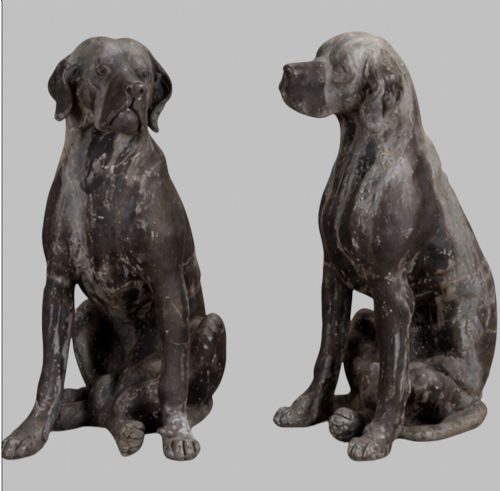
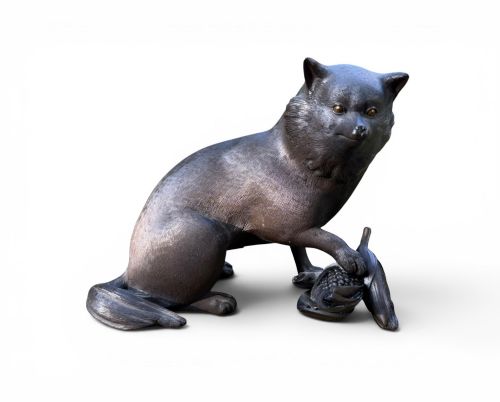


Metal Dog Figure
A metal dog figure brings character and weight to a desk, shelf or hearth, spanning playful cast iron doorstops and finely chased bronze desk tidies.
Metal Dog Figure
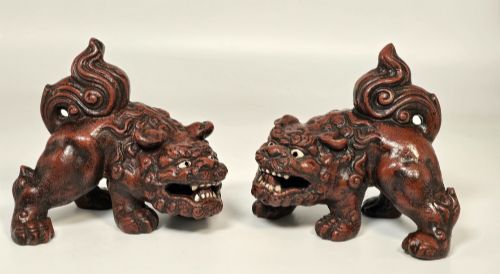
When searching for a metal dog figure, collectors encounter a diverse array of domestic and utilitarian objects that place canine subjects into daily life. These pieces function variously as desk accessories, doorstops, bookends, inkwells and tabletop sculptures, with domestic breeds like terriers, spaniels and whippets appearing alongside temple lions and foo dogs.
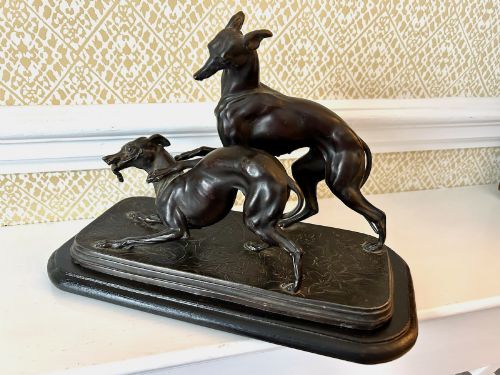
The selections span the Victorian, Edwardian and Art Deco eras, reaching back into the nineteenth century and across to Meiji period Japanese bronzes. Works range from modest cast iron doorstops to substantial bronze figural groups mounted on marble or onyx plinths.
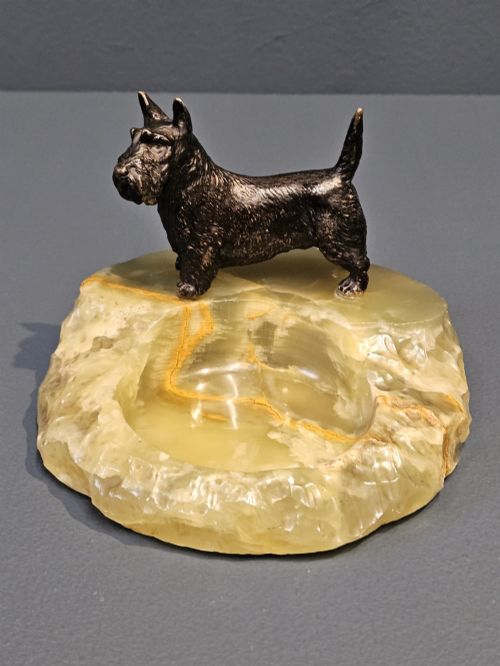
Art Deco examples often pair metal hounds with geometric plinths or night light fittings, whilst earlier pieces capture the anatomical realism of sporting dogs. Buyers meet everything from cold painted Vienna bronze novelties to life-size cast lead hounds.
Materials and casting techniques
Foundries utilised traditional casting methods to shape bronze, brass, cast iron and spelter into detailed animal forms. Spelter served as a more affordable alternative to bronze, frequently receiving a painted or patinated finish to mimic heavier metals.
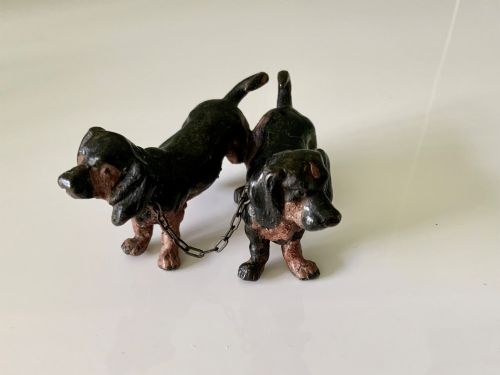
Cold painting involved applying polychrome paint to finished bronze surfaces without subsequent firing, a technique seen on many small Vienna bronzes and desk tidies. Gilt bronze and brass finishes introduced reflective highlights, whilst cast iron provided the heavy mass required for door stops and porters.
Metal Dog Figure Retail Price Guide 2026
Typical asking prices for metal dog figure among the pieces listed under this phrase on Sellingantiques today, from the lower quarter to the upper quarter. They describe what is for sale here now, not the wider market.
A racing greyhound chased by an enterprising monkey offers a wonderfully eccentric take on the traditional desk accessory.
Assessing quality in metal sculpture
Quality rests primarily in the crispness of the casting and the sensitivity of the chasing work applied to the metal after it left the mould. Superior pieces retain sharp muscle definition, fine fur texture and clean facial expressions without the softening seen in secondary casts.
The integrity of the surface finish dictates value, whether that involves the preservation of delicate cold painted polychromy or a deep, warm bronze patina. Base materials also matter, distinguishing solid bronze and heavy cast iron from more fragile spelter compositions, particularly where patination or paint shows loss.
Eurotrope Bouret·P.de Soete·J. Moigniez·H. Bal·Franze Bergman·AL Barye·Barbedienne
The Metal Dog Figure Glossary
- Cold painted
- Metal sculpture decorated with unfired polychrome paint. This delicate finish requires careful handling to prevent chipping over time.
- Spelter
- A zinc-based alloy utilised as an economical substitute for bronze. It takes patination well but possesses a lighter weight and softer structure.
- Animalier
- A nineteenth-century artistic movement focused on the realistic portrayal of animals. Sculptors in this style studied anatomy closely through life observation.
- Okimono
- A Japanese decorative ornament intended for display on a shelf or in a tokonoma alcove. These bronze and iron carvings often depict animals with great naturalism.
- Patina
- The surface sheen and coloration developed through age and handling on metal objects. A rich patina enhances the visual depth of bronze and brass.
Metal Dog Figure: Frequently Asked Questions
What is a metal dog figure used for?
These pieces served both decorative and practical domestic roles across the nineteenth and twentieth centuries. Many functioned as desk accessories, inkwells, bookends or doorstops while simultaneously displaying sculptural artistry.
Smaller examples brought humour to desktops as tidies or nodding novelties, whilst larger sculptures anchored hallways and studies as standalone works of art.
How do I identify Art Deco metal dogs?
Art Deco pieces typically feature stylised canine forms paired with geometric bases made of marble or onyx. The dogs often include breeds like Alsatians, spaniels and whippets captured in sleek, modern poses.
Foundries frequently combined these figures with functional elements such as night lights, ashtrays or bookend pairs during the interwar period.
What is cold painted bronze?
Cold painting is a technique where bronze figures are decorated with layers of polychrome paint that are not fired in a kiln. This method allowed makers to achieve lifelike coloration on small animal bronzes.
Because the paint sits on the metal surface rather than fusing with it, surviving examples often show charming traces of wear from handling.
How can I tell spelter from bronze?
Spelter is a softer, lighter zinc alloy that tends to feel cooler and less dense than solid bronze. When the surface finish wears, spelter reveals a greyish or dull metal underneath rather than the warm copper tone of bronze.
Bronzes also generally display crisper detail work from the chasing tools after casting.