
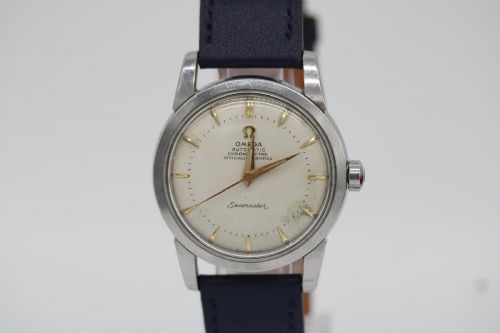
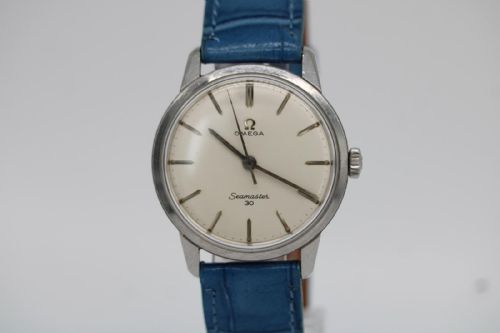

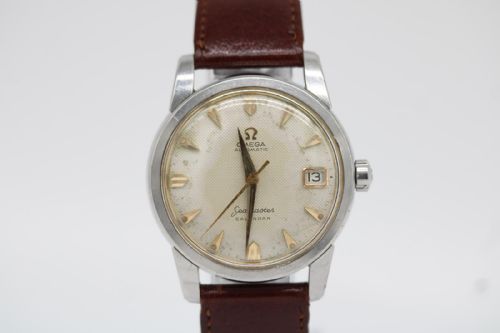
Mens Omega Seamaster
These vintage wristwatches bring the enduring design of a mens omega seamaster straight to the wrist.
Mens Omega Seamaster
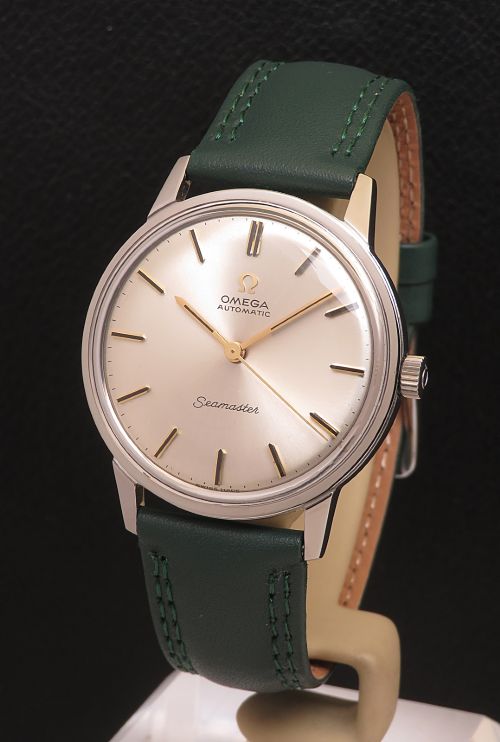
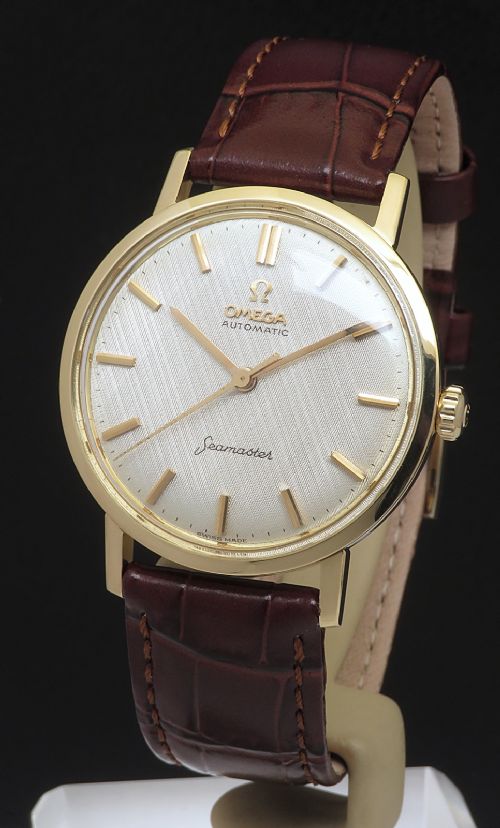
A mens omega seamaster represents a cornerstone of mid-century watchmaking, combining utility with refined mid-century modern styling. Dating predominantly from the 1950s and 1960s, these pieces survive as wristwatches designed originally for water resistance and daily wear.
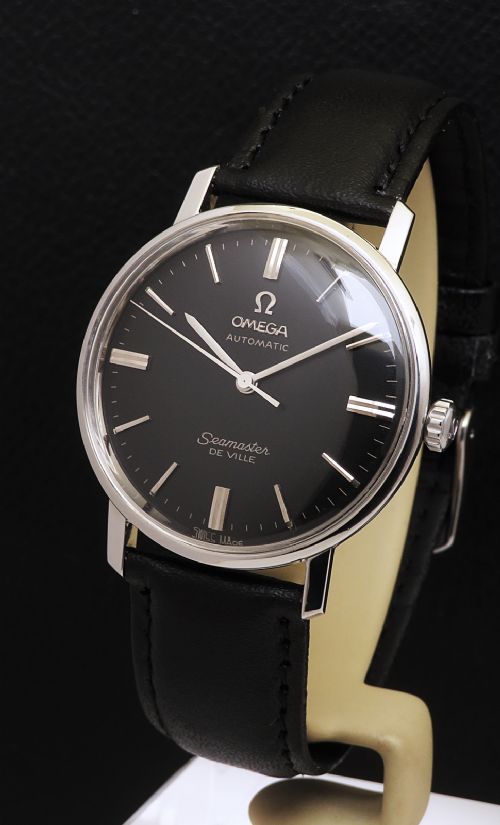
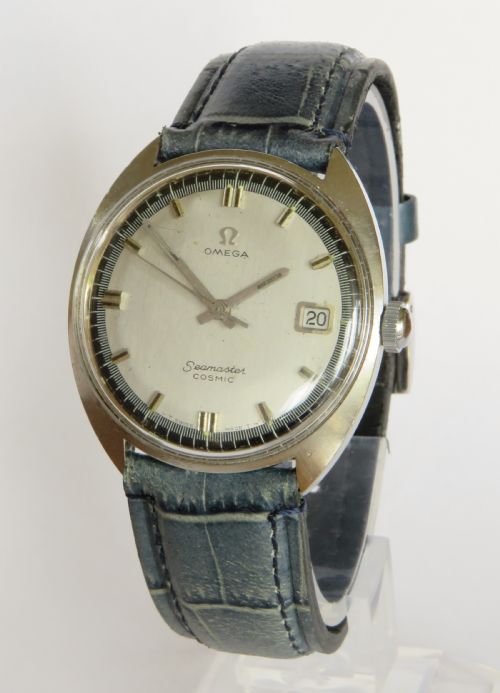
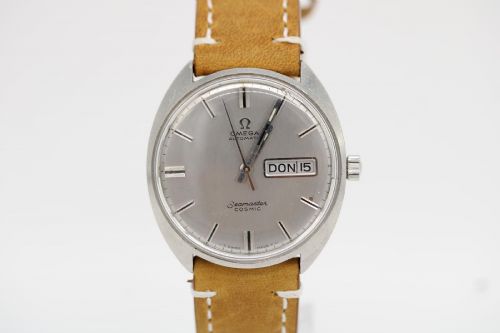
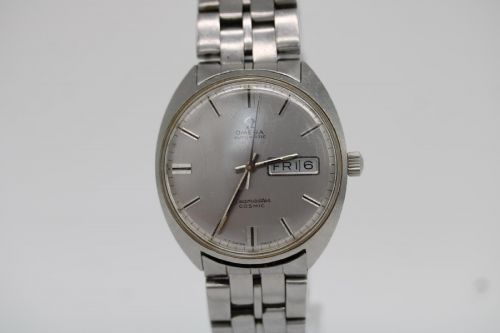
The versions most commonly encountered on this page span automatic movements, manual wind calibres, and calendar functions. Distinct sub-lines such as the Seamaster DeVille, Cosmic, and Chronostop appear frequently among the selection.
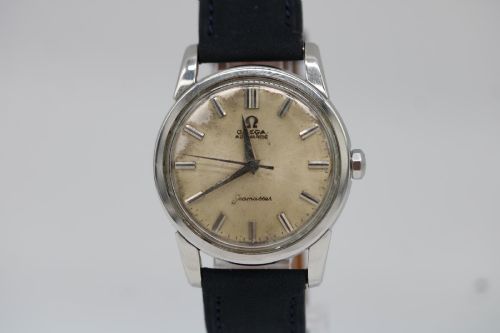
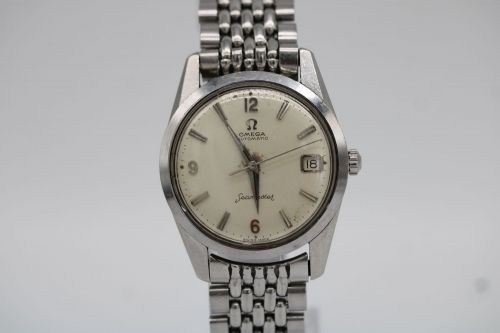
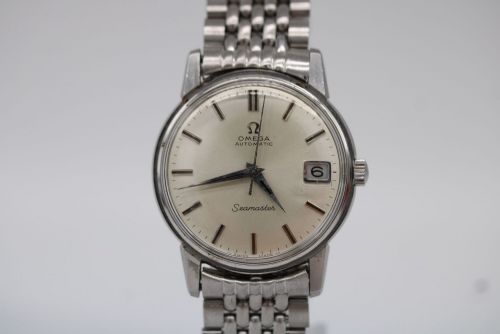
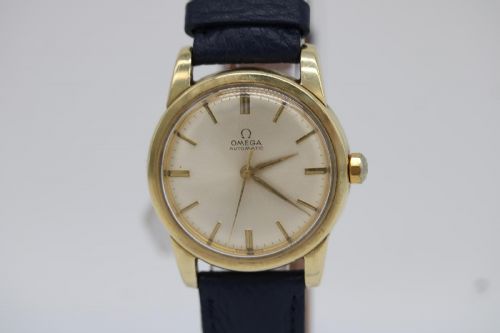
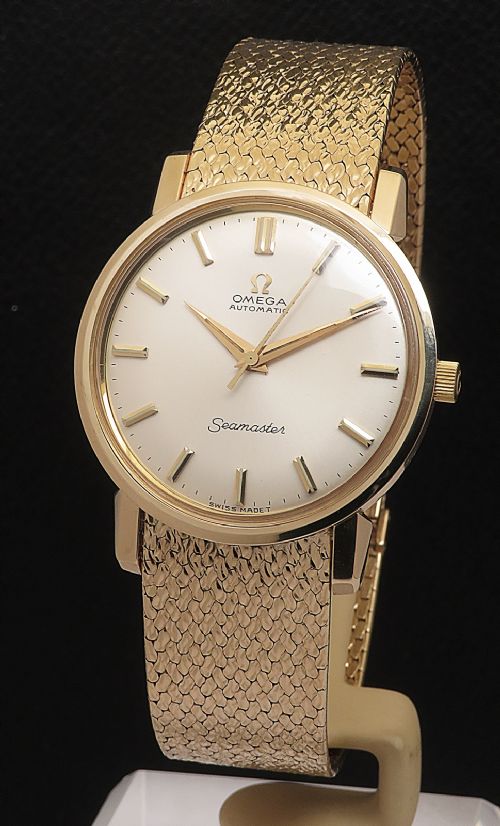
The aesthetic bridges formal dress codes with robust construction, housing mechanical movements inside stainless steel, gold plated, 9ct gold, and 18ct gold cases. Dials range from clean champagne surfaces to textured honeycomb and patinated finishes.
Materials and Construction
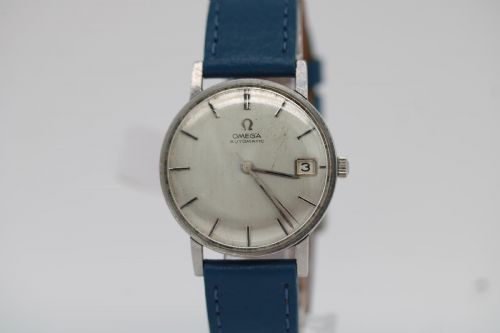
Cases utilise metals including stainless steel alongside solid 9ct and 18ct gold, paired with protective acrylic glass crystals over the dial. Leather straps frequently secure the watch to the wrist, complementing metal bracelets.
Movements rely on precision mechanical engineering, encompassing early bumper automatic systems, rotor automatics like calibre 552 and 562, and manual wind calibres. These internal mechanisms drive hour, minute, and second hands, often alongside date or day-date complications.
Bumper automatics tap gently against the wrist, letting the wearer feel the watch wind itself with every motion.
Distinction in Craft
The upper tier of these wristwatches maintains factory-original dial printing and unpolished case geometry, preserving crisp bevels and sharp edges. Surviving original boxes, papers, and signed buckles elevate historical completeness.
Dial preservation dictates much of the distinction between examples, with untouched surfaces commanding greater appreciation than repainted or heavily weathered alternatives. The complexity of the internal movement, from standard chronometre grades to specialised chronograph calibres, further separates individual pieces.
Omega
The Mens Omega Seamaster Glossary
- Calibre
- The specific internal mechanical movement manufactured to power the watch. Each calibre number identifies the design generation and technical specifications of the mechanism.
- Bumper Automatic
- An early self-winding movement where an internal weighted rotor swings back and forth against springs rather than rotating fully. This mechanism produces a distinct physical pulse on the wrist.
- Chronometer
- A high-precision watch movement tested and certified to meet strict accuracy standards over several positions and temperatures. Such pieces represent the pinnacle of mechanical tuning for the period.
- Honeycomb Dial
- A textured dial surface featuring a raised grid pattern resembling a bee hive. This decorative finish creates subtle light play across the face of the watch.
- Acrylic Glass
- A transparent polymer material used for the crystal protecting the watch dial. It offers clarity and can be polished to remove minor surface marks.
Mens Omega Seamaster: Frequently Asked Questions
What is a bumper automatic movement?
A bumper automatic relies on a weighted rotor that swings through a limited arc, striking internal springs to wind the mainspring. This mechanical layout defines early automatic models from the 1950s.
Wearers feel a gentle tap against the wrist as the rotor moves, distinguishing these pieces from later full-rotor automatic calibres.
How do I wind a manual wind Seamaster?
Manual wind models require turning the crown clockwise between thumb and forefinger until resistance builds. Doing this daily stores mechanical energy in the mainspring.
Care should be taken not to force the crown past the point of firm resistance to protect the internal winding mechanism.
What does the Seamaster DeVille signify?
The DeVille line designates a slimmer, more formal dress iteration introduced during the 1960s. These pieces merge waterproof case technology with refined proportions.
They pair neatly with tailored attire while retaining the dependable automatic or manual wind movements found in standard Seamaster references.
How can I tell the decade from the dial?
Pieces from the 1950s often display dauphine hands, crosshair dials, and bumper automatic movements. 1960s examples frequently introduce baton markers, calendar windows, and rotor automatic calibres.
Examining the reference number stamped inside the case back provides definitive verification of the production year.