


Meiji Wood Carving
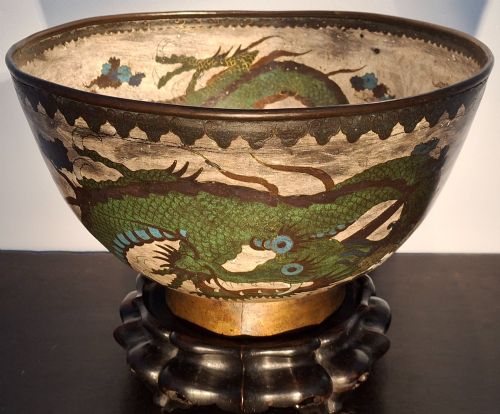
These pieces of meiji wood carving bring intricate craftsmanship into a room through carved hardwood, boxwood and lacquer items made in Japan.
Meiji Wood Carving
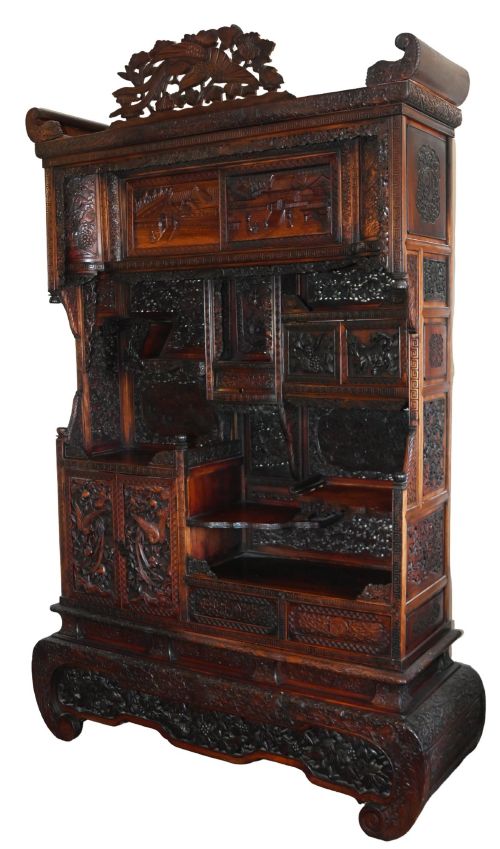
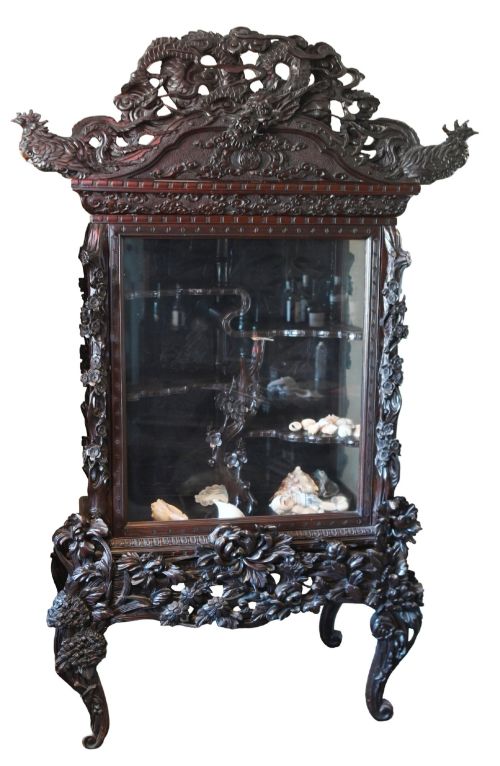
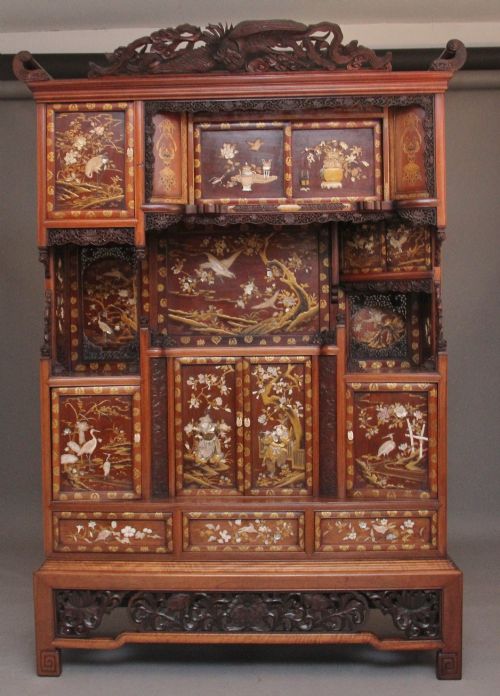
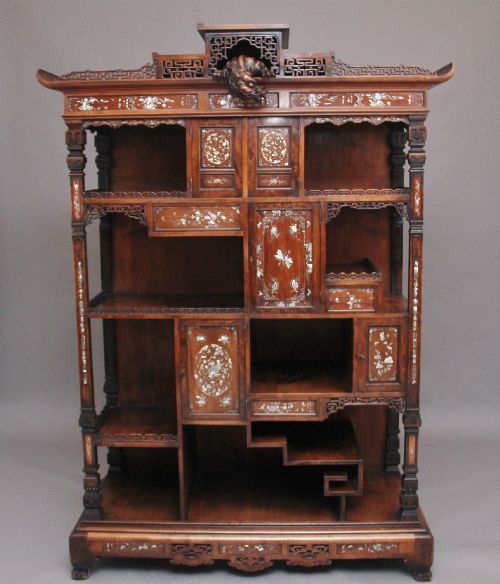
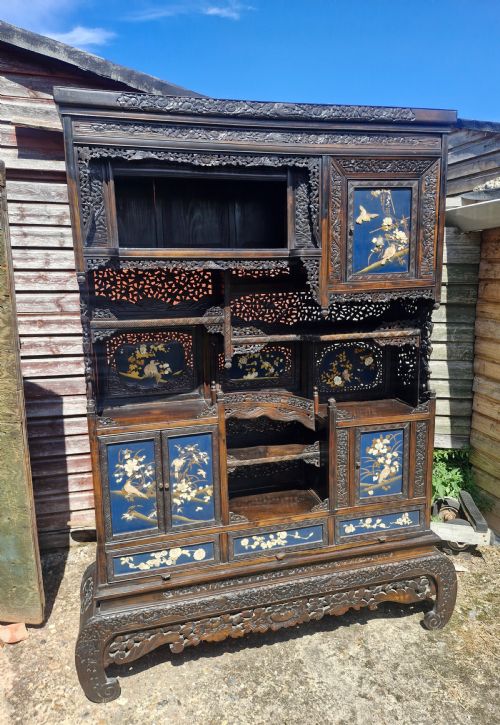
When you search for meiji wood carving, you encounter objects shaped during the late nineteenth and early twentieth centuries, spanning the Meiji period alongside related Edo and Taisho eras. These items range from small netsuke and okimono figures to larger furniture such as shodana cabinets, display stands and side tables.
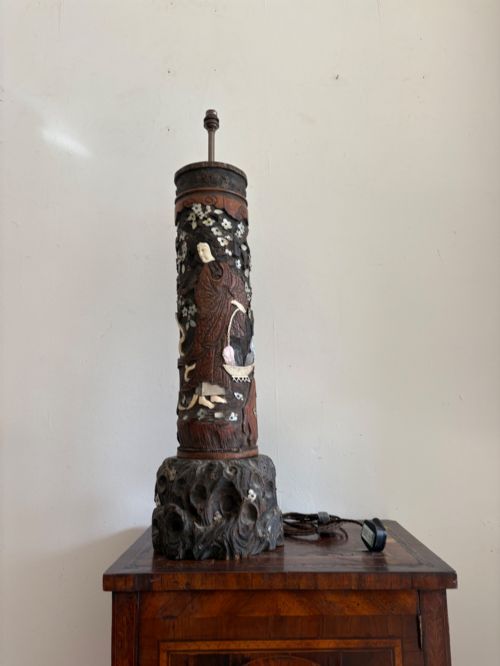
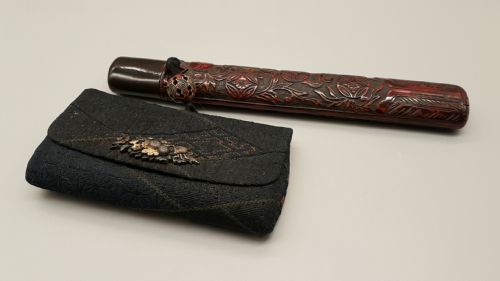
The selections on this page highlight the versatility of Japanese artisans working with timber, bone, and mother of pearl. You find miniature carvings of animals and deities alongside functional pieces like brush pot lamps and smoking ensembles.
How they were made
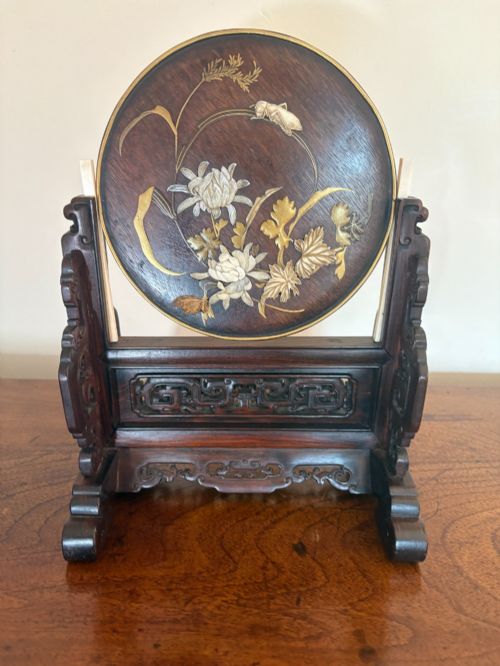
The makers utilised dense timbers such as boxwood and general hardwood to achieve sharp, durable detail in figures and panels. Artisans also incorporated lacquer, bone, and mother of pearl inlay to add contrast and texture to screens, cabinets, and small decorative items.
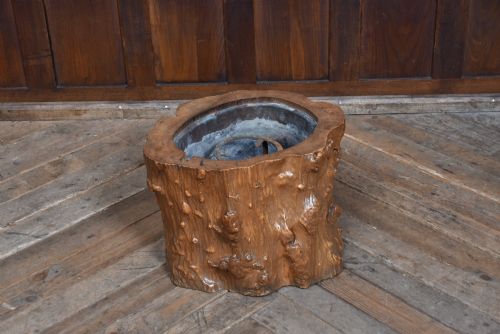
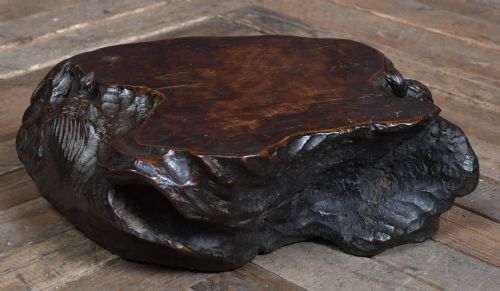
Techniques relied on precise hand chiselling and carving, often leaving naturalistic wood grains visible beneath polished surfaces. Root wood and ebonised finishes further defined the sculptural forms seen across these items.
Watch out for tiny carved rodents and frogs peering out from wooden boxes, keeping guard over your desk.
What varies in quality
Quality rests upon the naturalistic depth of the carving and the control shown in facial expressions, animal postures, and panel details. Fine examples demonstrate crisp relief work where every feather, scale, or fold of fabric appears distinct and convincing.
The choice of material and stability of construction also set pieces apart, from simple turned stands to elaborate cabinets fitted with multiple tiers and inlaid sections. Maker signatures add distinction, showing the hand of a named carver.
Tomochika·Masayuki·Gyoko
The Meiji Wood Carving Glossary
- Netsuke
- A small carved toggle fastened to the end of a cord, traditionally used to suspend pouches from kimono sashes.
- Okimono
- A standalone Japanese decorative figurine designed for display on a shelf or in a tokonoma alcove.
- Shodana
- A traditional Japanese display cabinet or shelf unit featuring asymmetrical compartments for ornaments.
- Hibachi
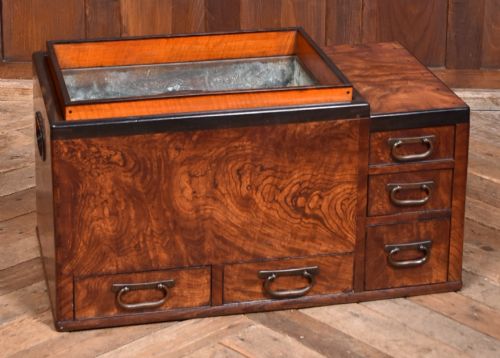
- A traditional Japanese heating device or brazier, often constructed from wood or ceramic with metal linings.
- Japonisme
- A nineteenth-century artistic movement in Western art influenced by Japanese aesthetics and woodblock prints.
Meiji Wood Carving: Frequently Asked Questions
What is a netsuke used for?
A netsuke served as a practical toggle for securing small personal containers, such as tobacco pouches or medicine boxes, to the sash of a kimono.
Over time, these toggles evolved into highly detailed miniature sculptures collected for their intricate carving and tactile qualities.
How do I identify a Meiji period carving?
Meiji period carvings typically exhibit a high level of naturalistic detail and dynamic composition, reflecting the opening of Japan to Western trade and artistic exchange during the late nineteenth century.
Signatures from carvers frequently appear on the base or underside of figures and okimono.
Where should I place a shodana cabinet?
A shodana cabinet functions well as a display surface in a study or living space, where its asymmetrical shelving can hold small ceramics, bronzes, or books.
Keep these wooden items away from direct sunlight and excessive heat sources to protect the lacquer and joinery.