


Meiji Period Lighting
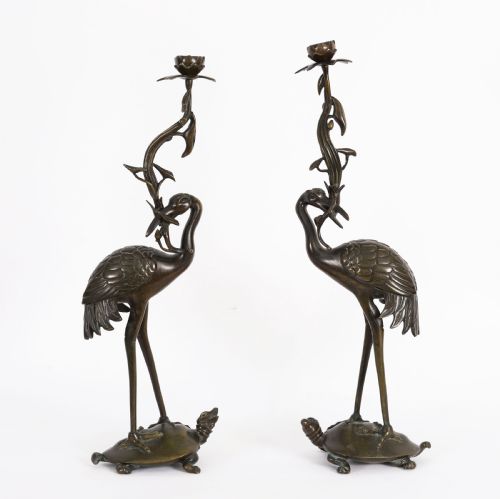
Meiji period lighting brings together cast bronze, champlevé enamel and Satsuma porcelain, formed into table lamps, floor lamps and pricket candlesticks.
Meiji Period Lighting
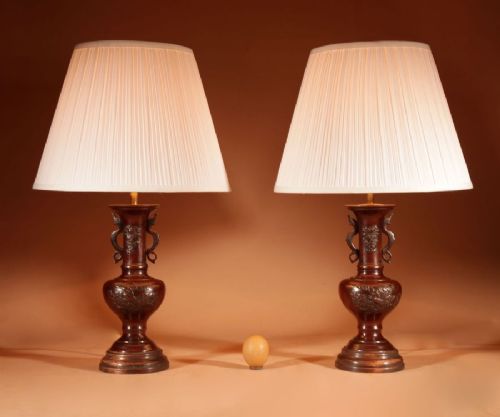
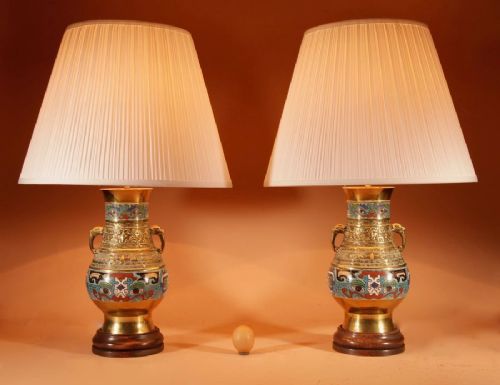
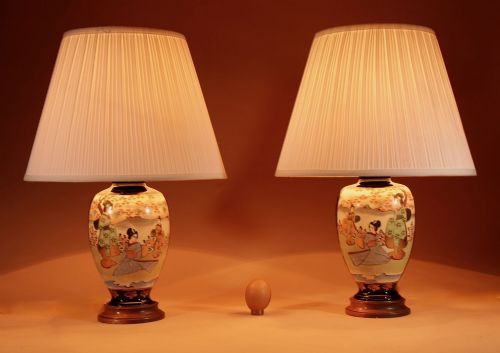
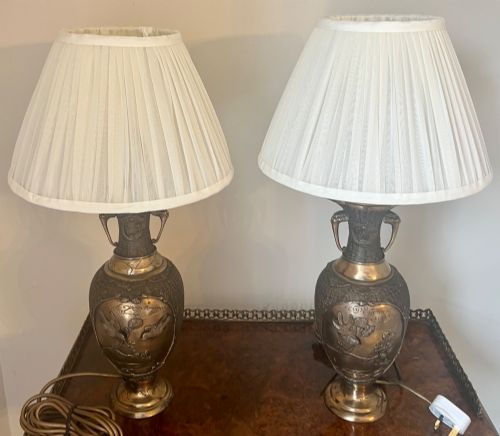
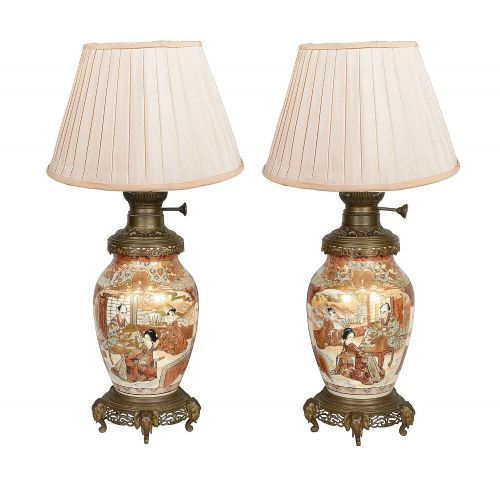
When buyers search for meiji period lighting, they encounter Japanese works dating predominantly from the nineteenth century into the early twentieth century. The selection consists largely of table lamps and floor lamps adapted from traditional bronze vases, cloisonné enamel vessels and porcelain bodies. Many examples utilise converted Satsuma, Kutani, Imari and blue and white ceramics alongside heavy cast bronze forms.
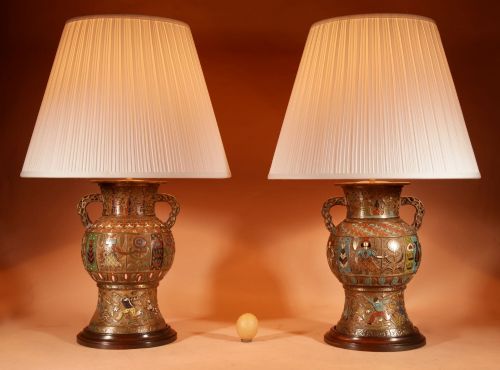
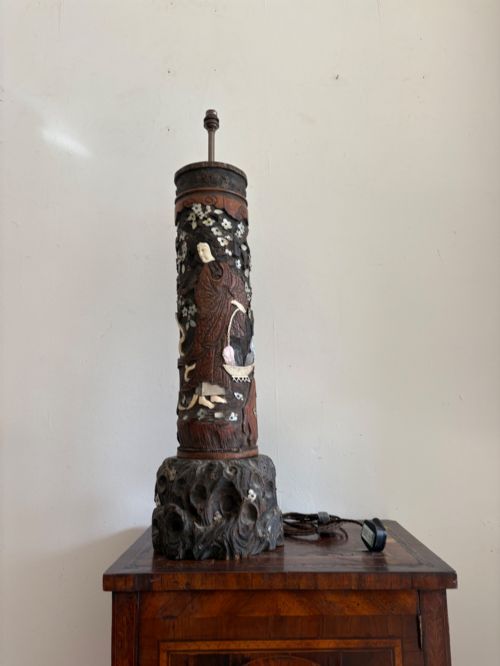
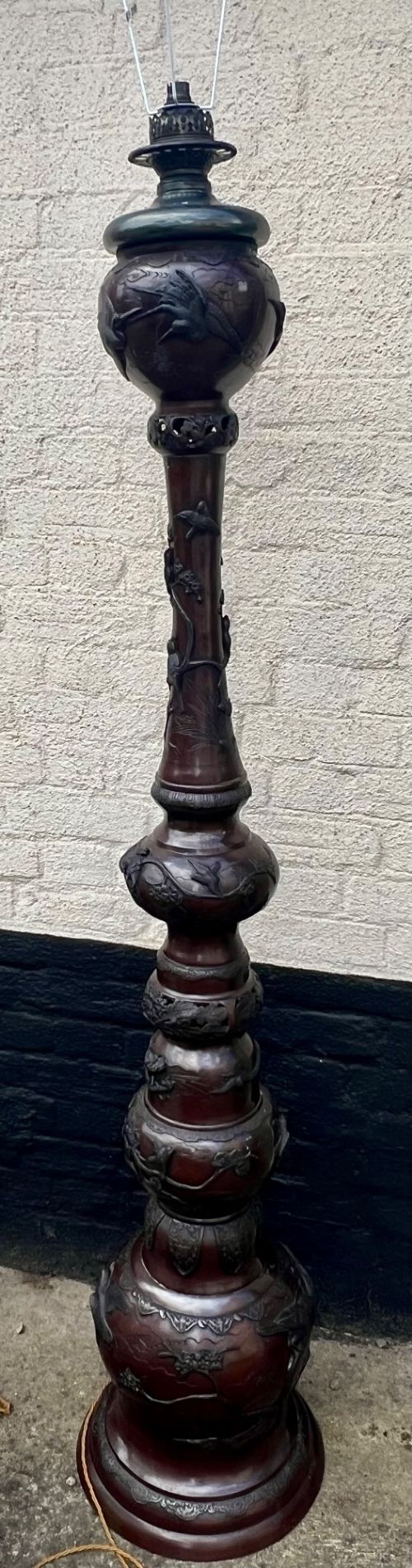
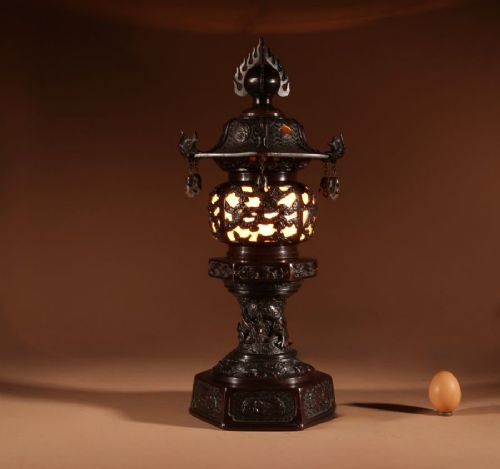
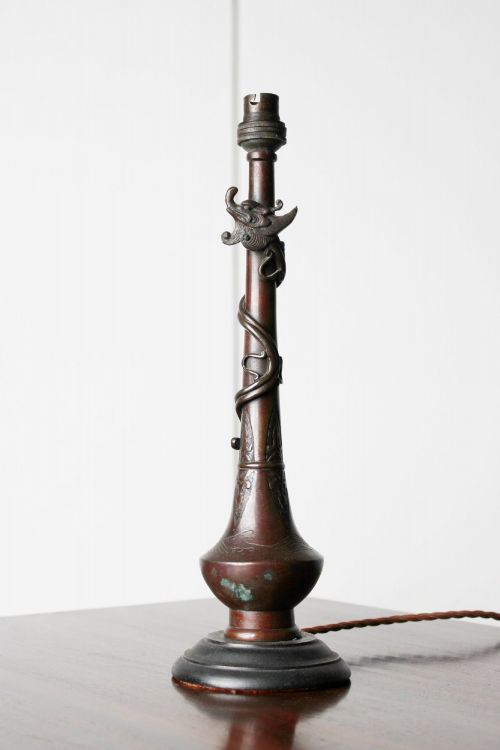
The objects frequently emerge from the Meiji era, spanning from eighteen sixty-eight to nineteen twelve, though occasional pieces cross into Edwardian or later decades. Forms range from simple pricket candlesticks and carved brush pots to large dragon table lamps and monumental bronze floor lamps. Pairs appear frequently among the listings, particularly matched bronze vases and porcelain vessel lamps.
How they were made
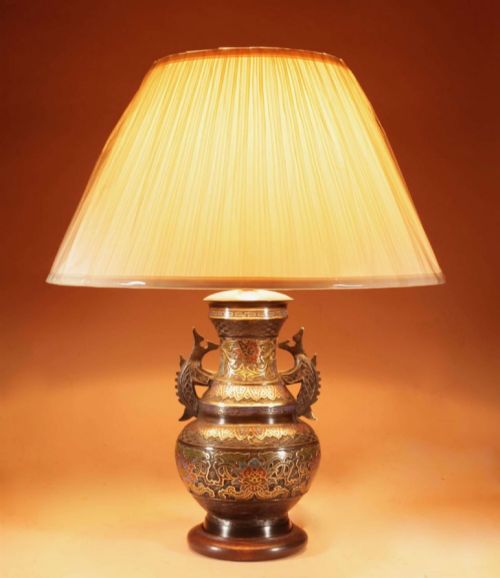
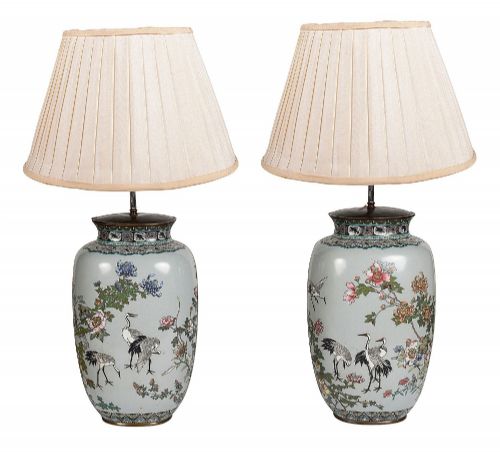
Makers shaped the metal pieces through casting in bronze and brass, applying champlevé and cloisonné enamel work to decorate surfaces with coloured vitreous pastes. Ceramic bodies utilise Satsuma, Kutani and porcelain wares, painted by hand with intricate motifs before conversion into lighting. Selected items incorporate carved wood, mother of pearl inlay and fabric silk elements.
The structural conversion process often adapts former vases, spill vases and jars into lamps through the addition of electrical fittings or weighted bases while retaining the original body. Artisans integrated dragons, elephants and traditional Japanese motifs directly into the cast bronze structures and enamel compartments.
Materials recorded across the inventory include bronze, brass, champlevé, cloisonné, Satsuma, Kutani, porcelain, earthenware, fabric, silk, wood and mother of pearl.
What varies in quality
Quality rests upon the crispness of the bronze casting and the precision of the cloisonné or champlevé enamel cells. Pieces displaying sharply defined dragon details, deep patination and intact enamel work sit at the higher end of the scale.
Ceramic quality depends on the fineness of the porcelain body and the complexity of the hand-painted Satsuma, Kutani or Imari decoration. The integrity of the original vessel before lamp conversion determines the overall presence of the object.
The Meiji Period Lighting Glossary
- Champlevé
- An enamelling technique where troughs or cells are cast into the bronze body and filled with coloured enamel before firing. This method creates bold surface patterns.
- Cloisonné
- A technique using thin metal wires soldered to a bronze base to form compartments, which are then filled with enamel paste and fired. It produces detailed decorative patterns.
- Satsuma
- A type of Japanese earthenware featuring a pale, crackled ivory glaze decorated with polychrome enamels and gilt. These ceramic bodies are frequently adapted into lamps.
- Kutani
- Japanese porcelain or earthenware originating from Kutani, known for strong colour palettes dominated by iron red and green. These wares often form the base of traditional lamps.
- Pricket candlestick
- A candlestick featuring a central spike or pricket designed to secure the base of a candle rather than a socket. Antique bronze examples are often adapted for interior display.
Meiji Period Lighting: Frequently Asked Questions
Are these lamps converted from original vases?
Yes, many pieces started life as bronze vases, cloisonné enamel vessels or porcelain jars before being adapted into table and floor lamps. This conversion process allows traditional Japanese artistry to function with modern lighting.
The original bodies often retain their nineteenth-century characteristics intact beneath the upper electrical fittings.
What materials are most common?
Bronze and brass form the primary metal structures, frequently decorated with champlevé or cloisonné enamel work. Porcelain and earthenware types such as Satsuma, Kutani and Imari appear equally often.
Additional materials include wood, fabric silk shades and mother of pearl elements.
Can I find matching pairs?
Matched pairs appear regularly in bronze, cloisonné enamel and porcelain lamp formats. These are often derived from symmetrical pairs of nineteenth-century Japanese vases.
Pairs provide balanced lighting options for mantelpieces, sideboards or large tables.