




Meiji Period Cupboard
These Japanese Meiji period cupboards bring intricate joinery and rich lacquer into the home, offering both practical storage and striking display space.
Meiji Period Cupboard
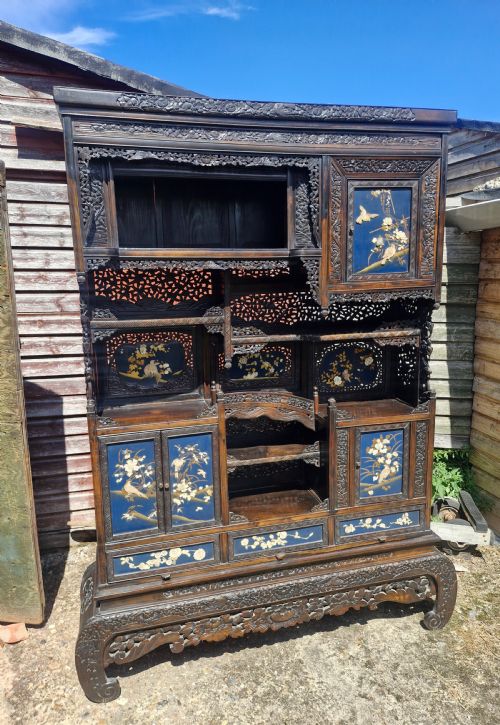
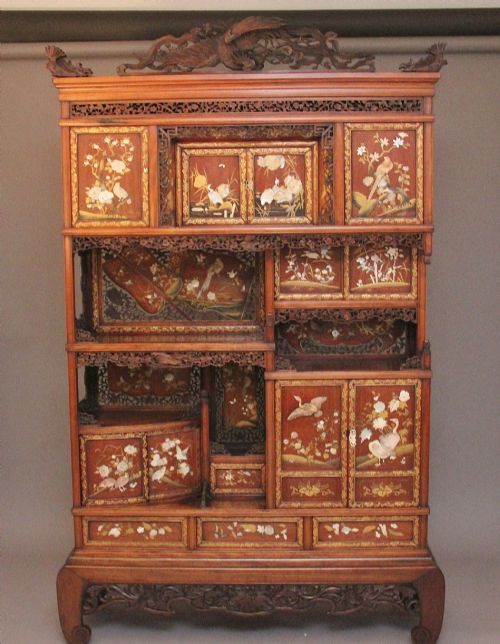
A meiji period cupboard encompasses diverse forms from late nineteenth and early twentieth century Japan, ranging from large display cabinets to compact tabletop storage. The pieces seen here include prominent shodana display cabinets, merchant tansu chests, and step chests designed for domestic organisation.
Most examples date from the nineteenth century, including specific years like eighteen-eighty, eighteen-ninety, and nineteen-hundred. Buyers encounter both utilitarian kitchen tansu and refined decorative cabinets on stands.
Traditional forms also feature black lacquered table cabinets and keyaki wood merchant chests. These objects reflect the varied functional needs of Japanese households during a period of rapid cultural exchange.
Materials and construction
Maker workshops utilised dense hardwoods and keyaki timber alongside traditional black lacquer surfaces. Structural elements incorporate iron and brass hardware for reinforcement and visual contrast.
Surface ornamentation relies on meticulous inlay work using bone and mother of pearl. Artisans also applied bronze animal decoration and shibayama techniques to enrich the exterior appearance.
Meiji Period Cupboard Retail Price Guide 2026
Typical asking prices for meiji period cupboard among the pieces listed under this phrase on Sellingantiques today, from the lower quarter to the upper quarter. They describe what is for sale here now, not the wider market.
Many a Victorian parlour gained an unexpected touch of distant craftsmanship when a merchant chest arrived smelling faintly of camphor and old lacquer.
Distinctions in quality
Superior examples demonstrate exceptional control in lacquer application and precision within complex joinery. The refinement of bronze animal decorations and mother-of-pearl inlays distinguishes finer cabinets from simpler utilitarian storage.
The choice of primary wood, such as keyaki versus general hardwood, alters the weight and tactile presence of the piece. Overall structural integrity and the crispness of traditional carving separate standard regional work from master craftsmanship.
The Meiji Period Cupboard Glossary
- Shodana
- A type of Japanese display cabinet featuring asymmetrical shelving and sliding doors. These pieces were traditionally used to exhibit art objects and ceramics.
- Tansu
- A traditional Japanese mobile chest or cabinet built for storage. They served various domestic functions, from kitchen organisation to merchant bookkeeping.
- Keyaki
- Japanese elm wood prized for its robust grain and durability. Makers frequently selected this timber for high-status merchant and storage chests.
- Shibayama
- A decorative technique involving inlay of precious materials like mother-of-pearl, bone, and ivory into a lacquer or wood base. It creates raised, pictorial scenes on cabinet doors and panels.
- Kaidan tansu
- A traditional step chest constructed in a staircase configuration. These dual-purpose objects provided both storage space and access to upper loft levels.
Meiji Period Cupboard: Frequently Asked Questions
How were tansu chests used?
Tansu chests served as essential movable storage for Japanese households and merchants. They accommodated clothing, documents, and domestic goods with robust iron or brass fittings for security.
Different regional types fulfilled specific roles, from kitchen storage to merchant accounts and household organisation.
What is keyaki wood?
Keyaki is Japanese elm, a dense and durable timber favoured for traditional furniture making. Its prominent grain pattern adds natural texture to merchant chests and storage cabinets.
Carpenters valued the wood for its structural strength and ability to withstand heavy daily use.
What defines Meiji period style?
The Meiji period spans from eighteen-sixty-eight to nineteen-twelve, a time when traditional Japanese craftsmanship met international design influences. Cabinets from this era often display intricate metalwork, lacquer finishes, and detailed inlay.
Artisans balanced utilitarian forms with elaborate decorative elements suited for both domestic use and export markets.