





Meiji Lacquerware
These pieces of meiji lacquerware bring intricate craft and deep history into a room, offering the meticulous finishes collectors prize.
Meiji Lacquerware
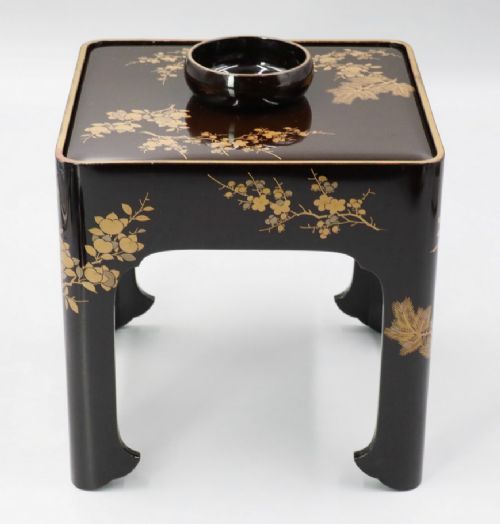
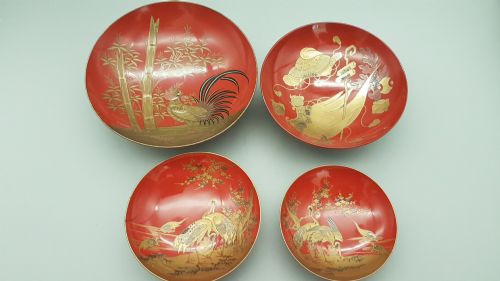
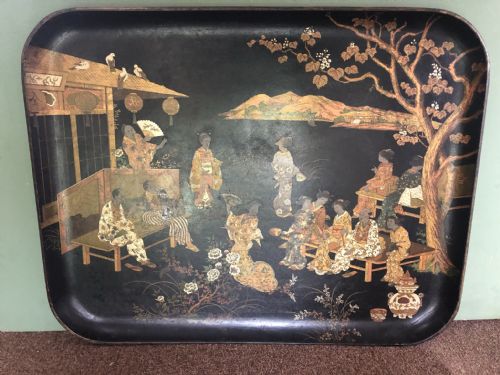
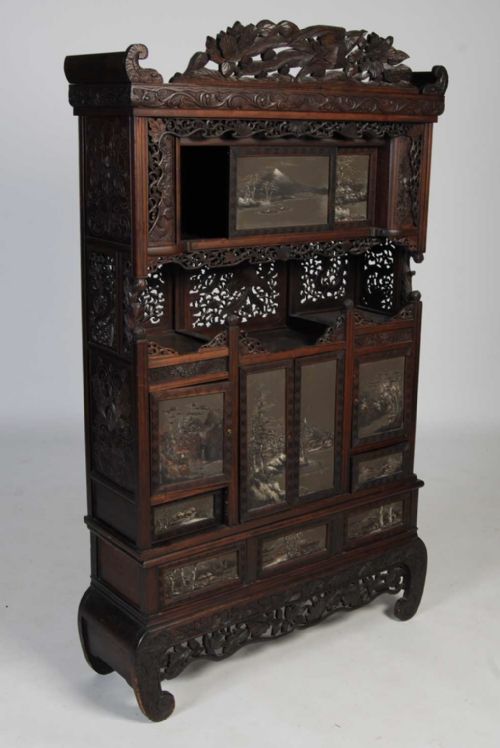
When you search for meiji lacquerware, you are looking at items shaped by Japanese artistry across the nineteenth and early twentieth centuries. The selection ranges from delicate sets of sake cups and stands to decorative trays, porcelain vases finished with lacquer over paint, and intricate shodana cabinets on stands.
The versions you are most likely to encounter on this page span the Meiji period, alongside pieces linked to the Japanese export trade and early twentieth-century production. Forms vary from small tabletop items like decorative plaques to larger furniture such as display cabinets.
These objects reflect both domestic Japanese tastes and items created specifically for export to Western markets during the period. Their utility ranges from display pieces and small receptacles to tabletop serving sets.
How they were made
Maker techniques relied heavily on applying multiple coats of urushi lacquer and standard lacquer to a substrate of wood, hardwood, or porcelain. Some pieces incorporate gold leaf to create luminous surface contrasts against black or red lacquer grounds.
Decoration often involved detailed inlay work set directly into the lacquered surface. Certain pieces also combined traditional lacquer methods with porcelain bodies or papier-mâché, demonstrating material versatility within the export trade.
Meiji Lacquerware Retail Price Guide 2026
Typical asking prices for meiji lacquerware among the pieces listed under this phrase on Sellingantiques today, from the lower quarter to the upper quarter. They describe what is for sale here now, not the wider market.
Several sets of sake cups wait patiently on this page, perhaps wondering if they will ever hold wine again.
What varies in quality
Quality in these objects rests on the precision of the lacquer finish and the stability of the underlying wood, porcelain, or papier-mâché base. Finer examples display smooth, even surfaces where applied elements like gold leaf and inlay remain secure and crisp.
The complexity of the form also dictates the standard of the piece, distinguishing simple export trays from elaborate shodana cabinets with numerous fitted compartments. The depth of the lacquer layers and the sharpness of the decorative details separate standard production from superior work.
The Meiji Lacquerware Glossary
- Urushi
- Natural lacquer derived from the sap of the toxicodendron vernicifluum tree. It cures into a hard, durable, and moisture-resistant finish.
- Shodana
- A traditional Japanese small cabinet or shelving unit designed for display. These often feature staggered shelves and small doors.
- Sake cup
- A small vessel used for drinking Japanese rice wine. They are frequently found in matching sets alongside a dedicated stand.
- Inlay
- The technique of embedding contrasting materials such as metal, shell, or ivory into a recessed lacquer ground.
- Export
- Goods produced in Japan specifically for sale to Western markets during the nineteenth and early twentieth centuries.
Meiji Lacquerware: Frequently Asked Questions
What is meiji lacquerware?
Meiji lacquerware comprises decorative and functional objects produced during the Meiji period in Japan, utilising traditional lacquer techniques.
Items range from small sake cups and rectangular trays to large display cabinets and porcelain vases finished with lacquer over-paint.
How were these cabinets used?
Shodana cabinets served as display furniture within homes to hold small ornaments and scholarly objects.
Their tiered shelves and compartments allowed for the orderly arrangement of valued possessions.
How do I date these pieces?
Dating relies on stylistic markers, materials, and documented production eras spanning the late nineteenth and early twentieth centuries.
Reference points include Meiji period export standards and transitional styles leading into the 1920s.
How do I care for lacquerware?
Keep lacquerware away from direct sunlight and extreme temperature fluctuations to prevent the wood or lacquer from cracking.
Dust gently with a soft, dry cloth and avoid chemical cleaning agents.