






Mechanical Writing Table
A mechanical writing table brings ingenuity to the study, using clever internal mechanisms to conceal compartments and adjust surfaces.
Mechanical Writing Table
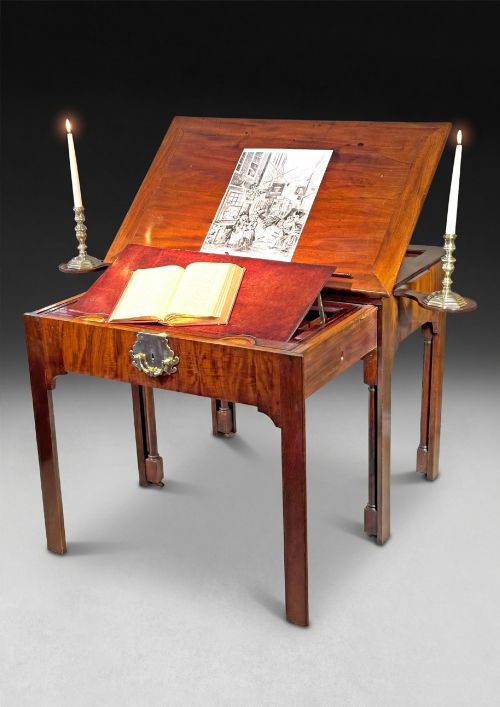
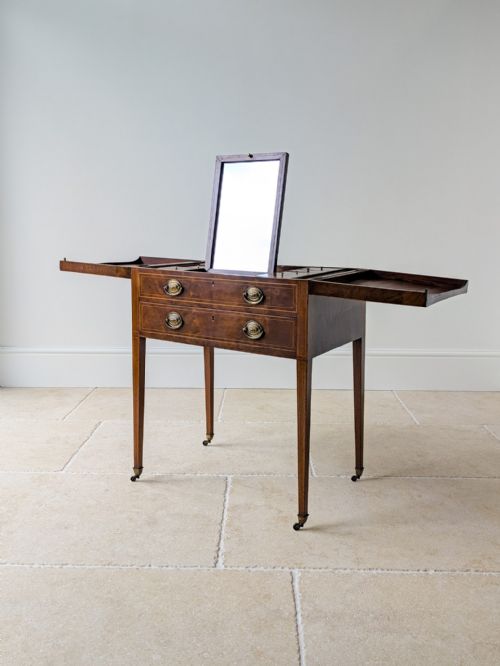
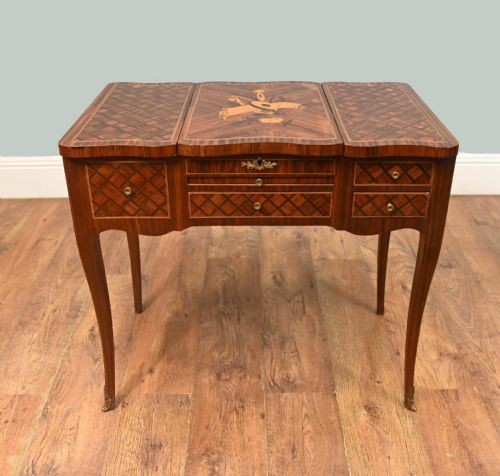
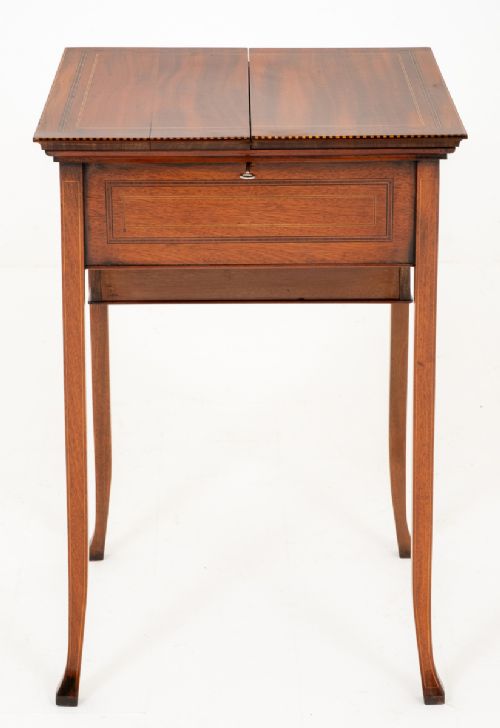
A mechanical writing table combines everyday utility with ingenious internal mechanisms, offering adjustable surfaces and concealed storage compartments designed for drafting, reading, and correspondence. The selections available encompass diverse forms such as architect's desks, bonheur du jour dressing pieces, and metamorphic library tables.
Originating predominantly from the eighteenth and nineteenth centuries, these pieces showcase period cabinetmaking traditions from English workshops and French ateliers. Buyers frequently encounter George III mahogany examples alongside later Edwardian and French Revival iterations.
How they were made
Cabinetmakers utilised dense timbers like mahogany, walnut, and satinwood, frequently accentuating surfaces with kingwood, rosewood, and intricate marquetry inlays. Brass fittings provide both structural support and operational guidance for the rising compartments and folding screens.
Internal mechanisms rely on weighted counterbalances, ratchets, and hinges concealed within the framework to allow writing surfaces and reading slopes to elevate smoothly. Leather inserts frequently provide a durable writing plane atop the timber construction.
Mechanical Writing Table Retail Price Guide 2026
Typical asking prices for mechanical writing table among the pieces listed under this phrase on Sellingantiques today, from the lower quarter to the upper quarter. They describe what is for sale here now, not the wider market.
The selection includes specialised forms such as architect's tables, worktables with secret compartments, and space-saving metamorphic desks.
What varies in quality
The sophistication of the internal movement dictates the standard of execution, where superior examples operate smoothly without binding or requiring manual assistance. Finely engineered ratchets and concealed compartments demonstrate the skill of the original maker.
Timber selection and decorative embellishment set the finest pieces apart, notably through figured mahogany grain, matched satinwood veneers, and precise marquetry work. The integration of brass hardware and quality leather inserts reflects the overall ambition of the piece.
J.C Vickery of London
The Mechanical Writing Table Glossary
- Metamorphic
- Describing furniture designed to transform from one form or function into another through hinged sections or rising mechanisms. These pieces often conceal desks within tables or cabinets.
- Architect's table
- A specialised desk featuring an adjustable reading slope mounted on a ratcheted ratchet stand for draftsmen and readers. They frequently incorporate pull-out candle slides and side drawers.
- Bonheur du jour
- A light lady's writing desk featuring a small cabinet or set of drawers on the upper surface. The form gained popularity in eighteenth-century France.
- Marquetry
- The art of applying pieces of veneer to a structure to form decorative patterns and pictures. Craftsmen utilise various coloured woods to achieve tonal depth.
Mechanical Writing Table: Frequently Asked Questions
How do mechanical writing tables work?
These tables utilise hidden ratchets, counterweights, and folding leaves to alter their height and configuration. Users can raise reading slopes or reveal secret compartments by operating discreet levers and pulls.
Such engineering allowed a single piece of furniture to serve multiple functions in a Georgian or Victorian interior, shifting from a flat table to a standing desk or reading stand.
What is an architect's table?
An architect's table is a specialist desk featuring a rising centre section supported by a ratchet mechanism. This allowed draftsmen and readers to angle their work for comfort.
Many examples include pull-out ledges to hold inkwells and instruments, alongside deep drawers for storing large paper sheets.
How do I care for the leather top?
Leather writing surfaces require gentle cleaning with a slightly damp cloth followed by a neutral wax or leather conditioner. Avoid using harsh chemical solvents that can strip the original dye and finish.
Keep these tables away from direct heat sources and strong sunlight to prevent the timber from warping and the leather from drying out and cracking.
Are these desks suitable for daily use?
While these pieces were built for practical service using robust timbers like mahogany and walnut, their internal mechanisms benefit from gentle operation. Regular use is entirely appropriate provided the moving parts are not forced.
Careful handling of the rising compartments and folding screens ensures the historical mechanism continues to function properly in a modern setting.