
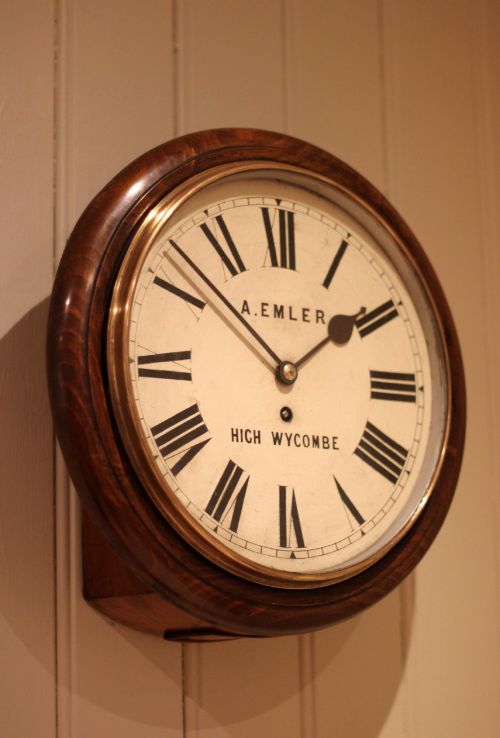
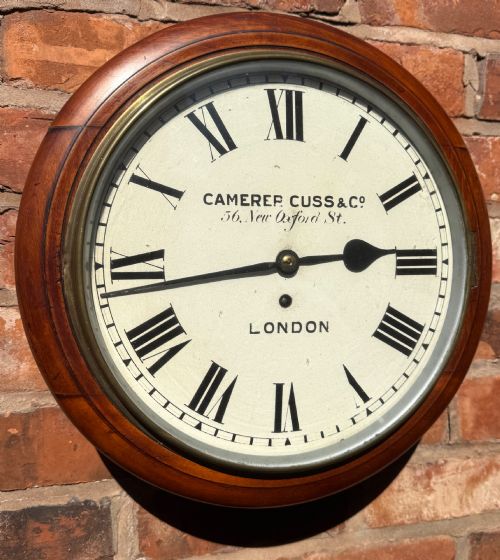
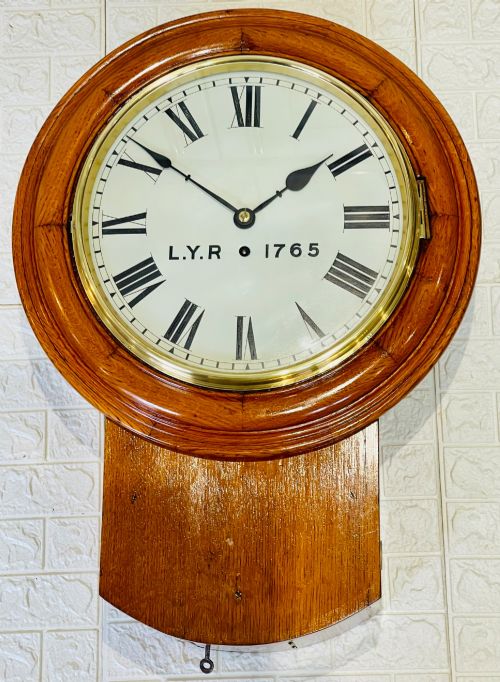
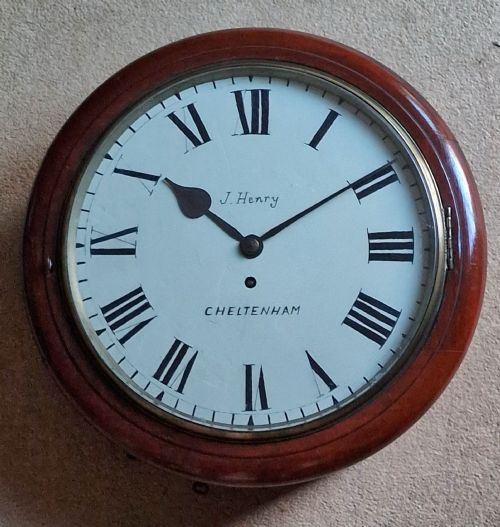
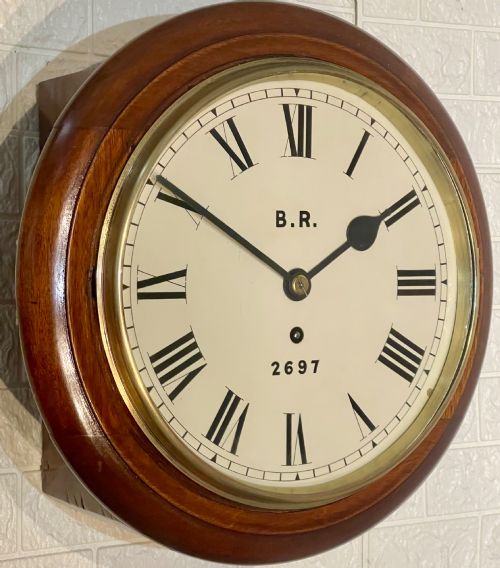
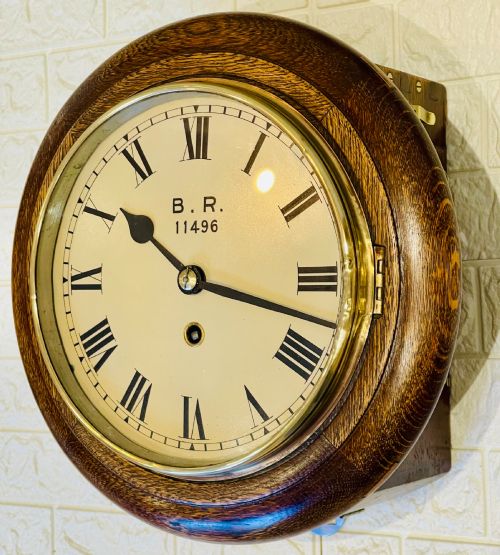
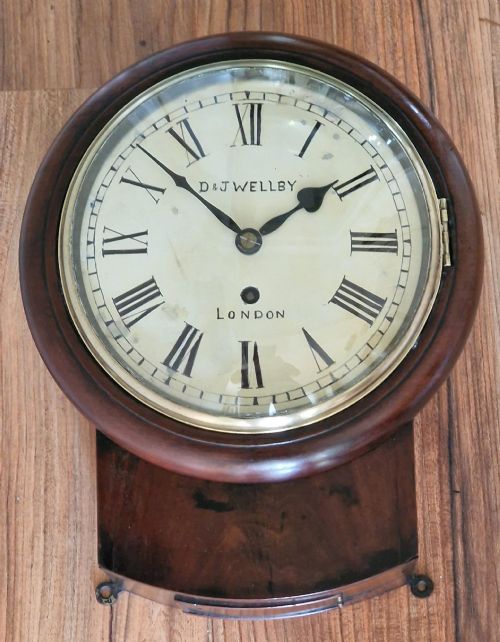
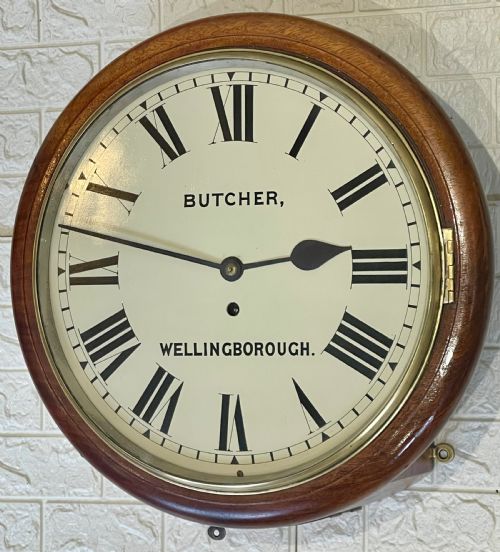




Mechanical Fusee Wall Clock
A mechanical fusee wall clock is a driven timekeeper of precision and heritage, offering steady movement and classic style for any room.
Mechanical Fusee Wall Clock
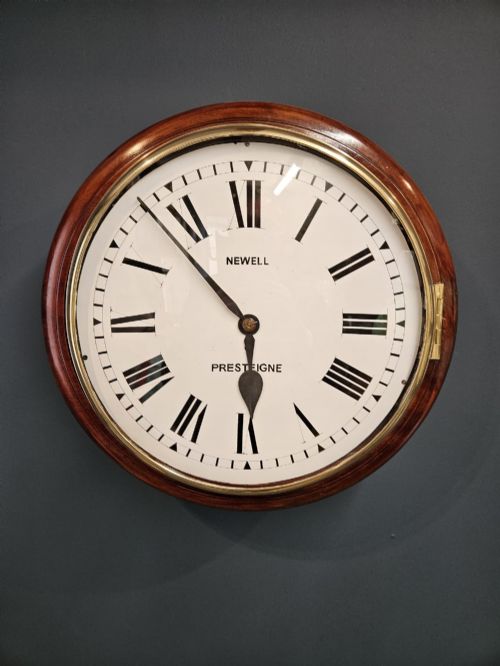
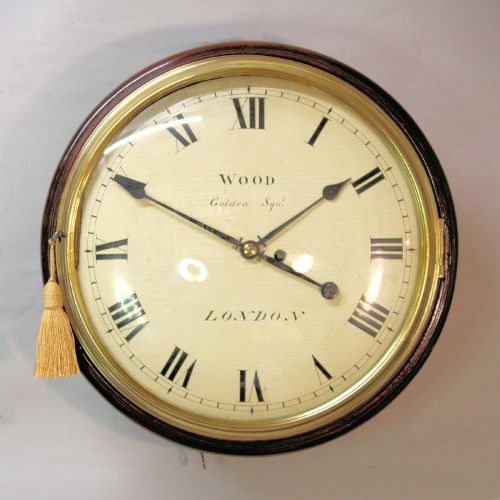
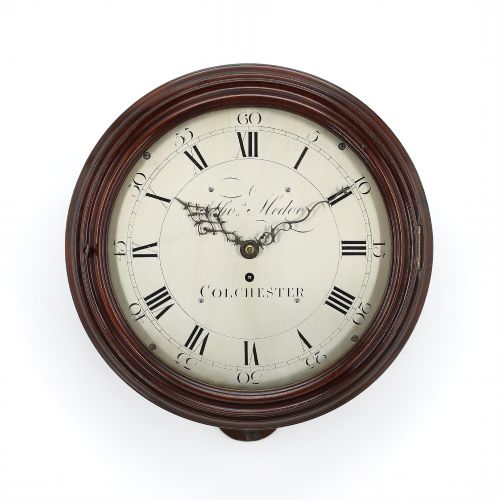
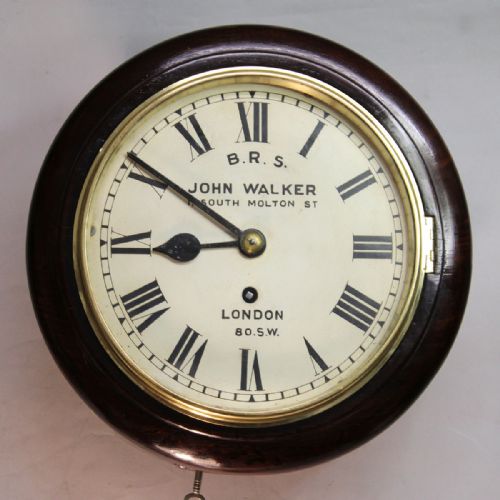
When you search for a mechanical fusee wall clock, you examine timepieces built for reliability in public spaces, offices, and homes across centuries. The pieces on this page span the Georgian, Victorian, and Edwardian periods, stretching into mid-twentieth century railway and industrial examples.
You will most commonly meet round dial clocks mounted in wooden cases, including drop-dial and school clock variations. These instruments originate from makers and railways across Britain, combining functional utility with traditional cabinet-making.
How they were made
Cabinet makers housed these movements in sturdy timbers such as mahogany, oak, rosewood, and beech, frequently shaping cases with octagonal bezels or carved drops. Dials were fashioned from painted metal or wood, protected by heavy brass bezels and glass covers.
The fusee mechanism itself relies on brass components and a chain or cord drive to equalise the pull of the mainspring as it unwinds. This mechanical arrangement ensures even power delivery to the escapement for accurate timekeeping.
Some railway clocks survived decades of platform steam before retiring to quiet living room walls.
What varies in quality
The standard of a mechanical fusee wall clock rests in the crispness of the dial markings and the integrity of the timber case. Superior examples display refined cabinet work, unblemished painted dials, and makers' signatures that denote reputable workshops.
Movement execution also dictates grade, where finely cut brass gears and original chain drives separate standard utility timepieces from high-precision precision regulators.
Camerer Cuss And Co·D And J Wellby·John Walker·Thomas Hedge·Gledhill Brook
The Mechanical Fusee Wall Clock Glossary
- Fusee
- A conical pulley designed to equalise the power of the mainspring as it winds down. This ingenious device ensures consistent force reaches the clock movement.
- Drop dial
- A wall clock featuring a circular dial mounted above a lower wooden case or trunk. The trunk often houses a swinging pendulum.
- Bezel
- The ring of brass or wood that holds the glass protecting the clock face. It usually opens on a hinge to allow hand-setting.
- Chain driven
- A movement powered by a fine metal chain rather than a gut cord. It connects the fusee cone to the spring barrel.
Mechanical Fusee Wall Clock: Frequently Asked Questions
How do I wind a mechanical fusee wall clock?
Use the appropriate winding key to turn the square arbor on the dial face clockwise until resistance meets you.
Take care not to overwind the movement, as this strains the chain and spring mechanism.
Where should I hang a mechanical fusee wall clock?
Mount the clock securely to a solid interior wall using appropriate fixings that bear the weight of the timber case.
Ensure the wall remains free from excessive vibrations and dampness to protect the delicate brass movement.
How do I keep my clock ticking accurately?
Adjust the regulating nut on the pendulum bob up to speed the clock or down to slow it.
Keep the movement clean and lubricated periodically to maintain consistent timekeeping across the days.