




Matching Bedside Cupboards
Matching bedside cupboards are practical bedroom essentials offering coordinated storage, and finding the right pair completes a scheme.
Matching Bedside Cupboards
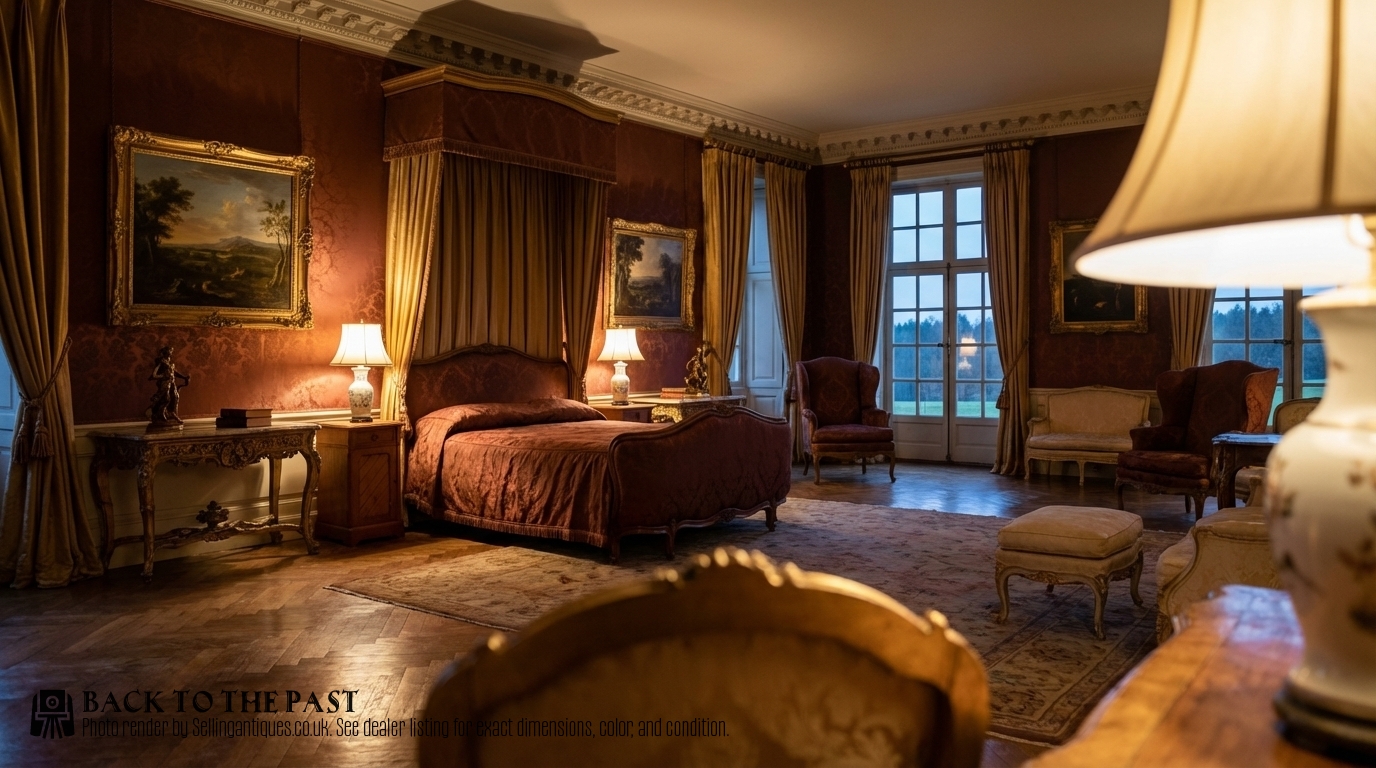
Matching bedside cupboards provide paired storage flanking a bed, keeping night-time essentials neatly hidden behind doors or within drawers. When searching for matching bedside cupboards, buyers encounter various forms including cabinets, tables, night stands and drum-shaped pieces.
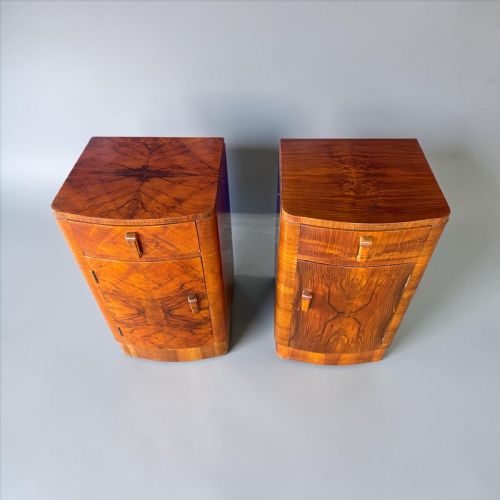
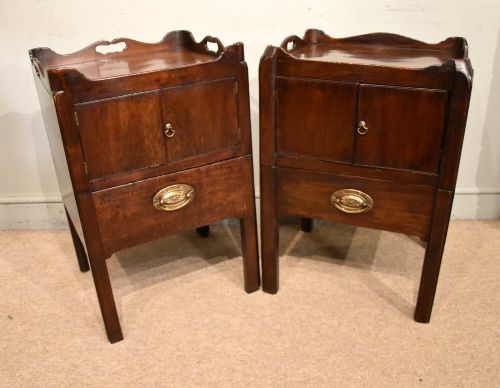
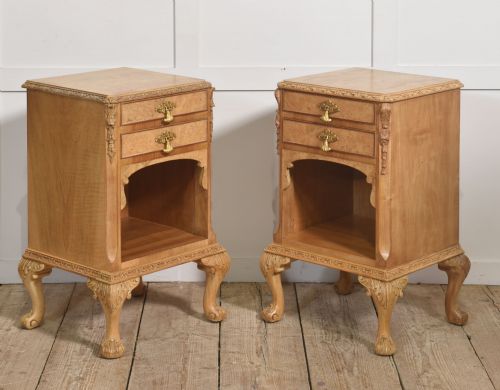
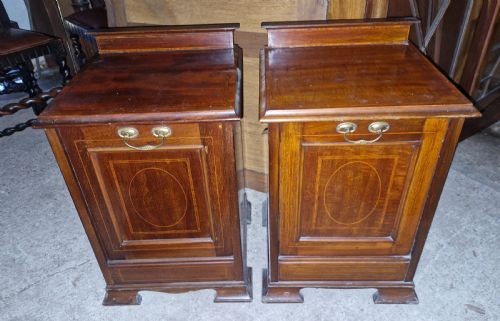
The selections span multiple historical periods, with Art Deco examples from the nineteen-thirties particularly prominent alongside Victorian, Edwardian, and eighteenth-century pieces. Materials range from mahogany and walnut to burr walnut, oak, pine, and exotic veneers like birdseye maple.
Origins vary from English workshops to French and Italian makers, often styled in revived Georgian, Regency, Queen Anne, or Sheraton forms. Many appear as matched pairs rather than original identical sets, offering a harmonious balance for the bedroom.
How they were made
Cabinet makers utilised solid timbers such as mahogany, oak, and pine alongside decorative figured veneers like burr walnut and birdseye maple. These veneers were carefully applied to carcases to create striking grain patterns across the doors and drawer fronts.
Construction techniques involved traditional joinery, brass fittings for handles and hinges, and occasional inlaid detailing in contrasting woods. Drum-shaped designs and cylindrical forms required specialist curved woodwork to achieve their smooth profiles.
Some nineteenth-century mahogany cabinets double as shoe storage, proving Victorians were masters of discreet bedside concealment.
What varies in quality
Quality rests in the choice of timbers and the precision of the veneer work, where superior examples display continuous or symmetrically matched grain patterns across both cupboards. The refinement of inlaid details and the weight and finish of original brass hardware further distinguish finer pieces.
Structural integrity depends on the joinery used in the carcase and drawer construction, separating robust everyday furniture from lighter decorative items. The closeness of the match in pairs that were assembled together over time also influences the overall cohesion of the set.
Regency Gillows
The Matching Bedside Cupboards Glossary
- Veneer
- A thin layer of finely figured wood applied to a secondary wood base to provide a decorative surface. Burr veneers utilise growth excrescences on trees to create swirling patterns.
- Breakfront
- A piece of furniture where the central section projects forward from the flanking sides. This architectural feature adds depth and shadow to larger wardrobe and cabinet combinations.
- Inlay
- The technique of embedding contrasting pieces of wood, brass, or other materials into the surface to form decorative patterns. Sheraton and Edwardian pieces frequently employ this method.
- Cylindrical
- Having a circular or rounded tubular shape, seen in nineteenth-century bedside pieces. These enclose storage behind curved doors that follow the contour of the carcase.
Matching Bedside Cupboards: Frequently Asked Questions
Are all pairs original?
Many pairs found today are actually matched sets assembled by dealers or previous owners rather than items originally sold together.
Close inspection of timber grain, dimensions, and hardware helps determine whether two pieces were created as a pair from the start.
What periods are most common?
Art Deco pieces from the nineteen-thirties dominate the available selection, frequently rendered in walnut, burr elm, or blonde maple.
Victorian and Edwardian mahogany or walnut examples also appear regularly alongside older eighteenth-century pieces.
How do drum-shaped cabinets open?
Drum-shaped bedside tables typically feature a curved door that swings open to reveal interior shelving or storage space.
Their circular design allows them to fit neatly beside various bed heights while concealing clutter.
Can I mix woods in a bedroom?
While matching pairs provide symmetry, mixing different wood tones depends on the overall palette and period styles within the room.
Mahogany and walnut offer rich dark warmth, whereas birdseye maple and blonde elm provide a lighter, more modern aesthetic.