


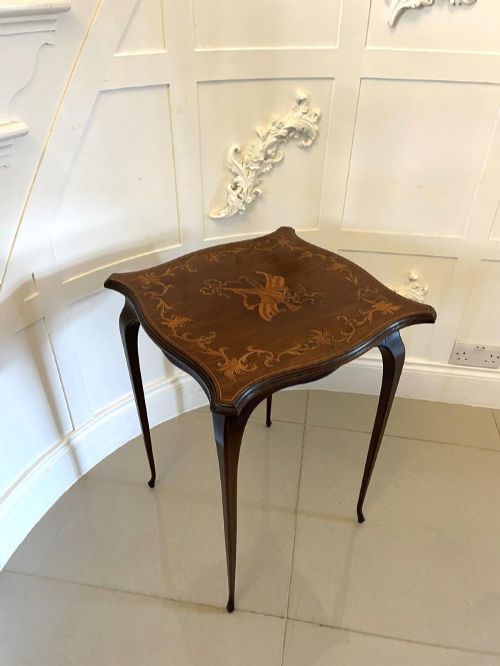
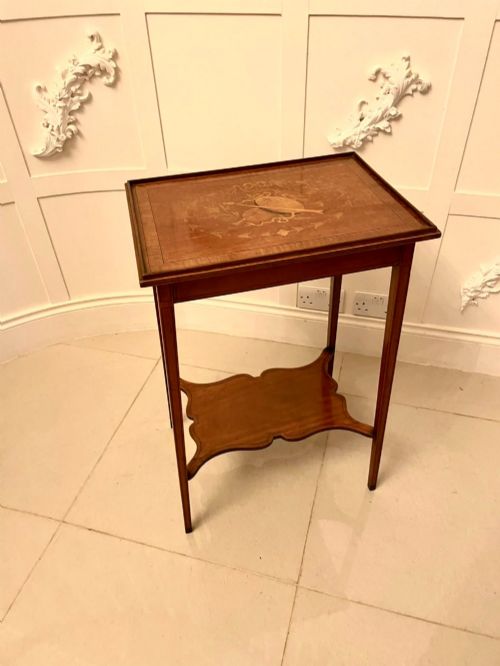
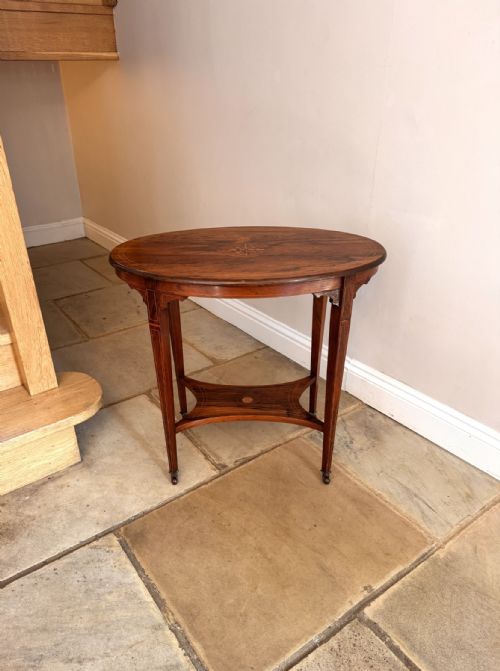
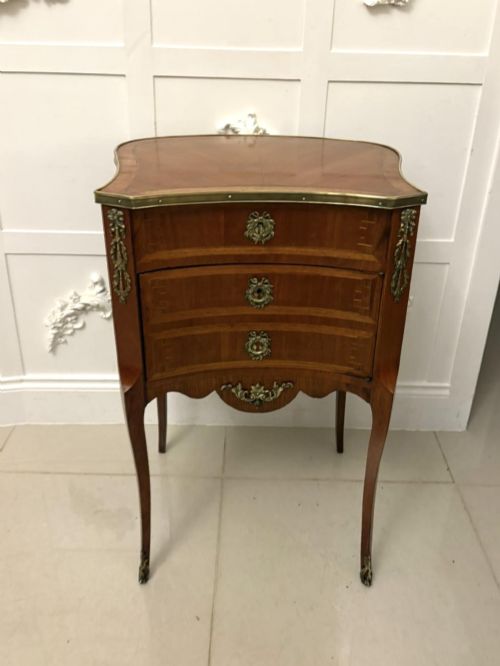

Marquetry Wood Accent Table
These marquetry wood accent tables combine intricate timber veneers with practical small-scale surfaces for display and daily use.
Marquetry Wood Accent Table
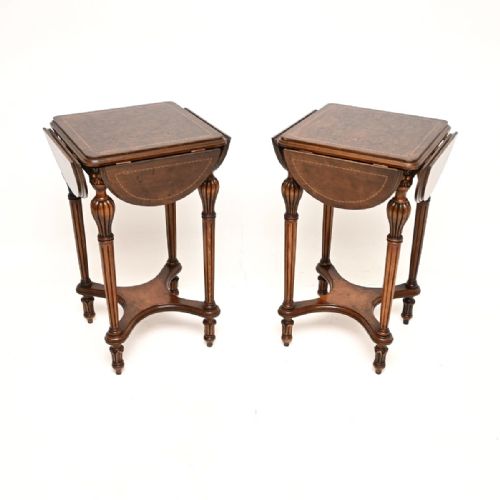
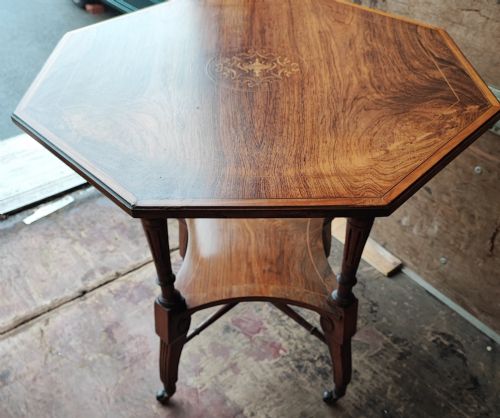
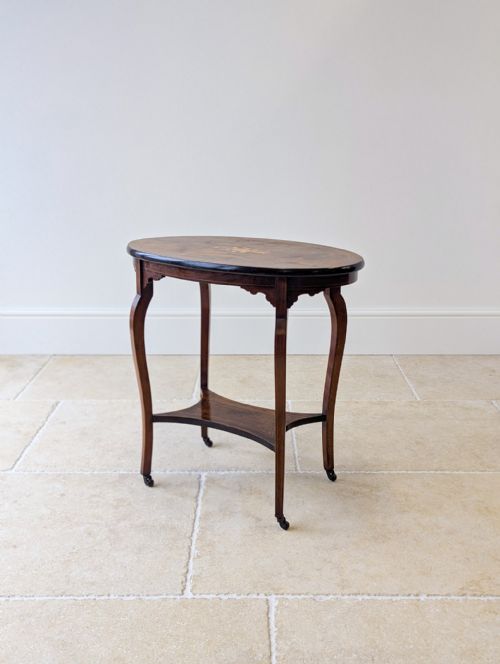
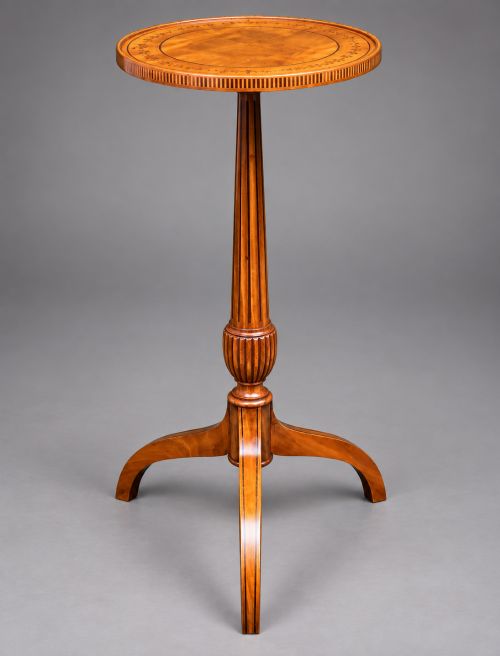
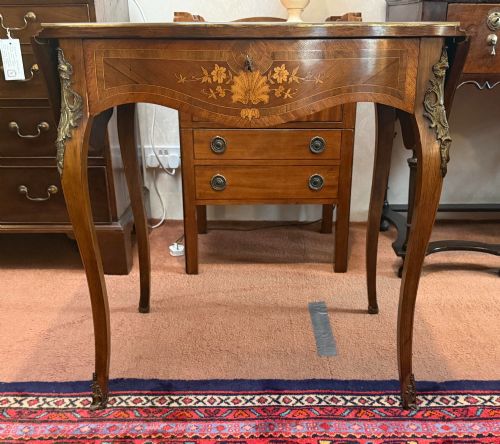
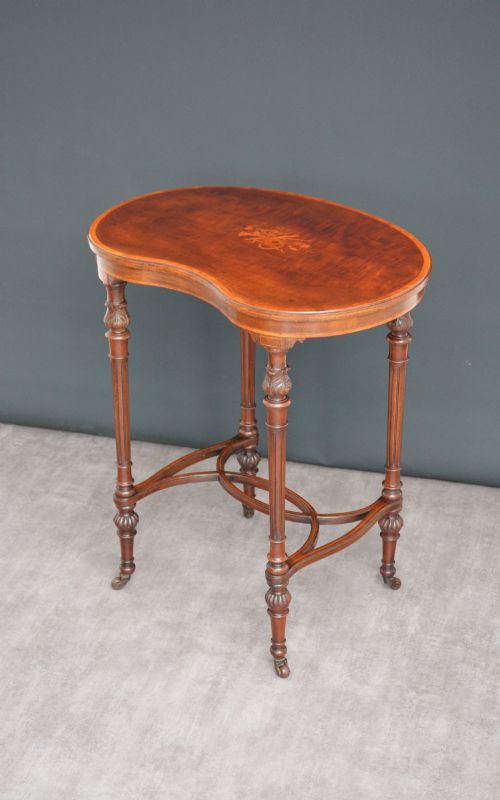
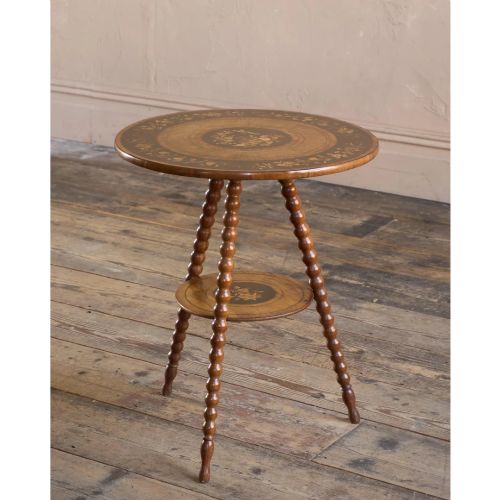
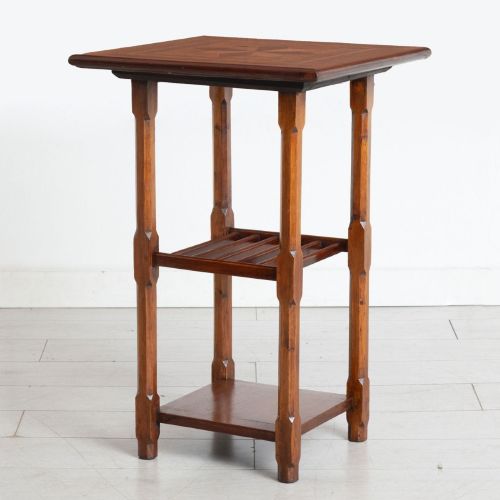
A marquetry wood accent table takes many forms across the selection, most frequently appearing as occasional tables, side tables, and nests of tables designed for domestic use.
The pieces span periods from the eighteenth century through the Edwardian era, showing influences ranging from French revival styles to British vernacular designs.
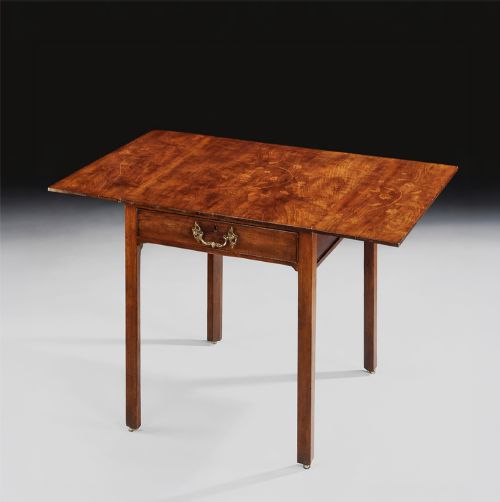
Makers utilised various timbers to create functional surfaces, including Pembroke tables, card tables, and tier tables suited to sitting rooms and parlours.
Materials and technique
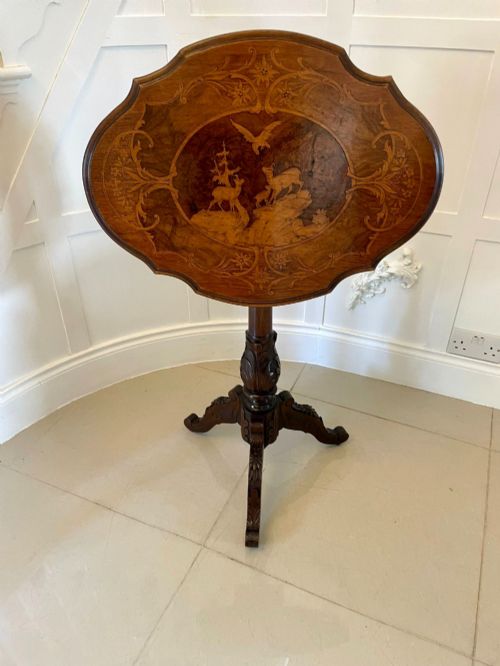
Cabinetmakers constructed these tables using a carcase of mahogany, walnut, or rosewood, applying contrasting veneers of satinwood, kingwood, and coromandel to form the pictorial or geometric surface patterns.
Many examples incorporate cast ormolu mounts, brass stringing, bone inlay, and ebonised wood to frame the detailed marquetry panels and support legs.
Joinery methods vary from simple turned supports and bobbin legs to complex pedestal bases and serpentine frames.
Marquetry Wood Accent Table Retail Price Guide 2026
Typical asking prices for marquetry wood accent table among the pieces listed under this phrase on Sellingantiques today, from the lower quarter to the upper quarter. They describe what is for sale here now, not the wider market.
Several tables incorporate tiny fragments of bone and specimen woods from distant lands, turning a humble tea surface into a portable cabinet of curiosities.
Defining quality
Quality rests upon the precision of the veneer work and the variety of timbers chosen by the maker to create tonal depth within the marquetry design.
The integration of secondary materials, such as finely chased ormolu mounts or delicate bone inlay, distinguishes standard production pieces from exhibition-grade works.
Liberty & Co.·François Linke·Émile Gallé·Anton Seuffert·George Bullock·Edwards & Roberts·Collingson & Lock
The Marquetry Wood Accent Table Glossary
- Marquetry
- Decorative veneer applied to a furniture structure in patterns or pictures. The technique relies on contrasting wood types fitted together precisely.
- Ormolu
- Gilded bronze used for mounts and decorative accents. It appears frequently on French revival pieces of the nineteenth century.
- Pembroke table
- A small table with hinged drop leaves on two opposing sides. These tables often feature inlaid tops and slender legs with castors.
- Ebonised wood
- Timber treated to resemble ebony. This dark finish provides a sharp visual contrast against lighter inlaid veneers and bone elements.
- Quartetto
- A matched nest of four tables designed to slide neatly beneath one another. They gained popularity during the Edwardian period.
Marquetry Wood Accent Table: Frequently Asked Questions
How do I date a marquetry wood accent table?
Dating relies upon timber selection, structural joinery, and the prevailing decorative style of the period. Pieces from the eighteenth century display different construction methods compared to Edwardian revivals.
Secondary woods and hardware details further clarify the exact decade of manufacture when the surface style offers mixed clues.
Where were these small tables used originally?
These tables served primarily in drawing rooms and parlours for holding lamps, books, tea services, or decorative objects. Their portable size allowed servants to reposition them easily.
Card tables and Pembroke versions offered adaptable surfaces that could expand or fold away depending on the immediate domestic requirement.
How do I care for antique wood veneers?
Maintenance requires stable indoor humidity and protection from direct sunlight to prevent the natural timber veneers from drying or fading. Regular dusting with a soft, dry cloth preserves the polished finish.
Avoid liquid cleaners and silicone polishes, which can penetrate hairline cracks in the historic lacquer and damage the underlying marquetry.
What is the difference between marquetry and parquetry?
Marquetry involves cutting and fitting various wood veneers to create pictorial scenes, floral motifs, or complex scrolls. It prioritises curves and illustrative detail.
Parquetry uses geometric shapes such as cubes, diamonds, or triangles to form repetitive patterns across the tabletop, often framed by contrasting stringing.