



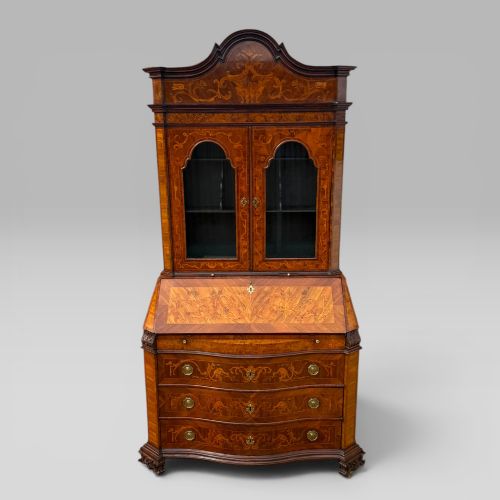

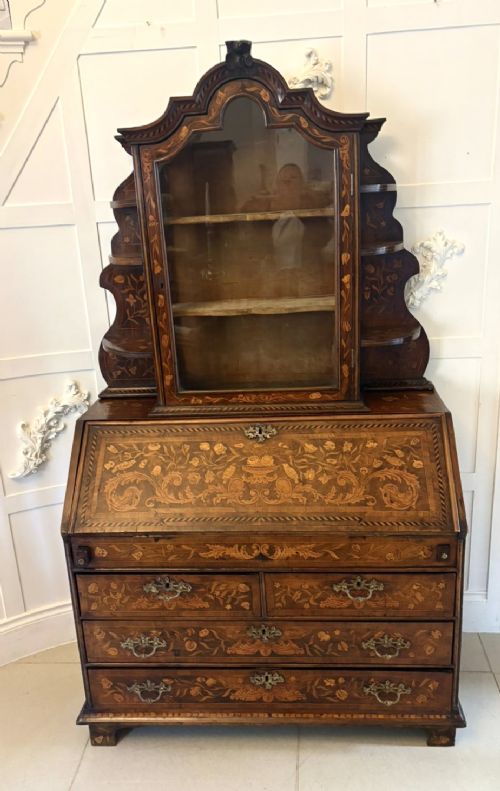


Marquetry Walnut Writing Cabinet
A marquetry walnut writing cabinet brings together precise timber craft and concealed writing surfaces, spanning Dutch Baroque forms to Victorian interpretations.
Marquetry Walnut Writing Cabinet
A search for a marquetry walnut writing cabinet reveals a diverse group of desks, bureau bookcases, and compact writing tables originating from the seventeenth century through the Victorian period. Bureau bookcases and cylinder desks dominate the selections, alongside smaller forms like the Davenport and the bonheur de jour.
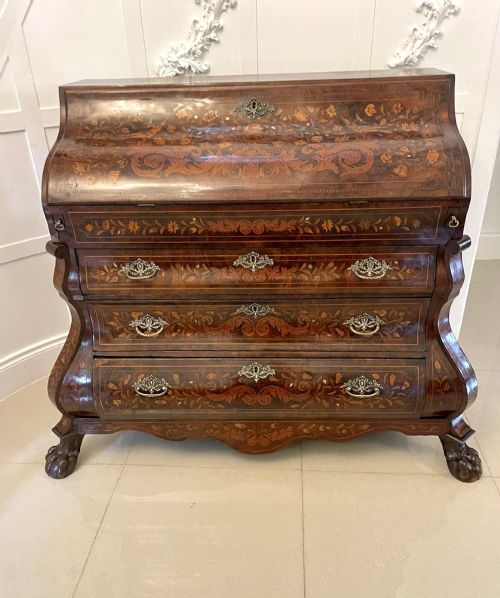
The regional variety spans English workshops, Dutch ateliers, and French cabinet makers, each interpreting the combination of walnut timber and pictorial inlay through distinct local styles. Dutch and German pieces frequently display bombe fronts and elaborate floral marquetry, while English examples favour restrained bureau cabinets and Davenport desks.
The evidence shows periods stretching from the seventeenth century through Georgian and Victorian revivals, meaning buyers encounter both centuries-old originals and nineteenth-century pieces executed in earlier idioms like William and Mary or Queen Anne styles.
Materials and Techniques
Makers constructed these pieces using solid walnut and burr walnut veneers, selected for rich grain patterns and applied over secondary timbers to form stable foundational carcases. Timber choice extends to fruitwood, kingwood, and tulipwood utilised specifically to create contrasting tones within pictorial marquetry panels.
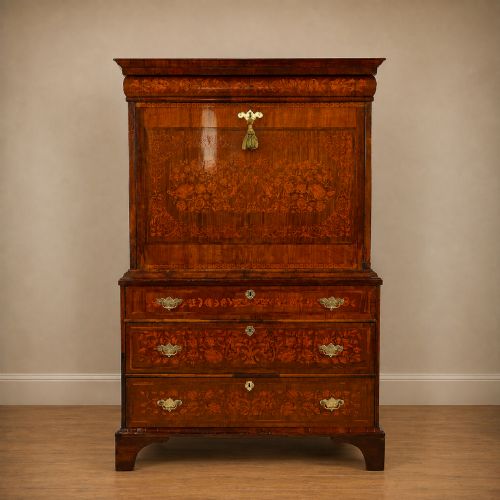
Marquetry and parquetry techniques required artisans to cut thin veneers of various woods by hand, assembling floral, geometric, or scrolling motifs before pressing them into recessed channels on the writing surface, fall front, or drawer panels.
Mounts in cast ormolu, gilt bronze, and brass enhance structural corners, key escutcheons, and gallery rails, while interior fittings often incorporate leather writing inserts and concealed compartments.
Listings feature walnut, burr walnut, fruitwood, and kingwood veneers combined with brass and ormolu mounts across Victorian and eighteenth-century periods.
Assessing the Workmanship
Quality rests upon the precision of the marquetry cutting and the integration of the veneer into the primary walnut carcase. Superior examples maintain tight junctions between contrasting wood species without visible filler, preserving crisp floral outlines and balanced natural grain movement.
Internal engineering dictates distinction across these cabinets, separating standard drawers from sophisticated pop-up mechanisms, tambour fronts, and fitted secretaire drawers with secret compartments. The harmony of secondary timbers and the crispness of brass or ormolu mounts further separate standard production from master craftsmanship.
Adriano Brambilla
The Marquetry Walnut Writing Cabinet Glossary
- Marquetry
- Decorative inlay technique using thin veneers of various woods, bone, or ivory to form pictorial or geometric designs on furniture surfaces. This method creates the elaborate floral and scrolling scenes seen across Dutch and French bureau cabinets.
- Burr Walnut
- Highly figured timber harvested from walnut tree growths, prized for swirling grain patterns. Cabinet makers utilised veneers of this material to cover large exterior surfaces for dramatic visual effect.
- Bombe
- A swelling, outward-curved contour characteristic of continental furniture. This curved profile appears frequently on eighteenth-century Dutch bureau bookcases.
- Secretaire Abattant
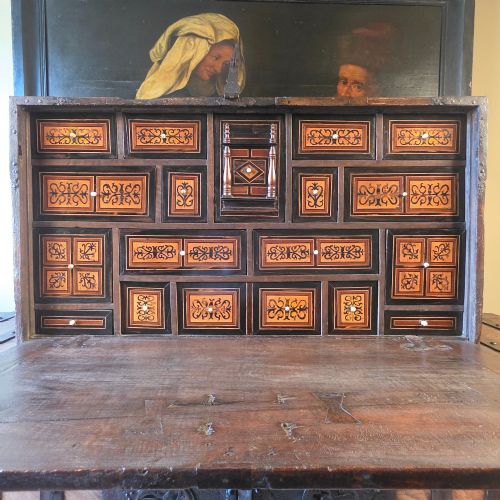
- A tall writing cabinet featuring a drop-front panel that conceals a fitted interior of small drawers and pigeonholes. These pieces often incorporate marble tops and gilt bronze mounts.
- Davenport
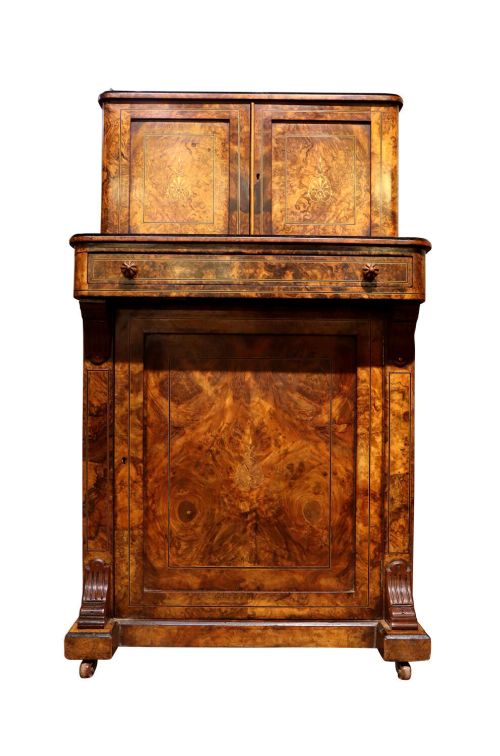
- A compact Victorian writing desk featuring a sloping, hinged desktop above a pedestal of drawers. Many versions include a stationery compartment on the upper rear section.
Marquetry Walnut Writing Cabinet: Frequently Asked Questions
What is a marquetry walnut writing cabinet?
A marquetry walnut writing cabinet is an antique desk or bureau featuring decorative wood veneer inlays and walnut construction. These pieces combine enclosed storage, shelving, or book-cases with a dedicated writing surface.
Such cabinets range from large bureau bookcases to compact ladies writing desks. They serve as functional desks while displaying intricate floral or geometric wood art.
How do you use a bureau bookcase?
A bureau bookcase combines upper display shelving with a lower writing desk equipped with a fold-down or cylinder fall front. The drop front creates an immediate writing desk surface over an arrangement of internal drawers and pigeonholes.
When not in use, the writing flap folds up to conceal correspondence and paperwork. The upper glass doors or open shelves store books and display decorative objects.
Where were these writing cabinets made?
These writing cabinets originated across several European regions, with significant representation from Dutch, English, French, and German workshops. Dutch makers specialised in bombe-fronted bureau bookcases with dense floral marquetry.
English cabinet makers produced walnut escritoires and Davenport desks often influenced by William and Mary or Queen Anne styles. French makers contributed bonheur de jour and secretaire abattant forms featuring ormolu mounts.
How do I distinguish eighteenth-century pieces from Victorian revivals?
Distinguishing period pieces from later revivals requires examining construction methods, secondary woods, and the ageing of the walnut veneers. Eighteenth-century examples display hand-cut dovetails and structural timbers appropriate to their specific regional origin.
Victorian revival pieces often utilise machine-sawn elements, nineteenth-century secondary timbers, and characteristic nineteenth-century hardware. The style of the marquetry and the specific finishing techniques provide further clues to the exact date of manufacture.