



Marquetry Tall Clock
A marquetry tall clock anchors a room with layered wood patterns and centuries of mechanical precision.
Marquetry Tall Clock
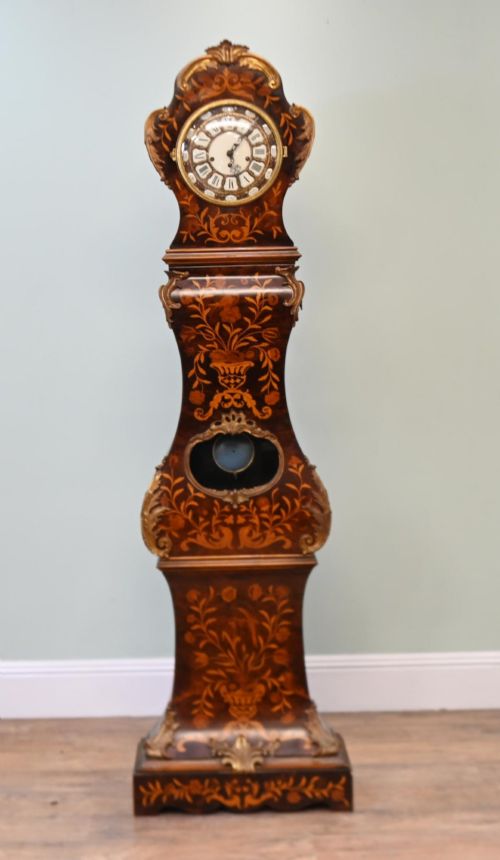
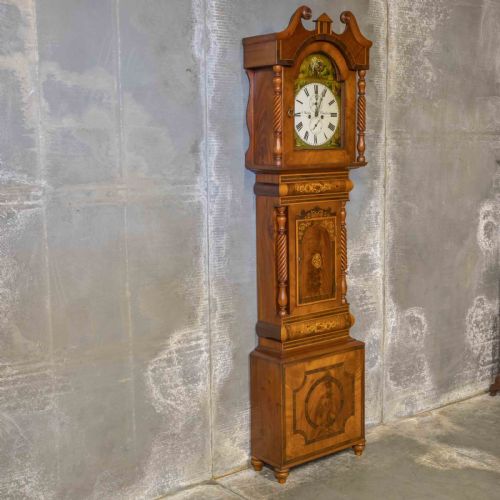
A marquetry tall clock combines a tall wooden case with detailed patterned wood veneers and a precision mechanical movement. These floor-standing pieces serve both as accurate timekeepers and as major decorative focal points within domestic spaces.
The examples gathered here span from the seventeenth century through the Victorian and Edwardian periods, crossing William and Mary, Georgian, and French Louis XV styles. Alongside traditional longcase and grandfather forms, the selection includes related items such as glass display domes.
Makers represented in these listings include historical figures such as Nathaniel Pyne, Edward East, Edward Stanton, Peter Wise, Henry Massy, and David Morice of Auchtermuchty. Their work demonstrates how regional British and continental workshops approached the craft of tall clock production.
Materials and construction methods
Cases utilise primary construction woods such as walnut, mahogany, and ebonised wood, which provide a stable structural foundation. Surfaces receive intricate marquetry inlay and satinwood details, creating contrasting pictorial or geometric patterns across the trunk and hood.
Mechanical elements incorporate brass for movements, dials, and fittings, while glass protects the delicate face and pendulum swing. Ormolu mounts appear on specific continental interpretations to highlight architectural joints and door bezels.
Marquetry Tall Clock Retail Price Guide 2026
Typical asking prices for marquetry tall clock among the pieces listed under this phrase on Sellingantiques today, from the lower quarter to the upper quarter. They describe what is for sale here now, not the wider market.
Listings feature woods like mahogany and walnut alongside marquetry inlay, spanning periods from the seventeenth century to the Edwardian era.
Distinctions in quality and execution
Quality rests upon the precision of the veneer work and the complexity of the botanical or figurative marquetry patterns across the door and trunk. Finer pieces demonstrate seamless integration of contrasting woods without lifting or excessive filler in the joints.
The movement itself determines mechanical merit, distinguishing standard production from signed examples by notable makers such as Edward East or Peter Wise. Superior examples maintain original dial formatting, clean engraving, and proportional cabinetry that respects the period style.
Nathaniel Pyne·David Morice of Auchtermuchty·Edward East·Edward Stanton·Peter Wise·Henry Massy·Sam Robson
The Marquetry Tall Clock Glossary
- Marquetry inlay
- Decorative veneer applied in patterns to wood surfaces. Skilled artisans cut thin slices of contrasting timber to form floral or geometric scenes.
- Longcase clock
- A tall pendulum clock enclosed in a wooden case. These freestanding items are frequently known as grandfather clocks.
- Ormolu
- Gilded bronze used for decorative mounts and accents. This technique adds metallic highlights to nineteenth-century continental pieces.
- Moon dial
- A specialised clock face mechanism tracking lunar phases. This addition appears on various regional Scottish and English longcase clocks.
Marquetry Tall Clock: Frequently Asked Questions
How do I wind a tall clock?
Most mechanical tall clocks require a key or crank to pull the weights back up to the top of the case every eight days.
Carefully insert the key into the winding hole on the dial and turn it steadily without forcing the mechanism beyond its natural stop point.
Where should I place a longcase clock?
Position the clock against an interior wall away from direct sunlight, heating vents, and damp areas to protect the wooden case and movement.
Ensure the floor beneath the clock is level so the pendulum swings evenly and the escapement ticks in a steady rhythm.
What is the difference between a longcase and a grandfather clock?
The terms are generally interchangeable, though longcase is the traditional British term used historically while grandfather clock became popular later.
Both describe tall floor-standing timepieces with enclosed weights and pendulums spanning various centuries and decorative styles.
How do I identify the period of a clock case?
Look to the overall silhouette, the style of the wood veneers, and the execution of the brass dial to determine the likely era.
Seventeenth-century pieces often feature walnut with floral marquetry, whereas later nineteenth-century examples may display mahogany or regional Scottish characteristics.