

Marquetry Study Desk
A marquetry study desk brings patterned wood veneers and a dedicated writing surface into a room.
Marquetry Study Desk
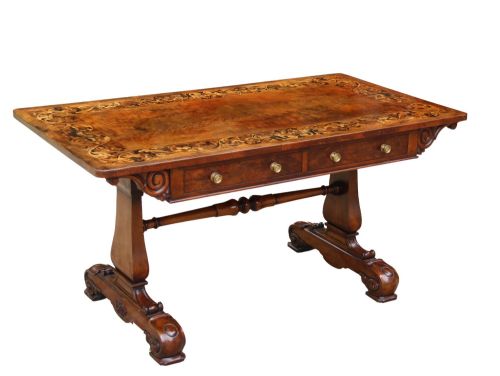
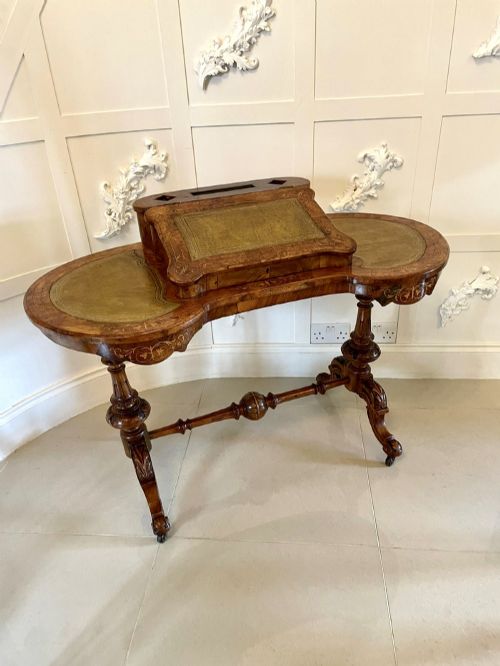
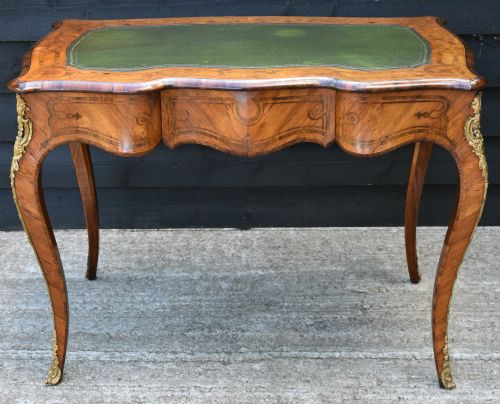
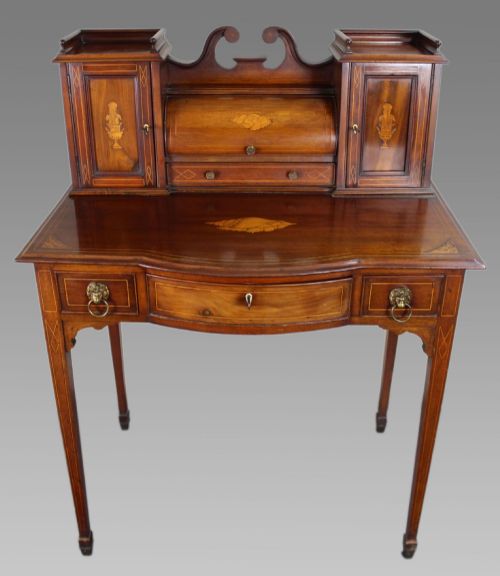
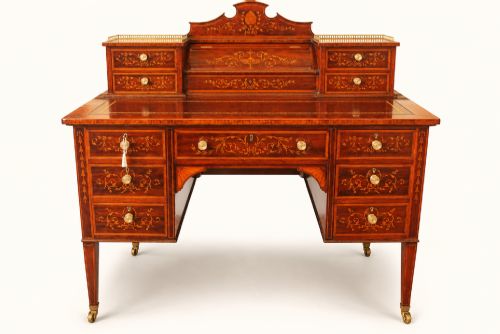
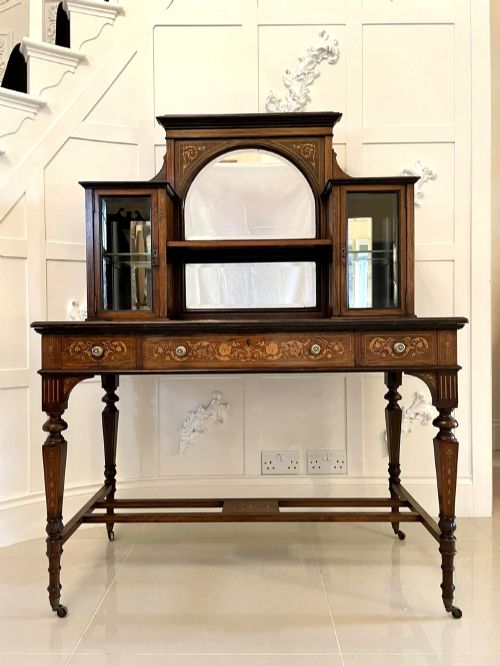
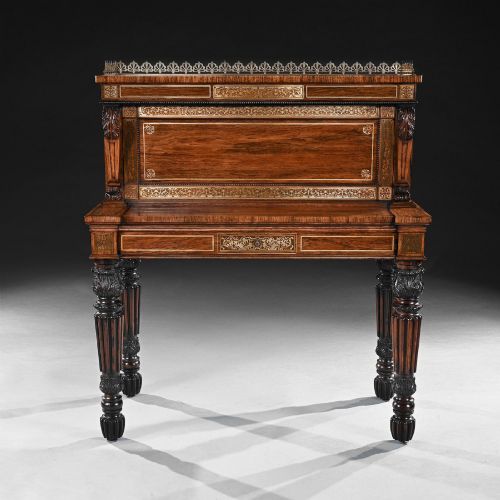
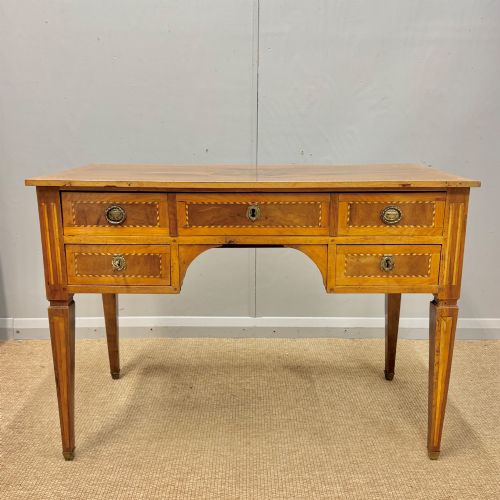
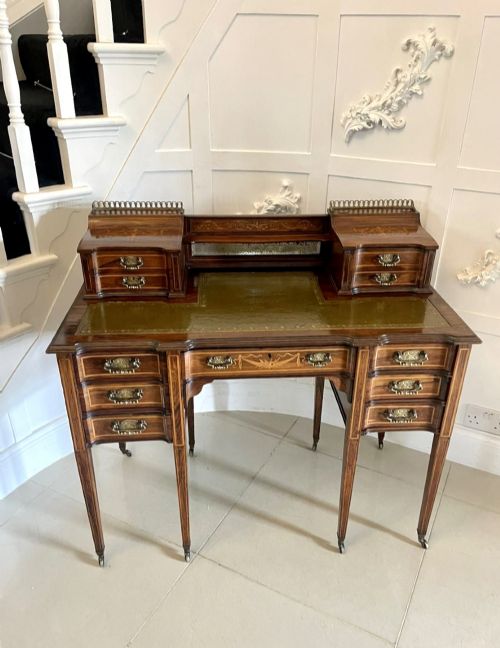
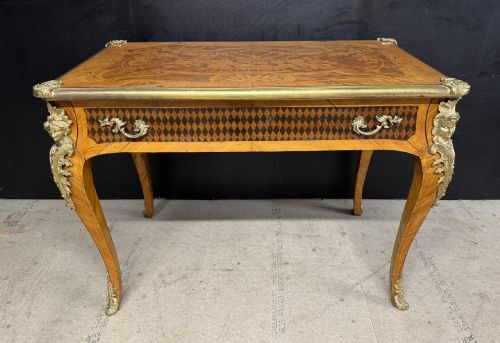
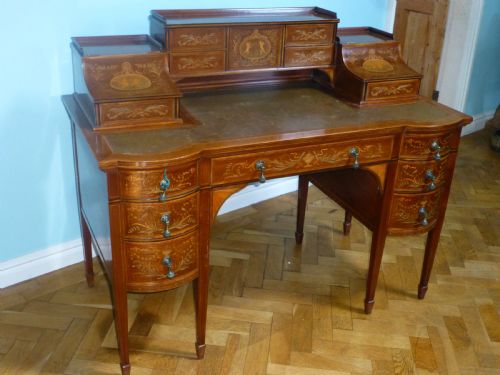
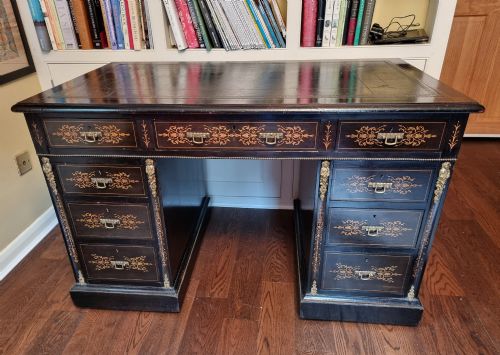
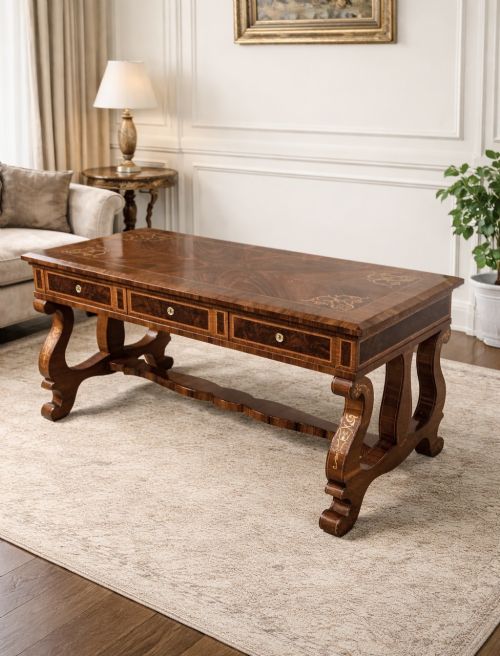
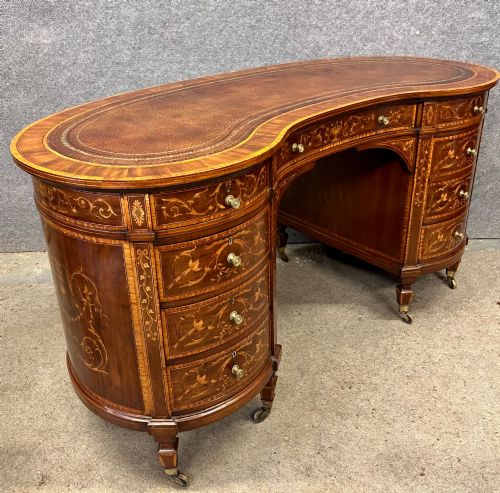
A marquetry study desk combines a functional writing surface with decorative wood veneers arranged in pictorial or geometric patterns. These pieces appear frequently in Victorian and Edwardian iterations, spanning forms from kidney-shaped tables to Carlton House desks and bureau plats.
Makers often shaped these surfaces for specific domestic or study tasks, incorporating inset leather writing panels and multiple small drawers. The structural forms draw heavily on Sheraton Revival and Louis XV styles, reflecting French and English cabinet-making traditions from the nineteenth and early twentieth centuries.
Materials and construction
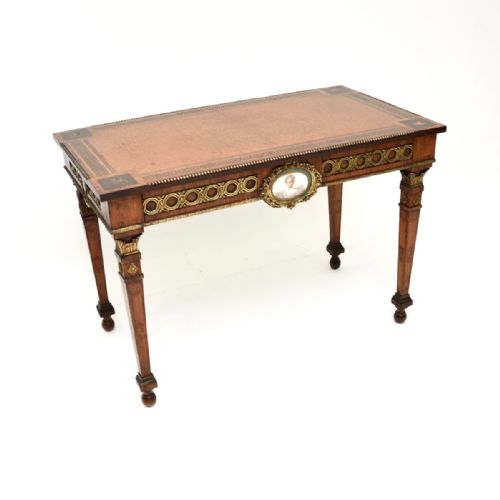
Cabinet-makers laid fine veneers of satinwood, kingwood, rosewood, walnut, and mahogany over solid secondary timbers to create the characteristic surface patterns. These woods were hand-cut and fitted together, then enhanced with brass mounts, ormolu, and leather writing inserts.
The construction relies on traditional joinery techniques combined with precise veneer work. Workshops often applied contrasting woods such as maple to outline the marquetry panels and structural edges.
Marquetry Study Desk Retail Price Guide 2026
Typical asking prices for marquetry study desk among the pieces listed under this phrase on Sellingantiques today, from the lower quarter to the upper quarter. They describe what is for sale here now, not the wider market.
Listings feature nineteenth and early twentieth-century pieces utilising mahogany, walnut, rosewood, satinwood, and kingwood.
Judging quality
Quality depends on the precision of the veneer matching and the complexity of the floral or geometric marquetry. Finer examples display meticulous hand-cut timber alignment and substantial secondary woods rather than thin surface prints.
Edwards & Roberts·Gillows Oxford Street Workshop·Maple & Co·Gill & Reigate·James Shoolbred of London
The Marquetry Study Desk Glossary
- Marquetry
- The art of applying decorative veneer pieces to a wooden structure to form pictorial or geometric designs. This technique defines the visual character of the surfaces.
- Bureau Plat
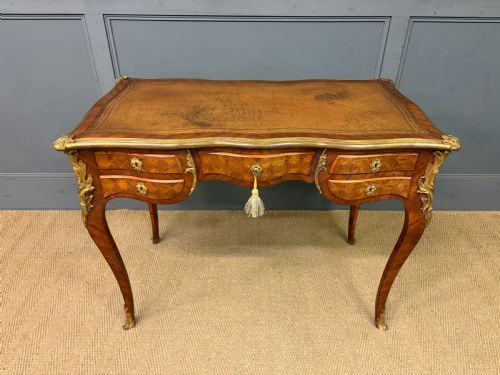
- A freestanding French writing table featuring a rectangular top and one or more drawers in the frieze. These pieces typically stand on cabriole or tapered legs.
- Carlton House Desk
- A Davenport-style or horseshoe-shaped writing desk featuring a stepped superstructure of small drawers and compartments around the back and sides. This form dates predominantly to the late eighteenth and nineteenth centuries.
- Ormolu
- Gilded bronze mounts applied to furniture for decoration and edge protection. Makers cast and chased these metal elements by hand.
- Satinwood
- A durable tropical timber with a lustrous golden-yellow sheen used extensively in cabinet-making for veneers and stringing.
Marquetry Study Desk: Frequently Asked Questions
What is a marquetry study desk?
A marquetry study desk is a fitted writing surface decorated with detailed wood veneer patterns. These tables serve as both functional workspaces and decorative furniture.
Most examples originate from the nineteenth and early twentieth centuries, drawing on French and English revival styles.
How do I identify a bureau plat?
A bureau plat is a freestanding writing table with a flat top, often inset with leather, and drawers set into the lower frame. These desks are finished on all sides so they can stand in the middle of a room.
They frequently feature ormolu mounts and cabriole legs.
Where were these desks placed?
These desks were designed for studies, libraries, and drawing rooms where writing and correspondence took place. Freestanding models sat away from walls to display their veneered backs.
Smaller kidney-shaped and Davenport variants were often used in private sitting rooms.
How do I care for the leather top?
The leather writing surface benefits from gentle dusting and occasional conditioning with specialised leather balms. Avoid exposing the hide to direct sunlight or excessive moisture.
Care should also be taken to protect the surrounding wood veneer from liquid spills.