


Marquetry Rosewood Nightstands
Marquetry rosewood nightstands bring together rich woods and detailed floral inlays, offering both practical bedside storage and decorative presence.
Marquetry Rosewood Nightstands
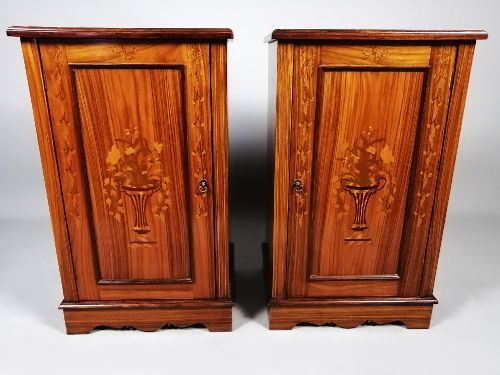
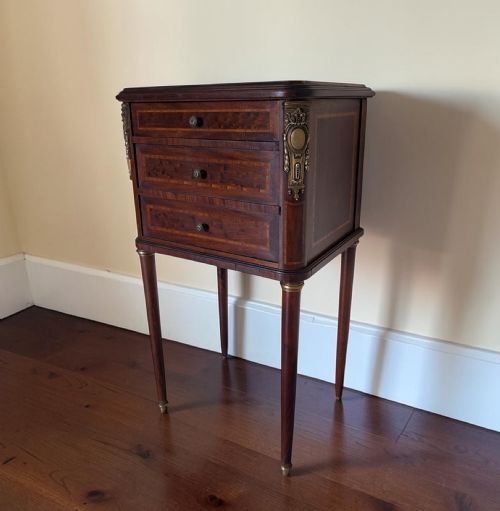
When you search for marquetry rosewood nightstands, you encounter a selection of nineteenth and early twentieth century bedside cabinets, side tables, and cupboards. These pieces predominantly date from the Victorian and Edwardian eras, alongside pieces executed in French Louis XV and Louis XVI styles.
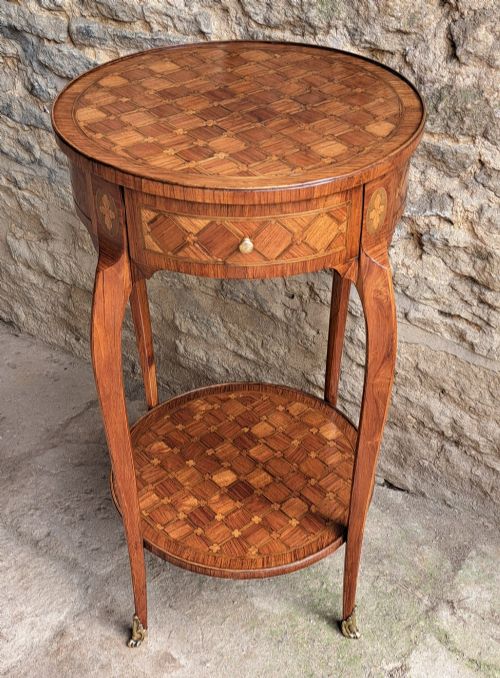
The form most frequently met on this page is the bedside cabinet, often appearing in matched pairs. Alongside these enclosed cupboards, you find open occasional tables and kidney shaped side tables incorporating intricate surface decoration.
Origin plays a notable role in the selection, with several examples reflecting French taste from the nineteenth century. Makers and cabinet makers of the period utilised these varied forms to showcase complex timber inlays within domestic sleeping quarters.
Judging quality and craftsmanship
Quality rests upon the precision of the marquetry and the choice of timbers used in the surface design. Finer examples display tight joins in the contrasting wood veneers and articulate floral detailing without gaps or heavy adhesive filler.
The structural integrity of the carcase and the retention of original hardware distinguish superior items. Cabinets with matching grain direction, sound door alignment, and original brass fittings demonstrate higher standards of nineteenth century workshop production.
Several Victorian tables sport kidney shapes, proving that nineteenth century designers understood the value of avoiding bruised shins in the dark.
Collinson & Lock
The Marquetry Rosewood Nightstands Glossary
- Marquetry
- Decorative veneer work arranged in pictorial or geometric patterns across a wooden surface. Craftsmen cut various coloured woods together to fit tightly within a designed motif.
- Rosewood
- A dense, heavily figured dark timber valued for its rich grain and purplish brown coloration. It serves as the primary ground material for many nineteenth century cabinet pieces.
- Kingwood
- A hard, richly coloured timber featuring violet and dark brown stripes. It is frequently employed alongside rosewood to create contrast in banded inlay work.
- Ormolu
- Gilded bronze applied as decorative mounts and hardware on furniture. It enhances the visual presentation of French style tables and cabinets.
- Satinwood
- A pale, lustrous exotic timber utilised for fine stringing and contrasting details within floral marquetry panels.
Marquetry Rosewood Nightstands: Frequently Asked Questions
Are these nightstands sold as pairs?
Many of the bedside cupboards and cabinets listed appear as matching pairs, though single tables also occur in the selection.
Buyers seeking symmetrical bedside placement will find several dual configurations originating from the Victorian period.
What periods do these pieces date from?
The pieces span the nineteenth and early twentieth centuries, encompassing Victorian, Edwardian, and specific continental design revivals.
Dates recorded across the selection generally range from the eighteen seventies through to the nineteen twenties.
How do I care for rosewood furniture?
Rosewood surfaces benefit from minimal exposure to direct sunlight and stable indoor humidity to prevent timber movement.
Gentle dusting with a dry cloth preserves the polished finish without requiring heavy wax applications.
What is the difference between marquetry and inlay?
Marquetry involves covering a surface with an entire mosaic of veneer pieces forming a complete picture or pattern.
Inlay generally refers to setting pieces of wood into a pre-cut recess within a solid or veneered background.