



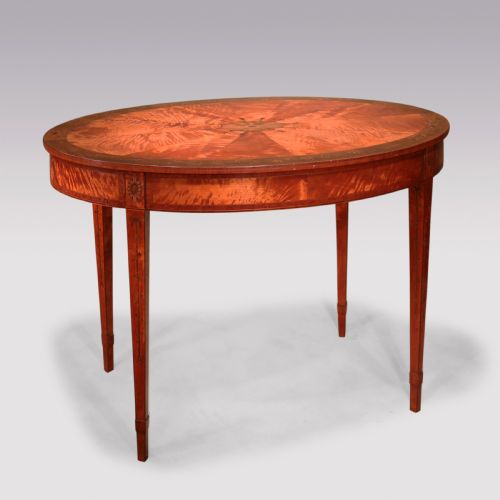
Marquetry Oval Coffee Table
A marquetry oval coffee table brings warmth and intricate woodwork to a sitting room, offering a distinct surface shaped by centuries of cabinet-making tradition.
Marquetry Oval Coffee Table
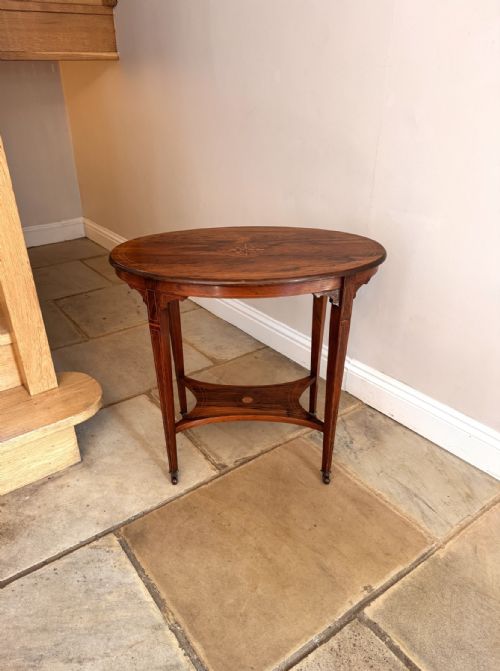
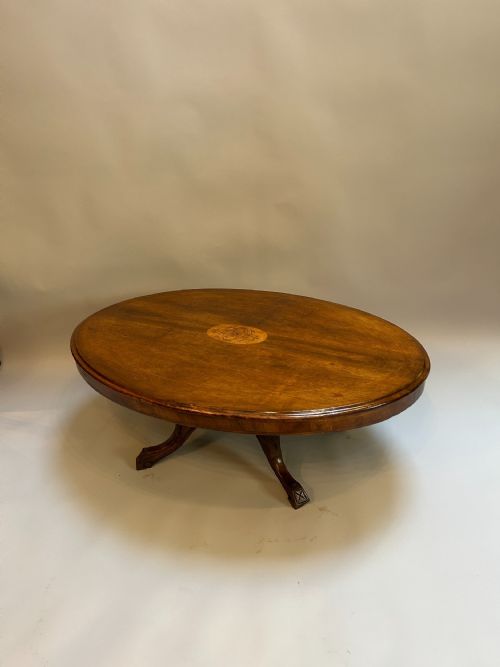
When you search for a marquetry oval coffee table, you are looking at low tables designed for living spaces, though many examples began life as Victorian or Edwardian occasional tables, centre tables, or even trays set upon stands. The form is defined by its curved oval top, which softens the geometry of a room while providing a useful surface for daily use.
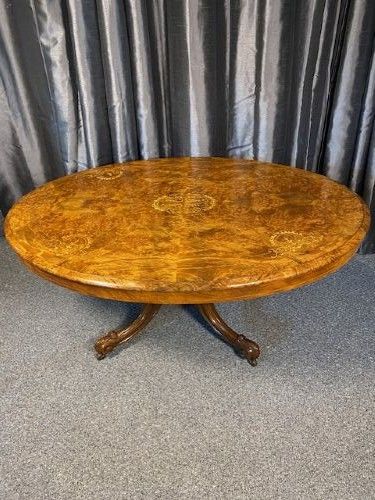
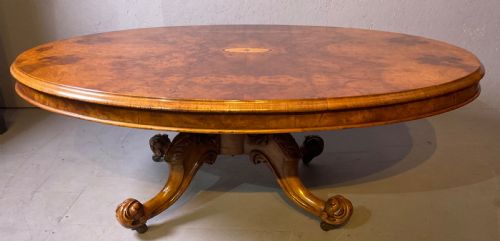
Most pieces you will encounter date from the nineteenth century and the early twentieth century, spanning the Victorian and Edwardian periods as well as Sheraton Revival and French styles. Makers often worked in mahogany, burr walnut, rosewood, and satinwood, applying detailed boxwood inlay to create geometric patterns, floral motifs, or classical scenes across the tabletop.
The height of these tables varies, as nineteenth-century occasional and centre tables were frequently adapted later in their lifespan to suit standard coffee table heights. You will find variations ranging from simple four-legged frames and hand-carved bases to modern cast iron tripod supports paired with antique walnut tops.
How they were made
Cabinet-makers constructed these tables using a timber carcase of mahogany, walnut, or satinwood, often selecting burr veneers for the top to display rich, swirling grain patterns. The distinct oval shape was carefully sawn and edged with solid timber moulding to protect the vulnerable end-grain.
Marquetry and inlay involved recessing thin slices of contrasting woods, such as boxwood and rosewood, into hand-cut channels within the surface veneer. Artisans then glued, clamped, and scraped the panel flat before finishing it with traditional polishes that highlighted the natural tone of each timber species.
Some tables cleverly disguise tea trays as furniture, ready to be lifted off their stands at a moment's notice.
What varies in quality
Quality in a marquetry oval coffee table lies in the precision of the veneer work and the crispness of the boxwood inlay. Superior examples show seamless joints between contrasting timbers with no visible gaps or heavy filler, whereas simpler pieces rely on painted lines or basic stamped motifs.
The choice of primary wood and the integrity of the base structure also dictate the standing of the piece. Tables retaining their original hand-carved wooden legs and stable framework represent a higher standard of craftsmanship than those altered with replacement pedestals or modern metal bases.
Edwards and Roberts
The Marquetry Oval Coffee Table Glossary
- Marquetry
- The art of applying fitted pieces of veneer to a structural panel to form decorative patterns and pictures. This technique allows craftsmen to utilise the contrasting colours of various exotic timbers.
- Occasional table
- A small, movable table designed for a specific, minor function in a room. These versatile pieces were frequently adapted into coffee tables during the twentieth century.
- Satinwood
- A hard, durable timber with a characteristic golden-yellow sheen and a satin-like lustre. It was heavily utilised during the Sheraton Revival period for light, elegant furniture.
- Burr walnut
- Wood taken from a tree growth or wart, yielding highly figured swirling patterns. Cabinet-makers prized this material for creating decorative tabletops.
- Boxwood
- A dense, pale yellow wood frequently used for fine inlay work and stringing. Its uniform grain allows for sharp, precise cutting in intricate marquetry designs.
Marquetry Oval Coffee Table: Frequently Asked Questions
Are these original coffee tables?
Many pieces sold as coffee tables today actually started as nineteenth-century occasional tables, centre tables, or serving trays placed upon custom stands. Cabinet-makers of earlier eras did not build low tables in the modern sense, so period items are routinely adapted to modern heights.
This adaptation process is standard practice within the antique trade and allows historic woodwork to function in contemporary living rooms. Buyers should examine the junction between the top and the base to understand how the piece was converted.
How do I care for marquetry?
Marquetry surfaces require protection from direct sunlight, excessive heat, and moisture to prevent the delicate veneers from lifting or cracking. Using coasters and table runners helps safeguard the antique polished finish from daily wear.
Applying a traditional beeswax polish occasionally maintains the moisture of the wood and enhances the natural grain of the timber. Avoid modern silicone sprays, which can penetrate old finishes and damage the underlying glues.
How do I distinguish Victorian from Edwardian pieces?
Victorian tables, dating from the mid to late nineteenth century, often feature darker timbers like burr walnut and mahogany, accompanied by heavier carved elements and dense marquetry. They tend to have a substantial presence in the room.
Edwardian pieces, made around the turn of the twentieth century, frequently utilise lighter satinwood and rosewood in the Sheraton Revival style. These later tables often display more restrained neoclassical details and slender tapered legs.
Can I use a tray on stand daily?
Trays and platters mounted on folding or fixed stands function well for serving or display, provided the supporting frame remains stable. The joint where the tray meets the stand takes the weight of objects placed upon it.
Ensure the stand is level on your floor to prevent rocking, which stresses the historical fixings. Regular gentle use will not harm a sturdy tray, but heavy loads should be avoided.