



Marquetry Music Stand
A marquetry music stand brings decorative timber work and practical sheet storage together, offering a traditional piece for any room.
Marquetry Music Stand
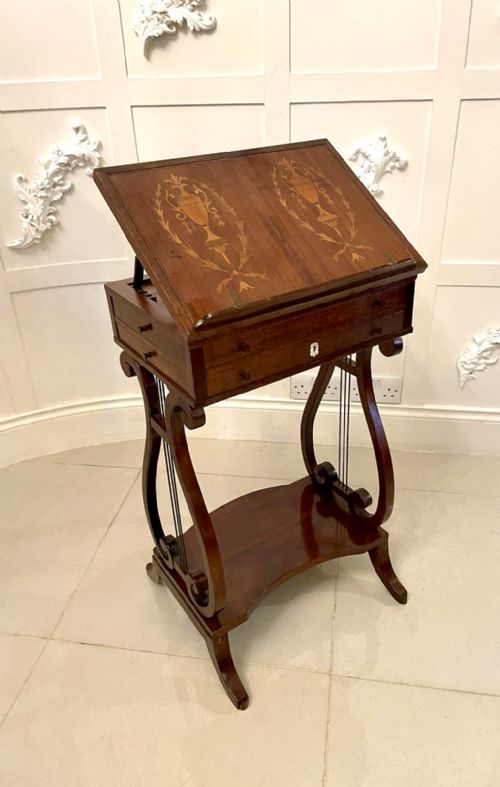
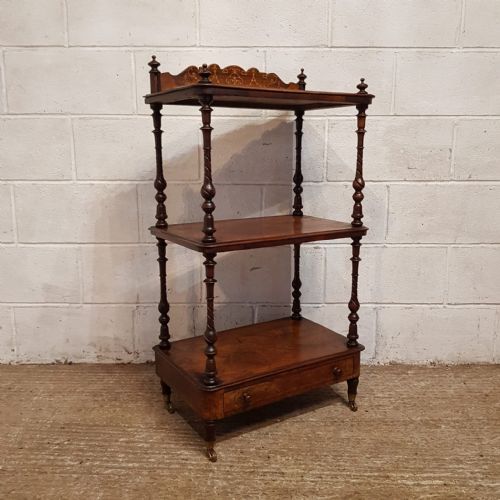
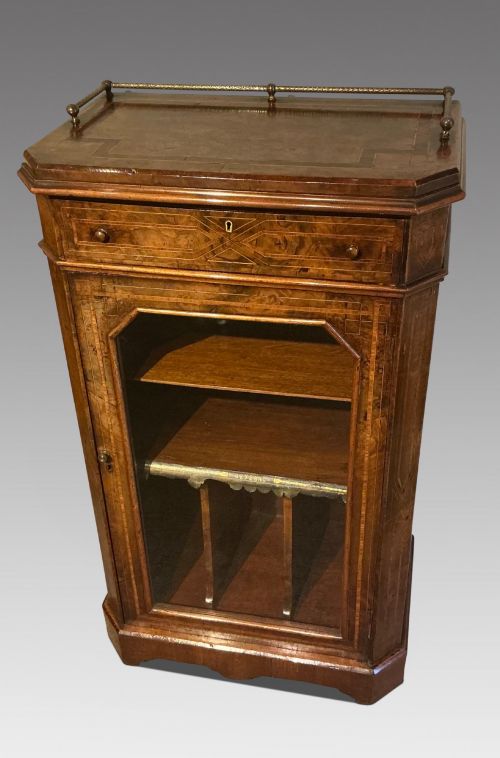
When searching for a marquetry music stand, buyers encounter a variety of forms including music cabinets, canterburys, reading tables, and traditional stands designed for holding scores and folios. These pieces span several distinct periods, with Victorian and Edwardian examples appearing most frequently across the inventory.
The objects take many shapes, from upright cabinets and side cabinets to open racks, lyre-shaped stands, and rotating tables. Walnut, burr walnut, mahogany, and rosewood form the main structural timbers for these items, often decorated with contrasting inlays.
How they were made
Cabinet makers utilised dense hardwoods such as mahogany, walnut, and rosewood as the foundational base for these stands and cabinets. Satinwood, burr walnut, and various exotic timbers were then cut into thin veneers to create intricate marquetry patterns across the surfaces.
Brass fittings, glass doors, and mirrored panels frequently complement the woodwork, particularly on cabinet forms intended to display or store sheet music securely. Joinery techniques relied on traditional cabinet-making standards of the nineteenth and early twentieth centuries to ensure stability.
Marquetry Music Stand Retail Price Guide 2026
Typical asking prices for marquetry music stand among the pieces listed under this phrase on Sellingantiques today, from the lower quarter to the upper quarter. They describe what is for sale here now, not the wider market.
Listings feature pieces spanning the Victorian, Edwardian, and Regency periods, constructed from burr walnut, mahogany, rosewood, and satinwood.
What varies in quality
The sophistication of the timber selection and the precision of the marquetry inlay dictate the distinction between standard items and finer examples. Richly figured burr walnut and carefully contrasted satinwood details indicate a higher standard of craftsmanship.
The structural complexity of the piece, whether a simple lyre stand or a multifaceted music cabinet with internal partitions, also alters the character of the object. Superior execution shows in the crispness of the inlaid motifs and the harmony of the secondary woods.
The Marquetry Music Stand Glossary
- Marquetry
- Decorative veneer work arranged in pictorial or geometric patterns across a wooden surface. This technique employs various contrasting timbers to create complex ornamentation.
- Canterbury
- A low stand featuring vertical partitions, originally designed for holding sheet music or books. These pieces often incorporate drawers and turned legs.
- Burr Walnut
- Timber taken from a walnut tree growth, prized for its swirling grain patterns. Cabinet makers used veneers of this wood to create striking decorative panels.
- Satinwood
- A luminous hardwood with a golden yellow sheen, frequently utilised for inlay work and stringing on mahogany and rosewood furniture.
Marquetry Music Stand: Frequently Asked Questions
What is a music canterbury?
A music canterbury is a low compartmentalised stand designed to hold sheet music, folios, and magazines within easy reach. They often feature castors and small drawers beneath the main partitions.
Victorian and Edwardian makers produced these in woods such as walnut and mahogany, frequently adding marquetry inlays to the top surface.
How do I date a music cabinet?
Dating relies on observing the primary timber, the style of the legs, and the nature of the inlay work. Victorian pieces often showcase burr walnut, while Edwardian examples frequently feature mahogany or satinwood.
Construction details and hardware also provide clues, shifting from mid-nineteenth-century solidity to lighter early twentieth-century proportions.
What woods were used for marquetry?
Makers employed a wide selection of contrasting timbers to achieve tonal variation in the marquetry designs. Common choices include mahogany, walnut, rosewood, and lighter satinwood for highlights.
Specialist woods like Gonçalo Alves and Amboina also appear on more decorative pieces from the nineteenth century.
Are music stands suitable for modern use?
These cabinets and stands fit well into contemporary interiors as storage units for sheet music, vinyl records, or general papers. Their compact footprints make them practical beside pianos, desks, or seating areas.
The enclosed cabinets keep contents tidy while displaying the decorative woodwork on top.