



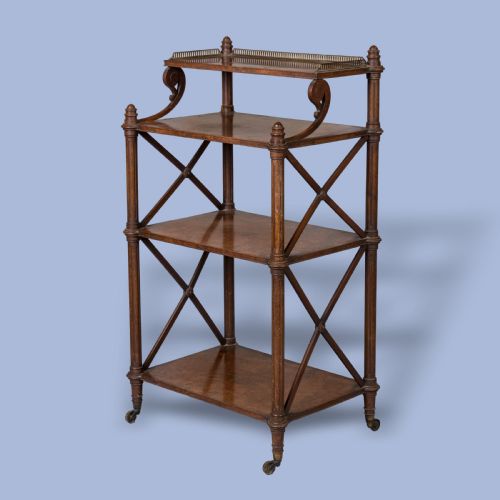


Regency Style Book Stands
These regency style book stands and associated waterfall bookcases bring architectural order and rich timbers to any room.
Regency Style Book Stands
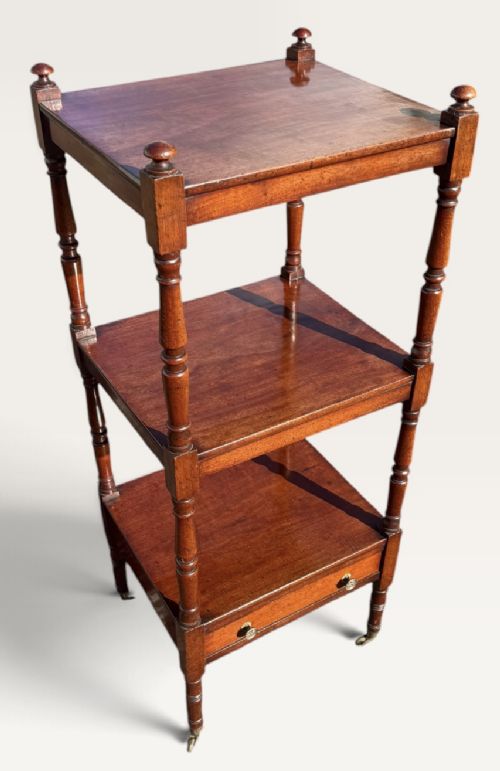
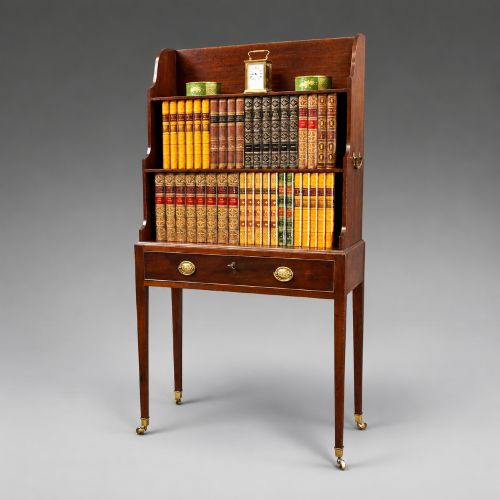
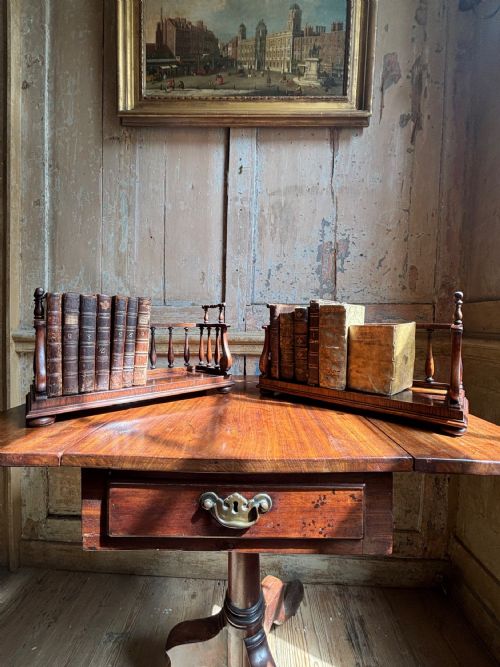
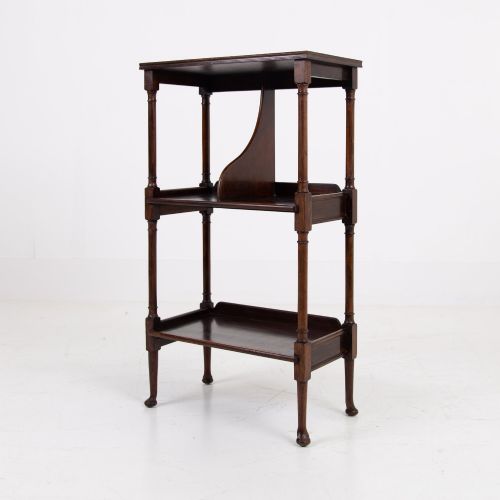
When buyers search for regency style book stands, they encounter tiered open furniture designed for display and practical reading storage. The selection spans compact table stands, multi-tier whatnots, and taller waterfall bookcases.
The pieces on this page draw principally on Regency, Georgian, and Victorian aesthetics, with revival interpretations appearing alongside earlier forms. Mahogany and rosewood dominate the material record, frequently joined by inlaid details and painted surfaces.
Makers and workshops of the nineteenth century produced these items to serve libraries, drawing rooms, and studies. The forms range from simple open shelves to complex revolving or adjustable stands fitted with brass mounts.
How they were made
Cabinetmakers constructed these pieces primarily using dense hardwoods such as mahogany and rosewood, often enhanced with contrasting stringing and intricate inlay. Timber selection dictated the structural integrity of slender uprights and tiered platforms.
Metalwork played a key structural and decorative role, with cast brass mounts, ormolu accents, and gallery rails securing books and adding weight to smaller table stands. Joinery methods relied on traditional housing and dovetail techniques suited to multi-tier weight distribution.
Regency Style Book Stands Retail Price Guide 2026
Typical asking prices for regency style book stands among the pieces listed under this phrase on Sellingantiques today, from the lower quarter to the upper quarter. They describe what is for sale here now, not the wider market.
Some nineteenth-century makers evidently believed that books deserved their own miniature architecture.
What varies in quality
The refinement of timber figure and depth of grain set the finest examples apart from standard production. Richly grained rosewood and figured mahogany indicate superior material selection by the maker.
Precision in the brass mounts and the crispness of turned supports distinguish high-status pieces from simpler workshop output. Proportions remain harmonious across superior stands, whereas lesser versions can appear heavy in the uprights or tiers.
Gillows
The Regency Style Book Stands Glossary
- Waterfall bookcase
- A tiered set of open bookshelves where each successive shelf steps back from the one below. This stepped profile creates a cascading visual effect popular in the nineteenth century.
- Whatnot
- A piece of open shelving furniture with multiple tiers supported by slender columns or uprights. It was used to display books, ornaments, and small decorative objects in principal rooms.
- Ormolu
- Gilded bronze or brass applied as decorative mounts and feet on fine furniture. The technique involves mercury gilding on early pieces or electroplating on later revivals.
- Inlay
- A decorative technique where contrasting woods, brass, or shell are fitted flush into the primary surface timber. It defines panel borders and friezes on Regency and Victorian case furniture.
Regency Style Book Stands: Frequently Asked Questions
How were book stands used?
These stands held working libraries close to reading chairs, desks, or beds in period interiors.
Smaller table models supported open volumes at a comfortable angle, while larger variants organised reference books.
How do I date a whatnot?
Dating relies on timber choice, turning styles on the upright columns, and assembly methods.
Earlier pieces utilise solid mahogany and rosewood with hand-cut joinery, while revival items from later decades often display machine-tooled details.
Where should I place a book stand?
These compact pieces suit studies, hallways, and drawing rooms where floor space is limited.
Open shelves allow books to remain accessible while displaying the grain of rosewood and mahogany against interior walls.