



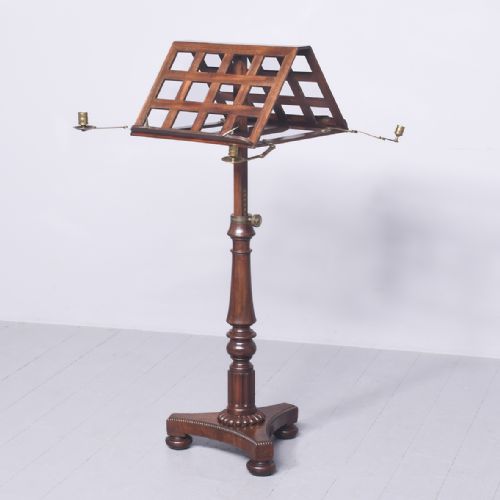
Adjustable Music Rack
An adjustable music rack brings mechanical poise to sheet music, offering sturdy wooden stands and polished brass fittings for daily playing.
Adjustable Music Rack
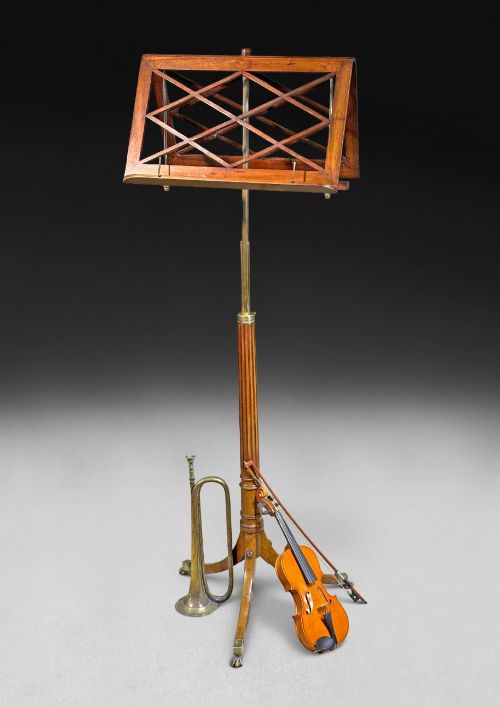
An adjustable music rack provides a dedicated support for scores and books, engineered to alter in height or angle. These stands appear across several periods, stretching from the Georgian era through to the Interwar Period.
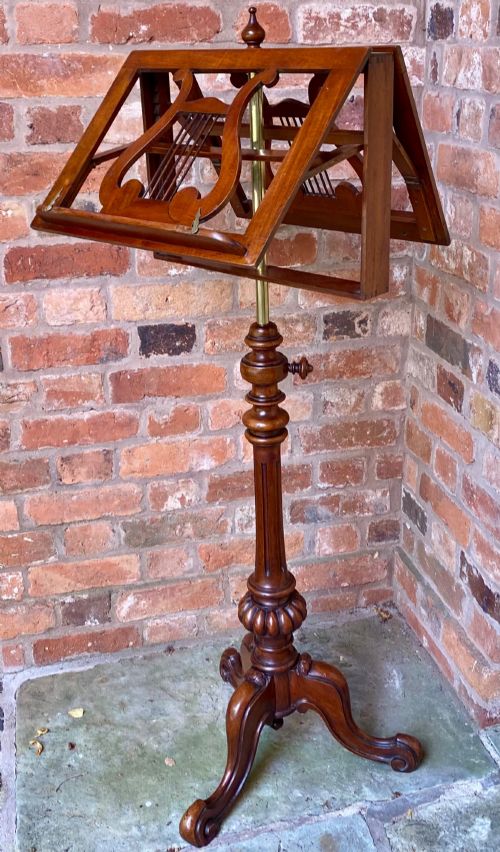
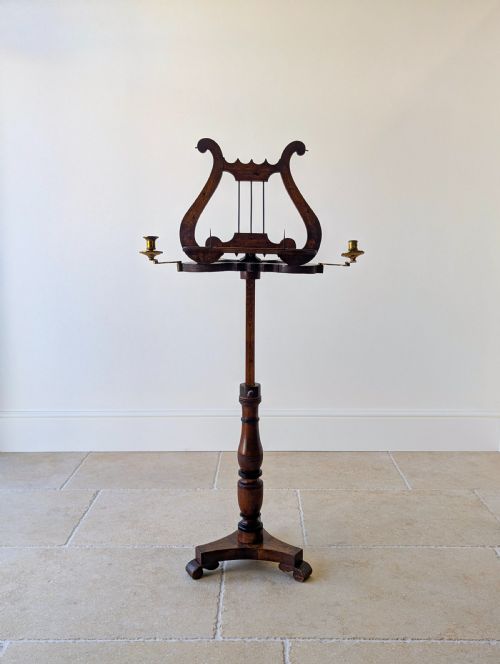
The most common forms on this page include mahogany and rosewood lyre-form stands, alongside duet versions designed for two musicians. Makers from the nineteenth century onward focused on combining practical reading utility with domestic elegance.
Examples span simple Victorian music stands to grand Regency duet music stands and reading stands. Buyers encounter varied woods like walnut, burr walnut, and satinwood inlay across these pieces.
How they were made
Cabinet makers utilised dense timbers such as mahogany, rosewood, and walnut, often shaping them into curved lyre motifs or solid reading ledges. Selected pieces incorporate delicate satinwood inlay to define the edges and surfaces.
Makers integrated brass mechanisms and heavy cast iron components to allow secure adjustment of height and reading angle. Carved details appear on walnut and mahogany frames, showing the hand of nineteenth-century artisans.
Adjustable Music Rack Retail Price Guide 2026
Typical asking prices for adjustable music rack among the pieces listed under this phrase on Sellingantiques today, from the lower quarter to the upper quarter. They describe what is for sale here now, not the wider market.
Listings feature mahogany, rosewood, walnut, and burr walnut alongside brass and cast iron components.
What varies in quality
The sophistication of the mechanical adjustment separates standard utility stands from finer examples designed for formal parlours. Smooth operation of the brass fittings and the weight of the base dictate the stability of the stand during use.
Selection of timber grain defines the visual appeal, with figured mahogany, burr walnut, and rich rosewood sitting at the upper end of the range. Finely carved details on the stem and lyre form reflect greater time spent by the maker.
The Adjustable Music Rack Glossary
- Lyre-form
- A music stand design shaped like the classical stringed musical instrument. This motif is frequently carved into mahogany or rosewood central columns.
- Duet music stand
- A wider reading stand built to accommodate two musicians sharing a single score. These pieces often feature double-sided or extended ledges.
- Regency
- A design period spanning the early nineteenth century known for classical revival forms and refined cabinet work. Pieces from this era often display clean architectural lines.
- Satinwood inlay
- Contrasting light wood inserted into a darker timber surface to create decorative borders. This technique highlights the edges of tabletops and music ledges.
- Lectern
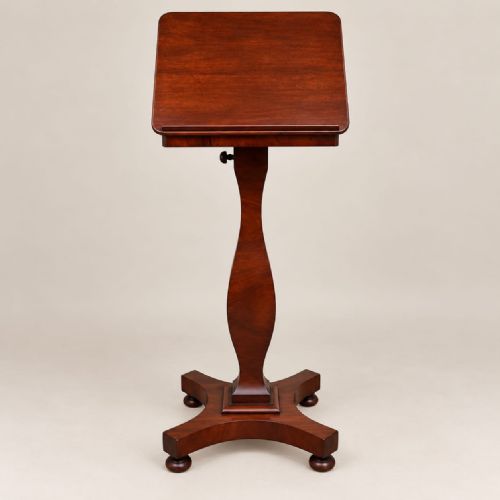
- A raised stand with a slanted top designed to hold books or papers for a standing reader. These function similarly to adjustable music stands in domestic settings.
Adjustable Music Rack: Frequently Asked Questions
What is an adjustable music rack?
An adjustable music rack is a piece of antique furniture designed to hold sheet music or books at a readable angle and height.
These stands use wooden frames, brass fittings, and pivoting mechanisms to alter position for musicians or readers.
How were duet music stands used?
Duet music stands provided a wide enough ledge for two people to read a shared musical score simultaneously.
Musicians placed them in parlours or drawing rooms for chamber practice and evening recitals.
Are these stands sturdy enough for heavy books?
Most stands are built from dense hardwoods like mahogany, walnut, or rosewood with weighted bases to prevent tipping.
Adjustable brass and iron mechanisms secure the reading ledge firmly in place for standard sheet music and volumes.