



Floor Standing Sheet Music Holder
A floor standing sheet music holder keeps your scores close at hand while adding genuine period character to a music room or parlour.
Floor Standing Sheet Music Holder
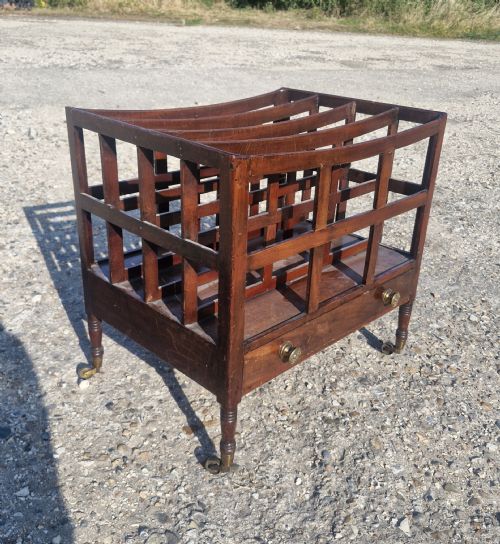
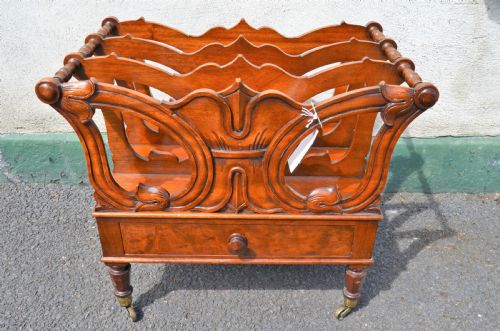
A floor standing sheet music holder appears in various forms across the Victorian, William IV, and Regency periods, often functioning as a Canterbury or music stand. These pieces serve to organise loose folios and bound scores beside a piano or in a study.
The most common examples on this page are mahogany canterburys and adjustable wooden music stands. Many incorporate compartments for folios or feature tilting reading surfaces designed for musicians.
Makers produced these items from the nineteenth century into the interwar period, spanning styles from English Classical to Black Forest carving. Each design reflects the domestic musical habits of its era.
How they were made
Cabinet makers utilised dense hardwoods such as mahogany, rosewood, and oak for structural stability and fine grain. Bamboo and rattan also appear in Victorian examples, offering a lighter construction.
Brass fittings and hardware provide the adjustable mechanisms on reading stands and music desks. Inlaid details and carved wooden motifs adorn the more decorative surfaces.
Floor Standing Sheet Music Holder Retail Price Guide 2026
Typical asking prices for floor standing sheet music holder among the pieces listed under this phrase on Sellingantiques today, from the lower quarter to the upper quarter. They describe what is for sale here now, not the wider market.
Several pieces combine multiple functions, serving as both reading stands and music holders with adjustable wooden desks.
What varies in quality
Quality rests in the selection of timber and the crispness of any carved ornament. Dense Cuban mahogany and finely figured rosewood distinguish superior examples from plain pine or oak utility pieces.
The mechanical ingenuity of adjustable stands separates basic furniture from higher grade pieces. Smoothly operating brass ratchets and stable pivoting desks show the care taken during manufacture.
Harrods
The Floor Standing Sheet Music Holder Glossary
- Canterbury
- A low stand with vertical divisions used for holding sheet music, folios, or books. This form originated in the late eighteenth century and remained popular throughout the Victorian era.
- Music Stand
- A piece of furniture featuring a sloping, adjustable desk designed to hold scores at a readable angle for a performer. Many examples allow height adjustment via a central brass screw mechanism.
- Lectern
- A tall stand with a slanted top used to support books or music while standing or sitting. They appear in ecclesiastical and domestic contexts.
- Black Forest
- A style of ornate, highly detailed wood carving originating from the Swiss-German border region during the nineteenth century. These pieces often feature naturalistic animal or foliage motifs.
Floor Standing Sheet Music Holder: Frequently Asked Questions
What is a Canterbury?
A Canterbury is a low stand featuring vertical partitions designed specifically to hold sheet music, folios, and magazines near a piano or seating area.
Cabinet makers of the nineteenth century built these pieces primarily in mahogany and rosewood, often incorporating low legs with castors for easy movement.
How do adjustable stands work?
Adjustable music stands use a central metal rod paired with a brass screw mechanism or ratchet to alter the height and angle of the desk.
Musicians used these adjustments to position scores precisely for sitting or standing performances.
Where should I place one?
These holders sit comfortably beside a piano, in a music room, or near a reading chair to store sheet music and periodicals.
Their compact footprints allow them to fit easily into corners or beside side tables without dominating the room.
How do I identify a Victorian piece?
Victorian examples often display characteristic dark hardwoods like mahogany or alternative materials such as bamboo and rattan.
Stylistic cues range from heavy classical mouldings to intricate Black Forest carvings and ebonised finishes.