




Marquetry Mahogany Armchair
A marquetry mahogany armchair brings warmth and fine detail to a room, combining solid timber frames with contrasting decorative inlays.
Marquetry Mahogany Armchair
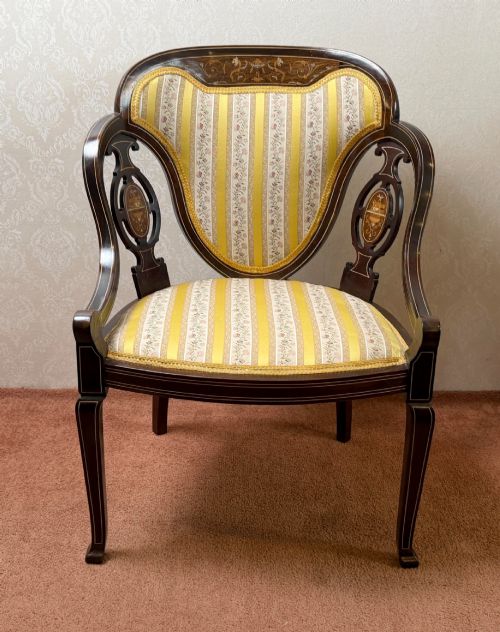
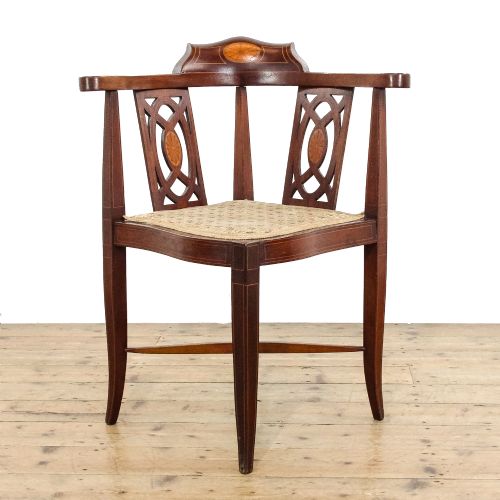
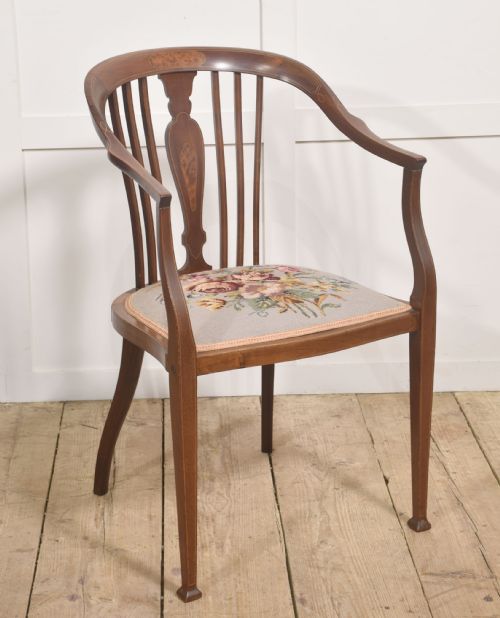
A marquetry mahogany armchair is a seating piece built from mahogany and decorated with contrasting wood veneers. These chairs appear in several specific forms across this selection, including desk chairs, corner chairs, rocking chairs, and salon armchairs.
The pieces available here lean heavily toward the Edwardian period and the late nineteenth century, though earlier examples from the Regency and Victorian eras also appear. Makers adapted the form for various rooms, producing library desk chairs, occasional seating, and elbow chairs.
Most examples rely on Sheraton Revival or Edwardian aesthetic principles, balancing structural timber with delicate floral or geometric veneers. Buyers encounter everything from simple elbow chairs to elaborately inlaid corner seats.
How They Were Made
Cabinetmakers constructed the primary frame in solid mahogany, utilising its natural strength and deep reddish-brown grain to support the seat and backrest. Workshops then applied contrasting light veneers, principally satinwood, to create decorative marquetry panels.
Craftsmen cut intricate patterns into the primary surface and fitted individual pieces of tinted or natural wood inlay by hand. Artisans finished the seating surfaces with upholstery fabric, velvet, or leather, secured over traditional stuffing.
Marquetry Mahogany Armchair Retail Price Guide 2026
Typical asking prices for marquetry mahogany armchair among the pieces listed under this phrase on Sellingantiques today, from the lower quarter to the upper quarter. They describe what is for sale here now, not the wider market.
Several small children found a seat of their own in the evidence, with miniature armchairs scaled down for Edwardian nurseries.
What Varies in Quality
The distinction between ordinary and exceptional seating lies in the precision of the marquetry and the crispness of the carving. Master workshops selected timber with superior grain patterns and executed inlays with razor-sharp joins that resist lifting over time.
Proportion and structural integrity separate standard utility chairs from finer salon pieces. Higher quality examples maintain balanced framing that supports comfortable upholstery without appearing heavy or clumsy.
Shoolbred·Jenks & Wood
The Marquetry Mahogany Armchair Glossary
- Marquetry
- A decorative technique where small pieces of veneer are fitted together to form pictorial or geometric patterns on a wooden surface. This artistry defines the ornamentation on the backrests and splats of these chairs.
- Satinwood
- A pale, durable tropical timber utilised for contrasting inlays against darker mahogany frames. Its bright yellow tone catches the light and highlights floral motifs.
- Corner Chair
- A seating form designed to fit into the angle of a room, featuring a diagonal seat and a continuous curved armrest supported by multiple posts. These often serve as occasional or desk chairs.
- Sheraton Revival
- A late nineteenth and early twentieth century design movement that reinterpreted the lighter, neoclassical styles of the eighteenth century. Pieces from this era often feature refined tapering legs and delicate wood inlay.
- Carver Armchair
- An armchair, typically with open arms, designed to match a set of dining side chairs. These pieces usually stood at the head of a table.
Marquetry Mahogany Armchair: Frequently Asked Questions
Where did these armchairs sit in a Victorian or Edwardian home?
These chairs served multiple rooms depending on their specific form. Desk and library armchairs worked in studies, while lighter salon and corner chairs furnished drawing rooms.
Rocking chairs and occasional armchairs offered comfortable seating in morning rooms and bedrooms. Their versatile sizing allowed them to move easily between formal reception spaces and private chambers.
How do I distinguish an Edwardian piece from a Victorian one?
Edwardian examples tend to display lighter proportions, brighter satinwood inlays, and a distinct Sheraton Revival influence. They often feature clean lines and delicate floral marquetry.
Victorian pieces generally present heavier framing, darker finishes, and denser carvings. The joinery and timber weight reflect a shift toward sturdier domestic comfort during the earlier decades.
Can I use these antique armchairs for daily seating?
These chairs are sturdy enough for regular use provided the frame and joints remain sound. Many survive with reinforced construction that accommodates everyday sitting.
Placing them away from direct heat sources and sunlight protects the delicate marquetry veneers and upholstery fabrics. Periodic checks of the underframe ensure the traditional joinery stays secure.