





Marquetry Inlaid Grandfather Clock
These marquetry inlaid grandfather clock examples are tall timepieces featuring detailed wood ornamentation, sought after for their traditional craftsmanship and stately presence.
Marquetry Inlaid Grandfather Clock
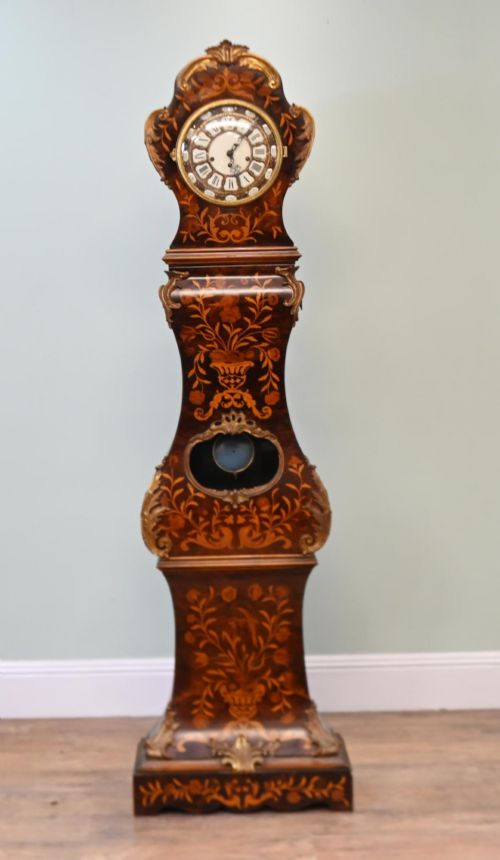
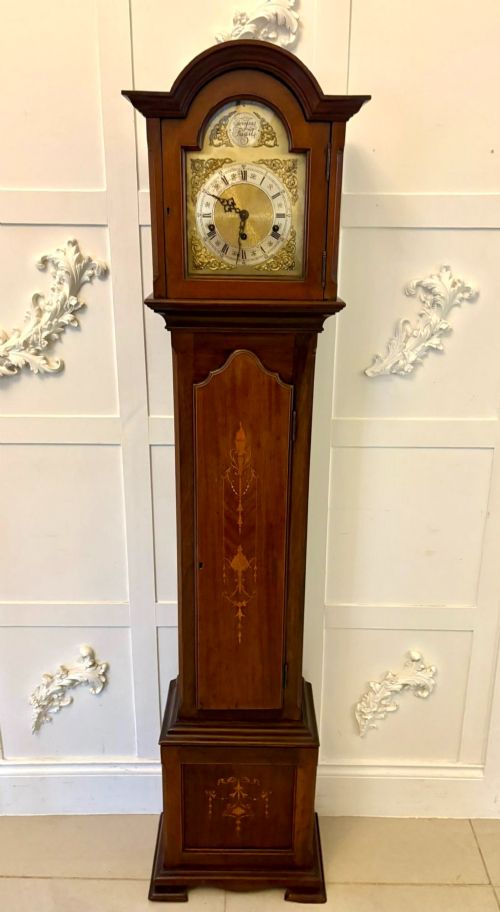
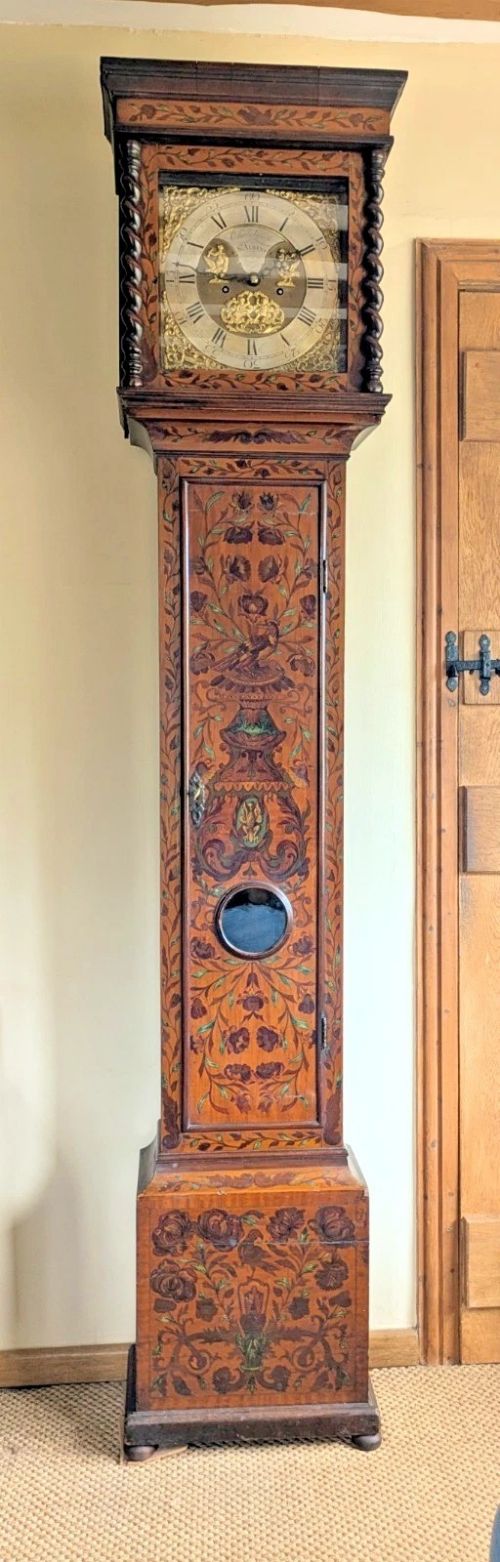
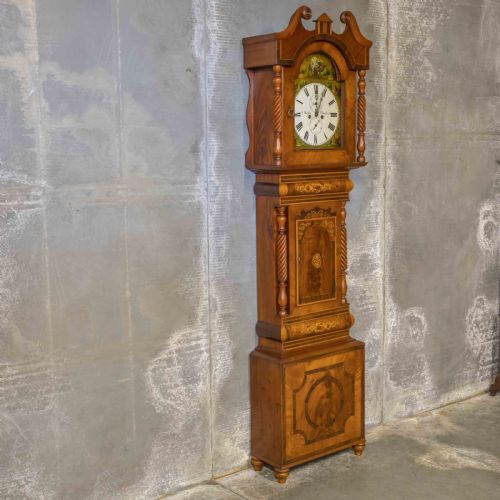
A marquetry inlaid grandfather clock stands as a tall timepiece housed in a wooden case decorated with intricate patterned veneers. These clocks appear across several periods, including the seventeenth, eighteenth, and nineteenth centuries, alongside Edwardian and Georgian iterations.
The pieces on this page span diverse geographical origins and regional styles, from Scottish longcase clocks to London makers and French interpretations. Buyers will encounter forms ranging from full-sized grandfathers to smaller grandmother clocks and musical variations.
Common woods forming the structural foundation include mahogany and walnut, paired with contrasting decorative inlays. Each example records the mechanical and aesthetic tastes of its era, combining timekeeping utility with cabinetmaker artistry.
How They Were Made
Cabinetmakers constructed the tall wooden cases using primary timbers like mahogany and walnut, while incorporating brass and glass components for dials and door panels. Ormolu mounts appear on specific continental interpretations to accent the case structure.
Makers applied marquetry and satinwood inlay by carefully cutting and fitting thin veneers of various woods into pre-cut recesses on the surface. This technique created complex pictorial or geometric patterns that decorated the trunk and hood of the longcase.
Marquetry Inlaid Grandfather Clock Retail Price Guide 2026
Typical asking prices for marquetry inlaid grandfather clock among the pieces listed under this phrase on Sellingantiques today, from the lower quarter to the upper quarter. They describe what is for sale here now, not the wider market.
Listings feature longcase clocks spanning the seventeenth, eighteenth, and nineteenth centuries, alongside Edwardian revivals.
What Varies in Quality
The precision and complexity of the marquetry work distinguish standard production from exceptional examples, with tighter veneer fits and richer contrasting timbers elevating the cabinetmaking standard. The choice of primary wood, whether rich walnut or figured mahogany, also shapes the visual depth of the case.
Movement sophistication plays a role, as eight-day or chiming mechanisms require greater horological skill than simpler timepieces. Signed dials by recorded makers add historical weight and document the origin of the clockwork.
Charles Louch St. Albans·Nathaniel Pyne·David Morice of Auchtermuchty·Edward Stanton·Peter Wise·Henry Massy·Richard Baker·Sam Robson
The Marquetry Inlaid Grandfather Clock Glossary
- Marquetry inlay
- Decorative woodwork where small pieces of veneer are fitted into a ground material to form designs. This technique defines the visual character of the case.
- Longcase clock
- The formal term for a tall pendulum clock housed in a wooden trunk. These pieces are commonly known as grandfather clocks.
- Satinwood
- A lustrous, yellowish timber utilised for contrasting inlay work and decorative banding. It provides bright detail against darker woods like mahogany.
- Ormolu
- Gilded bronze used for decorative mounts and accents on certain continental clock cases. It adds metallic highlights to the wood surface.
Marquetry Inlaid Grandfather Clock: Frequently Asked Questions
What is a marquetry inlaid grandfather clock?
A tall pendulum timekeeper housed in a wooden case decorated with fitted veneer patterns.
These pieces combine functional clockwork with decorative cabinetmaking across centuries of design.
How do I date a longcase clock?
Examination of the wood materials, dial style, and cabinet proportions reveals the period of creation.
Signatures on the dial face often connect the mechanism to a recorded historical maker.
Where should I place a grandfather clock?
These tall pieces require stable, level flooring and adequate ceiling height to accommodate the vertical case.
Placing them away from direct sunlight and temperature fluctuations protects the wood and veneer.
What woods were used for these clocks?
Cabinetmakers primarily utilised mahogany and walnut for the main structure of the tall cases.
Satinwood and various decorative veneers provided the contrasting tones for the surface marquetry.