



Marquetry Inlaid Armchair
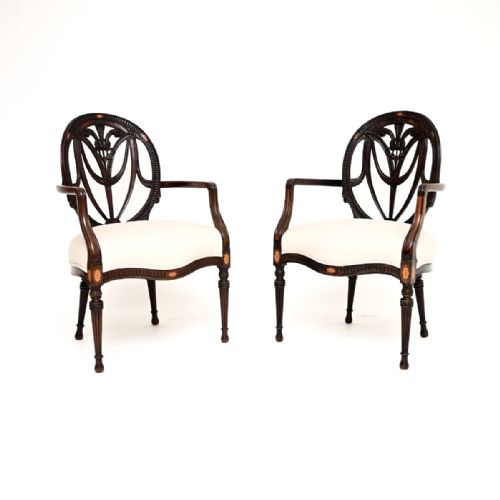
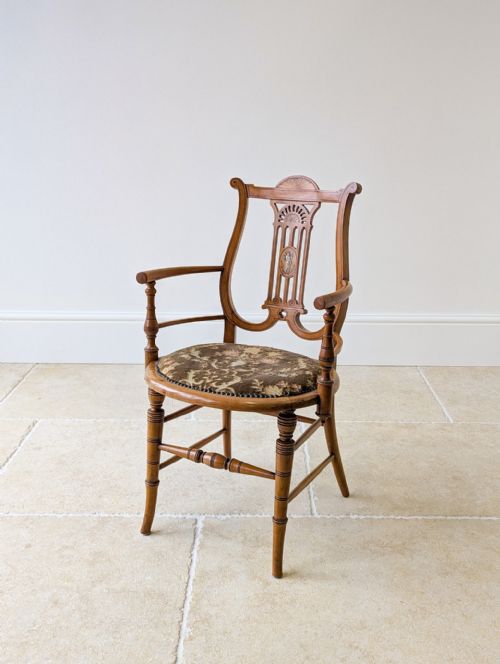
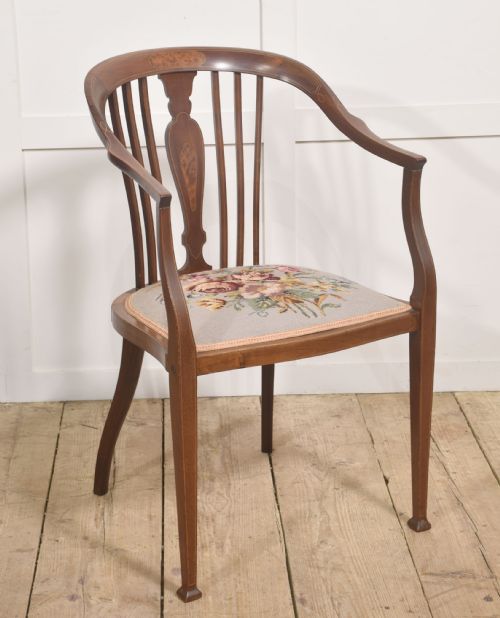
A marquetry inlaid armchair brings intricate botanical and geometric timber work into everyday seating.
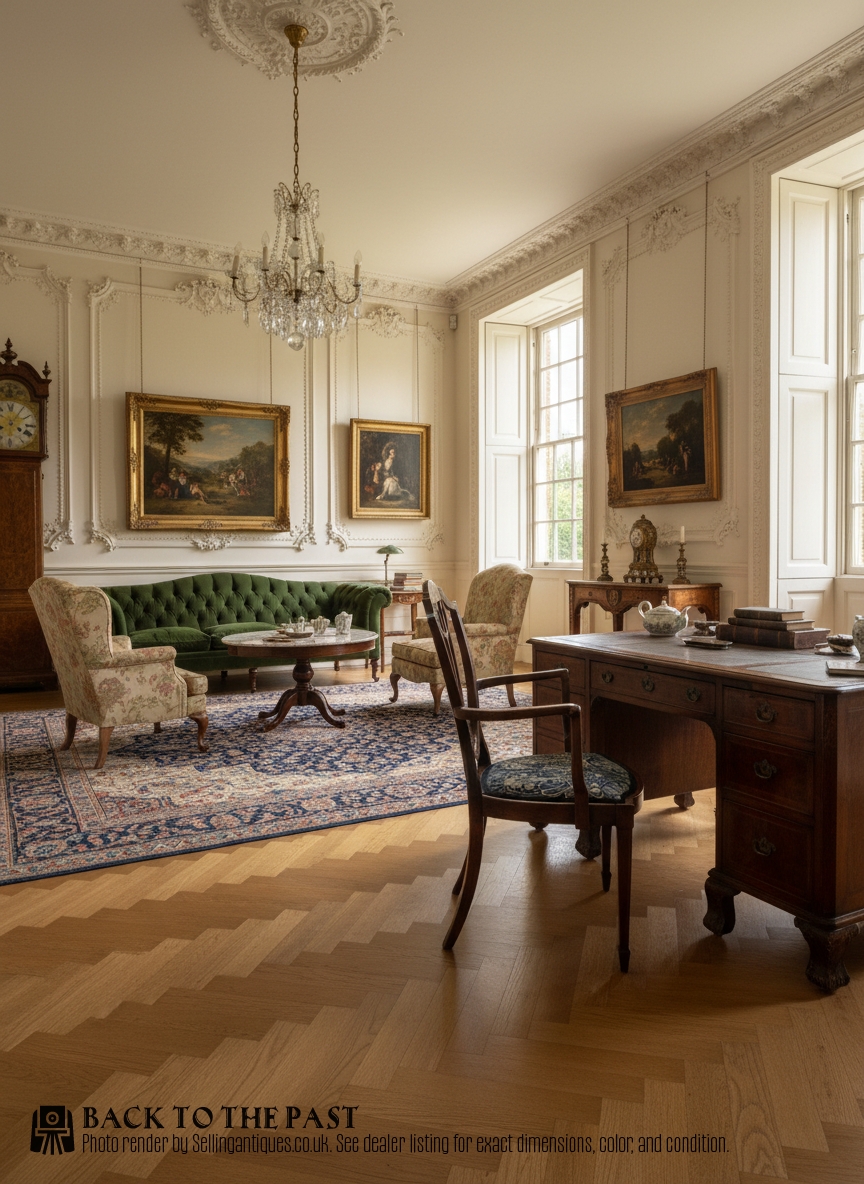
Marquetry Inlaid Armchair
A marquetry inlaid armchair is a seated piece of furniture embellished with contrasting wood veneers arranged in pictorial or geometric patterns. When searching this phrase, buyers encounter examples primarily from the Edwardian era and the Victorian period, alongside earlier centuries.
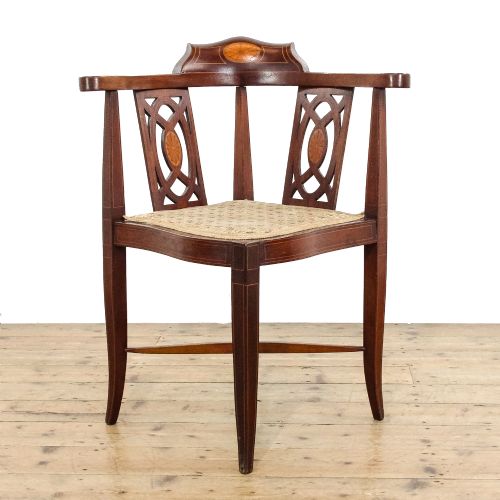
The selections span various forms including standard carvers, corner chairs, desk chairs, and occasional seating. Edwardian mahogany frames with delicate satinwood details dominate the available pool.
Origin variations include English revival pieces, Dutch marquetry masterworks, and Moorish or Syrian folding designs. Each variation offers distinct regional techniques and aesthetic choices for the interior.
How they were made
Craftsmen built the primary framework using sturdy timbers such as mahogany, walnut, oak, and rosewood. These woods provided the structural integrity required for armchairs, library chairs, and rocking chairs.
The decorative surfaces rely on fine wood inlay and marquetry, often combining satinwood, brass, and contrasting veneers into precise pictorial scenes or borders. Artisans cut these delicate veneers by hand before recessing them directly into the solid timber grounds.
Several examples include pivoting ships chairs and folding Syrian seats designed for nineteenth-century travellers.
What varies in quality
The precision of the veneer work dictates the standing of an individual marquetry inlaid armchair. Finer examples display tight joints between contrasting timbers without excessive filler, maintaining crisp lines within floral or geometric motifs.
Structural integrity and material selection further separate tiers of pieces. Solid mahogany or walnut frames carrying substantial carving and intact upholstery webbing outlast lighter, less robust occasional frames.
Shoolbred·Jenks and Wood
The Marquetry Inlaid Armchair Glossary
- Marquetry
- The art of applying fitted pieces of veneer to a structural surface to create decorative patterns. This technique allows for complex pictorial designs using various coloured woods.
- Carver
- A traditional term for an armchair with wooden elbows, designed to match a set of dining or side chairs. These often featured prominently at the ends of tables.
- Satinwood
- A pale, durable tropical timber prized for its reflective sheen and used extensively for contrasting inlay work. It brings luminous highlights to mahogany chair backs.
- Sheraton Revival
- A late nineteenth-century design movement replicating the lighter, neoclassical furniture forms of the eighteenth century. Pieces from this revival often feature delicate tapering legs and refined marquetry.
Marquetry Inlaid Armchair: Frequently Asked Questions
How do I date a marquetry inlaid armchair?
Dating relies on timber selection, structural joinery, and the stylistic cues of the period. Edwardian pieces often display lighter mahogany and satinwood frames, whereas seventeenth-century examples utilise heavier oak.
Examining the underside and secondary woods provides further clues regarding age and regional workshop practices.
Where should I place an antique armchair?
These chairs function well in studies, drawing rooms, or bedrooms as reading or accent seating. Their decorative backs make them suitable for placement where the rear view remains visible.
Placing them away from direct sunlight protects vulnerable wood veneers and delicate fabric upholstery from fading.
What is the difference between inlay and marquetry?
Inlay involves inserting pieces of wood or other materials into depressions carved directly into a solid wooden surface. Marquetry covers the entire surface of the piece with fitted veneer assemblies forming a picture or pattern.
Both methods appear frequently across nineteenth-century and Edwardian seating.
Are these chairs suitable for daily seating?
Sturdier library and desk armchairs accommodate regular daily use, provided their frames remain tight and well-maintained. Lighter occasional or salon chairs suit decorative placement or gentle sitting.
Checking the internal webbing and upholstery support ensures comfort and longevity for active use.