



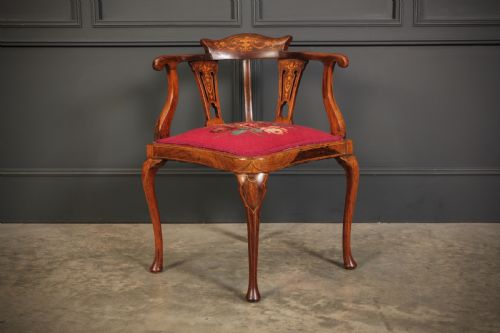


Marquetry Elbow Chair
A marquetry elbow chair brings patterned wood inlay and supportive armrests together in seating created across the eighteenth, nineteenth and twentieth centuries.
Marquetry Elbow Chair
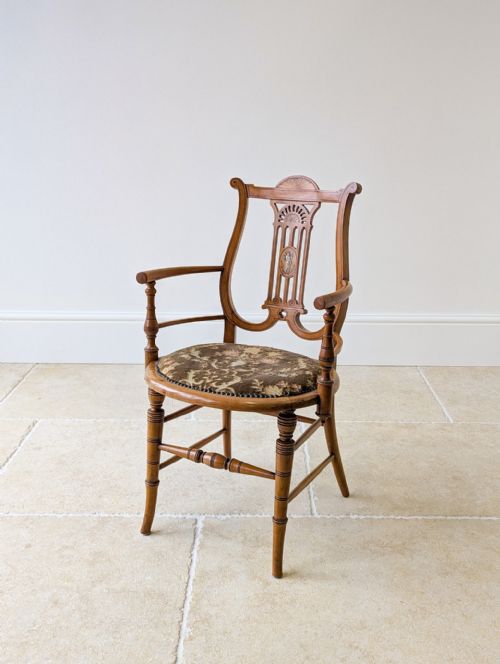
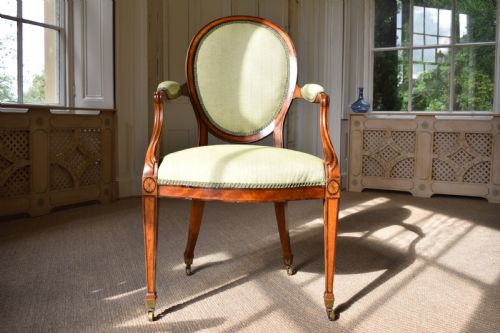
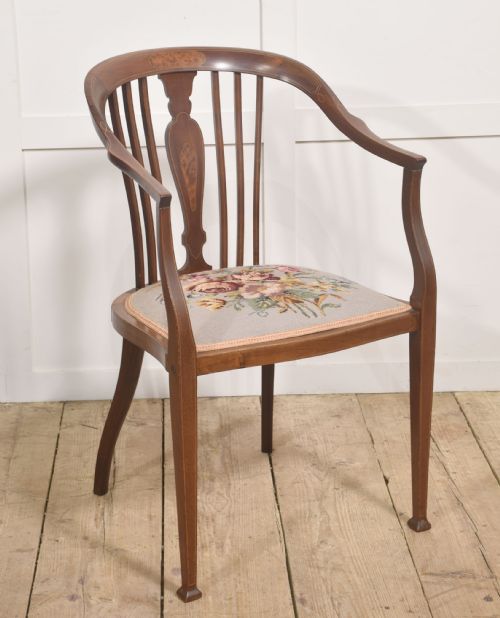
A marquetry elbow chair is a seating form featuring decorative wood patterns built into the frame and designed with supportive armrests for a desk, library or occasional room. You will encounter these pieces spanning the eighteenth century through to the Edwardian period and the early twentieth century.
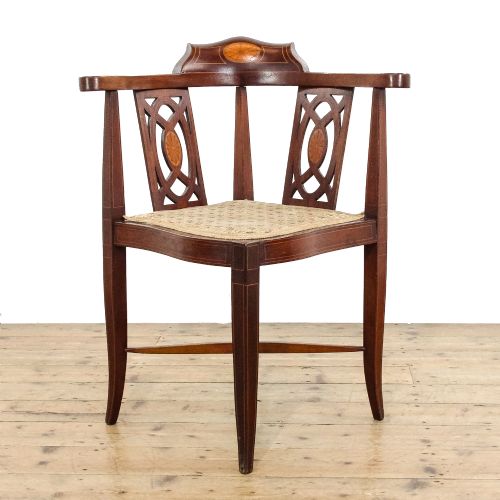
The selections on this page appear most frequently in mahogany, walnut and satinwood, often taking the form of open armchairs, desk chairs and corner seating. Styles range from formal George III and Sheraton Revival designs to Dutch Baroque, Art Nouveau and Moorish Revival pieces.
How they were made
Cabinetmakers constructed these frames primarily from mahogany, walnut, satinwood and rosewood, incorporating contrasting timbers such as boxwood and fruitwood for detailed visual impact. Wood inlay techniques allowed makers to apply finely cut veneer patterns directly onto the structural surfaces of the seat backs and rails.
Many examples integrate fabric upholstery on the seats, utilising traditional webbing and padding methods to ensure comfort alongside the decorative woodwork. Brass accents occasionally appear on hardware or castors supporting the desk and office variants.
Marquetry Elbow Chair Retail Price Guide 2026
Typical asking prices for marquetry elbow chair among the pieces listed under this phrase on Sellingantiques today, from the lower quarter to the upper quarter. They describe what is for sale here now, not the wider market.
Some chairs served double duty for reading and office work, proving that Victorians loved a good multitasker just as much as we do.
What varies in quality
The standard of a marquetry elbow chair depends heavily on the precision of the wood inlay work and the crispness of the surrounding carving. Finer examples display tightly fitted veneers and complex botanical or geometric motifs that remain flush with the primary timber.
Structural integrity and timber selection further separate standard output from exceptional work, particularly in the choice of richly grained mahogany or figured walnut. The harmony between the upholstered components and the underlying cabinetwork dictates the overall success of the piece.
Shoolbred·Jenks & Wood
The Marquetry Elbow Chair Glossary
- Marquetry
- The art of applying decorative pieces of veneer to a structure to form intricate patterns and pictures. This technique defines the visual character of the surfaces.
- Elbow chair
- An armchair designed with low armrests intended to support the elbows while sitting at a desk or table. These seats function as library, salon or occasional chairs.
- Sheraton Revival
- A late nineteenth and early twentieth century design movement drawing inspiration from the neoclassical furniture of George III designer Thomas Sheraton. Pieces in this style utilise light satinwood and delicate inlay.
- Corner armchair
- A chair engineered to fit neatly into the corner of a room, featuring a continuous curved backrest supported by multiple uprights. They often stand on four legs with one positioned centrally at the front.
- Veneer
- A thin slice of figured wood glued over a structural base timber to provide a decorative exterior. It allows cabinetmakers to utilise expensive or highly patterned woods efficiently.
Marquetry Elbow Chair: Frequently Asked Questions
Where were marquetry elbow chairs used in the home?
These chairs served multiple functions across different domestic spaces, appearing in libraries, morning rooms and studies as desk or reading seating. Their decorative backs also suited them for placement in formal drawing rooms and salons as occasional furniture.
Over successive periods, makers adapted the form from eighteenth century formal rooms to Edwardian offices and reception spaces. Their supportive armrests made them practical for sustained sitting while maintaining a decorative presence.
How do I distinguish eighteenth century Dutch pieces?
Eighteenth century Dutch examples typically display dense, elaborate floral and urn marquetry executed in contrasting fruitwoods across the entire frame. The woodwork often incorporates heavy carving on the cabriole legs and shaped elbow supports.
Later revivals from the Victorian and Edwardian eras adopted lighter frames and refined Sheraton influences rather than the heavier proportions of earlier Dutch craft. Comparing the timber density and the complexity of the veneer work helps clarify the date of manufacture.
How do I care for inlaid wood surfaces?
Inlaid wood surfaces require stable environmental conditions away from direct sunlight and excessive heat sources to prevent veneer lifting. Regular dusting with a soft, dry cloth preserves the polished finish without introducing moisture into the joints.
Harsh chemical cleaners can damage the historic polish and loosen the adhesives securing the marquetry details. Maintaining consistent room humidity protects both the base timbers and the delicate decorative veneers.