

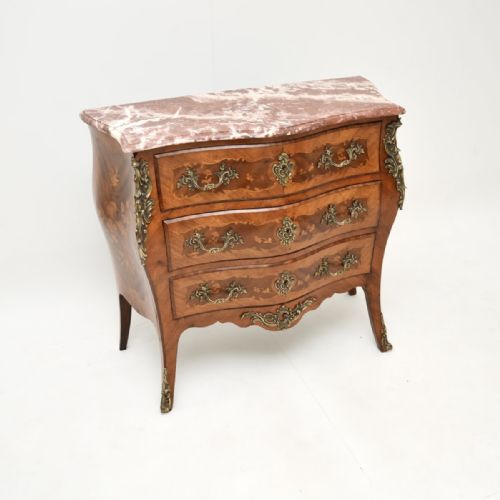


Marquetry Bombe Commode
When you study a marquetry bombe commode, you examine a swelling storage chest adorned with detailed wood veneers.
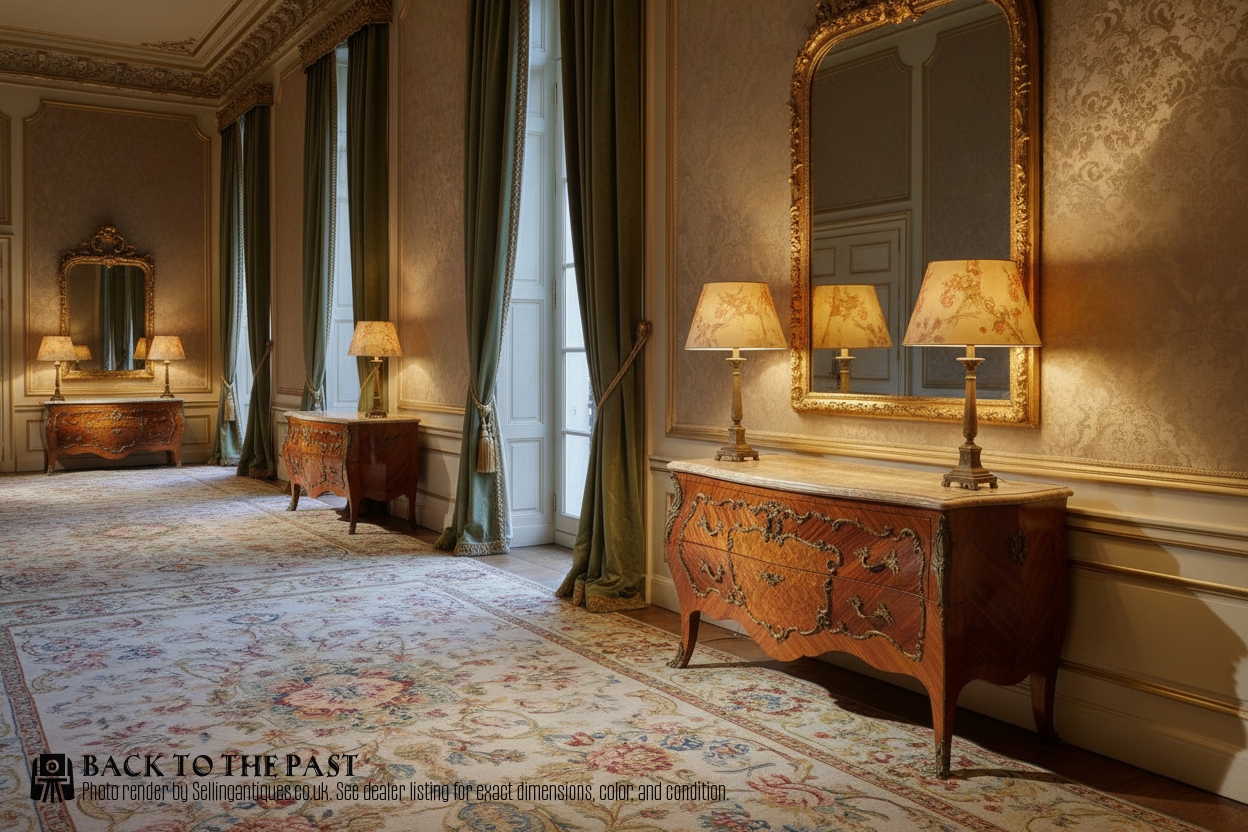
Marquetry Bombe Commode
A marquetry bombe commode represents an opulent storage chest featuring distinctive outward-curving sides and intricate wooden inlay work.
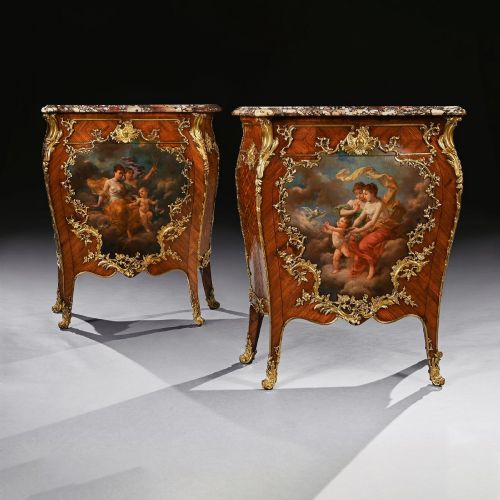
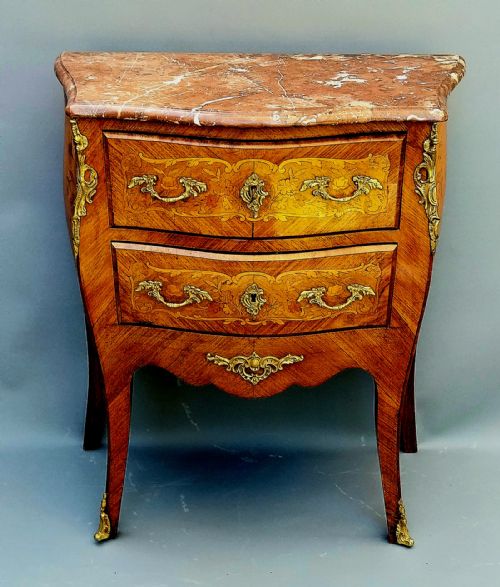
The selections span from eighteenth-century origins to later revivals, displaying forms such as side cabinets, petite chests, and full-sized bedroom pieces.
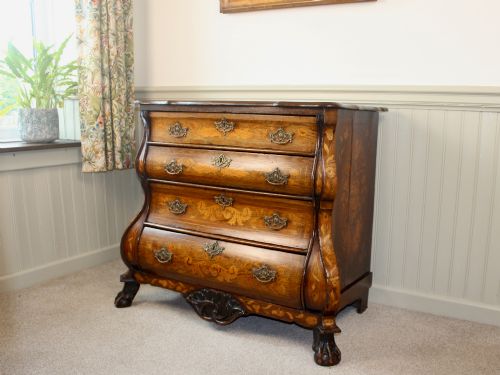
French and Dutch origins dominate the selections, alongside Italian and Swedish interpretations created across various historic eras.
How they were made
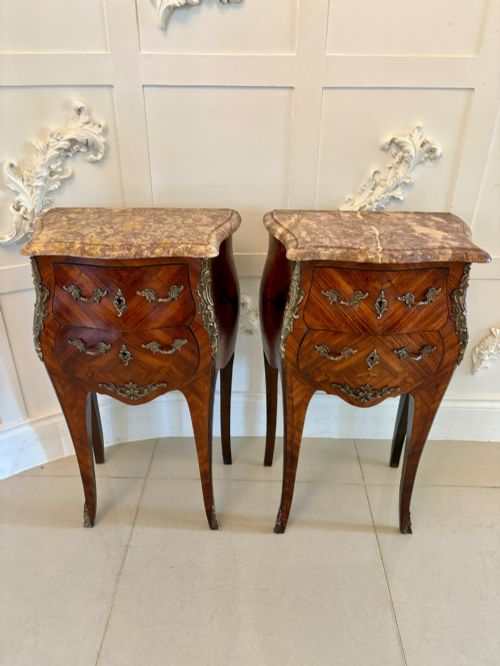
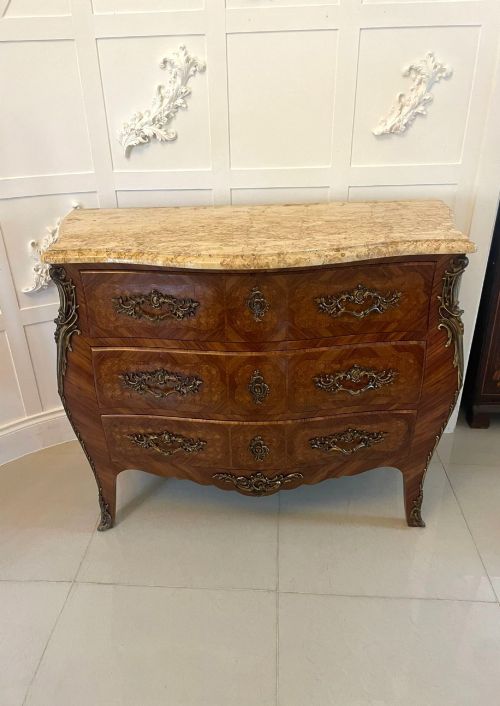
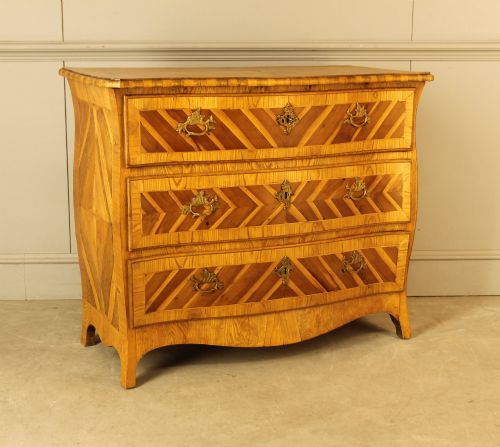
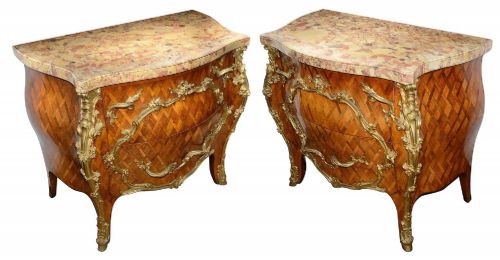
Craftsmen shaped native and exotic timbers like kingwood, walnut, and fruitwood over robust oak carcases to achieve the signature swelling profile.
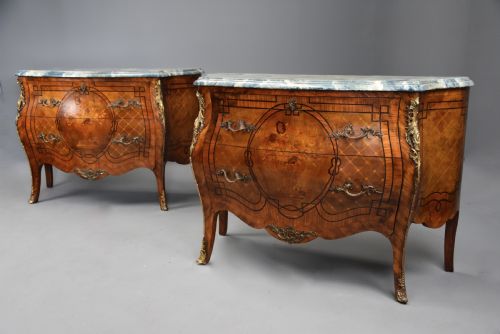
Surfaces received elaborate floral or geometric inlay patterns, frequently accented by cast or chased gilt bronze and ormolu mounts.
Heavy marble slabs in tones of white and grey were meticulously fitted to crown the upper surfaces of the chests.
Listings feature items spanning from the early eighteenth century through the twentieth-century revival movements.
What varies in quality
The precision of the veneer cutting and the complexity of the botanical or geometric marquetry dictate the visual depth of the facade.
The weight, crispness of chasing, and integration of the bronze and ormolu mounts separate standard production from master craftsmanship.
The fluidity of the curvaceous outline and the structural integrity of the dovetailed drawers reflect the original maker's skill.
Germain Landrin
The Marquetry Bombe Commode Glossary
- Bombe
- A swelling, outward-curving profile found on the front and sides of casework. This silhouette requires advanced joinery to execute cleanly.
- Marquetry
- Decorative veneer work forming pictorial or geometric patterns using various tinted woods. Artisans piece these together like puzzles before application.
- Ormolu
- Gilded bronze mounts applied to furniture edges and corners. These cast metal ornaments protect vulnerable areas while adding ornamentation.
- Vernis Martin
- A European imitation of East Asian lacquerwork used on furniture panels. Named after the Martin brothers, it provides a glossy, polished finish.
- Kingwood
- A dense, richly figured timber imported from South America and utilised extensively in high-end cabinetmaking. Its contrasting grain enhances inlaid designs.
Marquetry Bombe Commode: Frequently Asked Questions
What is a bombe commode?
A bombe commode is a drawer chest characterised by an outward-swelling profile on its front and sides. These pieces offer substantial storage while serving as decorative focal points.
Originating primarily in continental Europe during the eighteenth century, they continued to inspire cabinetmakers through subsequent revival periods.
How were these commodes used?
These chests functioned as primary storage furniture for garments and personal items within bedchambers and grand reception rooms. Their expansive marble tops also provided sturdy display surfaces for decorative objects.
Today, buyers utilise them in living spaces and hallways where their sculptural silhouette commands attention.
How do I spot an eighteenth-century piece?
Eighteenth-century examples reveal their age through hand-cut joinery, traditional timber shrinkage, and authentic patination on the wood surfaces. The internal carcase construction often employs native oaks specific to French, Dutch, or Swedish workshops.
Later nineteenth-century revivals imitate these styles but display distinct mechanical tooling marks and different secondary woods.
How do I care for marble tops?
Marble surfaces require gentle cleaning with mild, pH-neutral soap and warm water to preserve the polished finish. Avoid acidic substances like vinegar or wine, which etch the stone.
Applying a specialised stone sealer helps protect the marble from moisture and everyday staining.