


Marquetry Accent Chair
A marquetry accent chair brings patterned wood inlay and historical presence into a room, offering both seating and decorative impact.
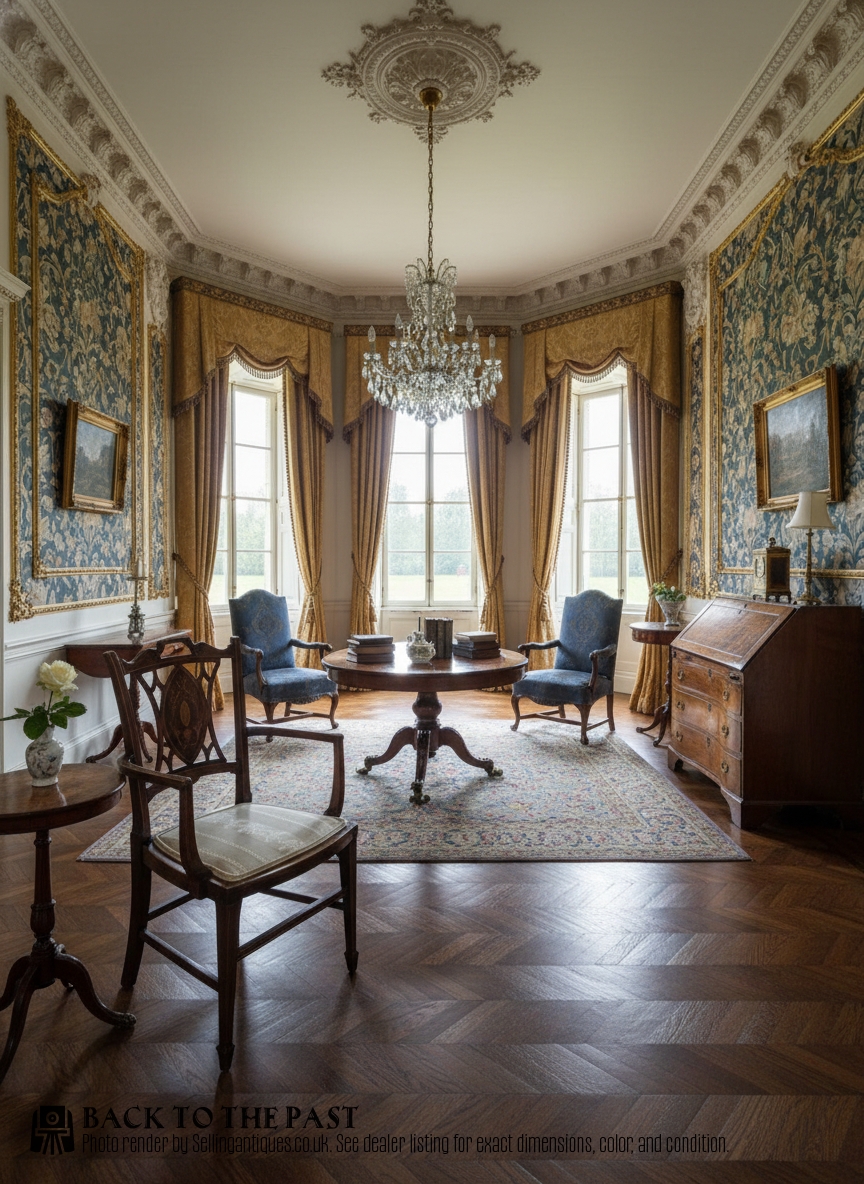
Marquetry Accent Chair
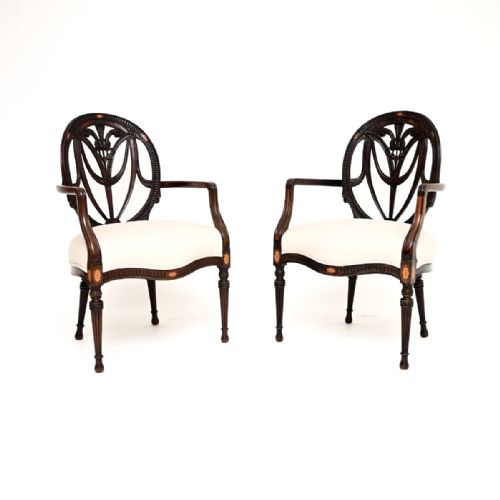
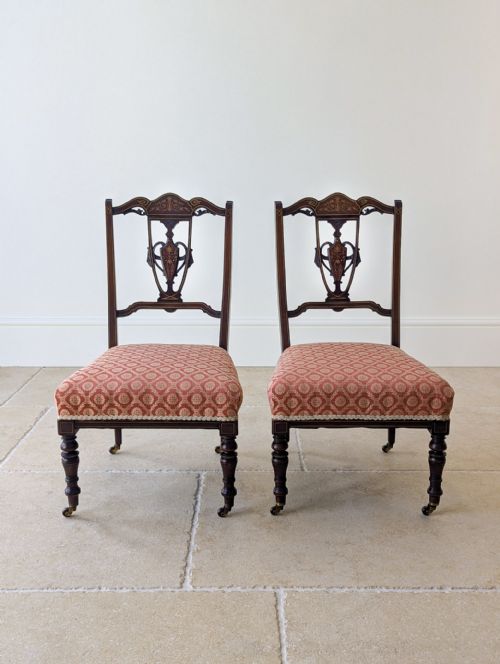
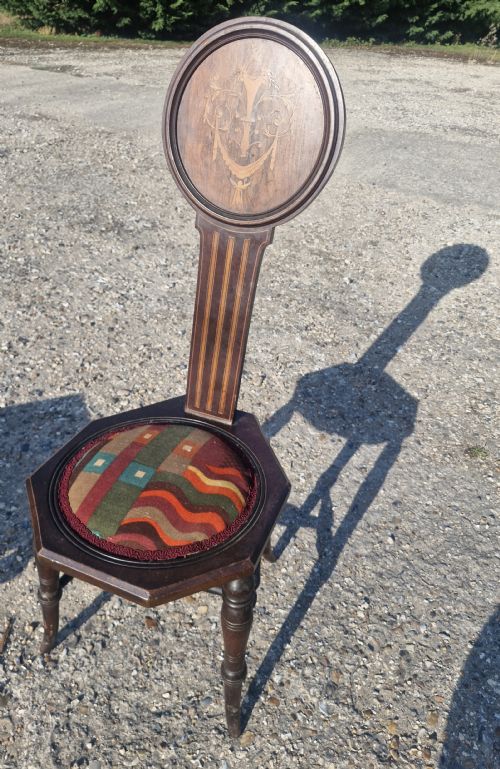
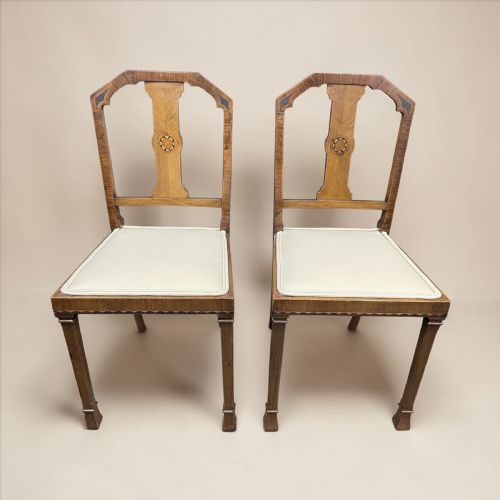
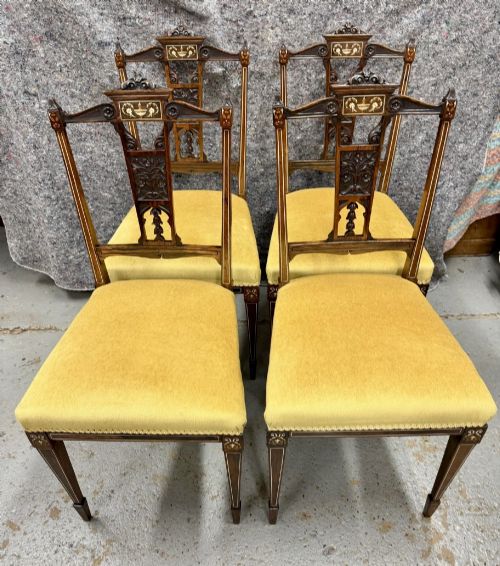
A marquetry accent chair is a decorative seat adorned with detailed wood inlay, designed to stand out within a room rather than serve as standard dining furniture. These pieces appear frequently in Edwardian interpretations alongside earlier 18th century and 19th century examples.
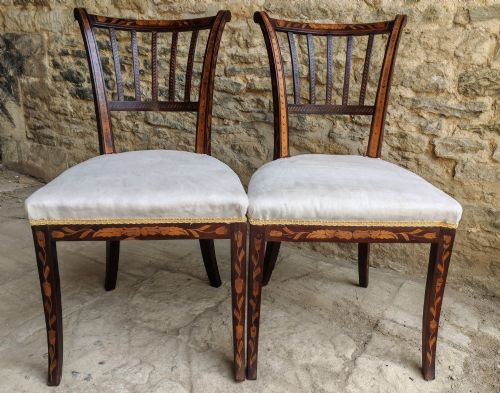
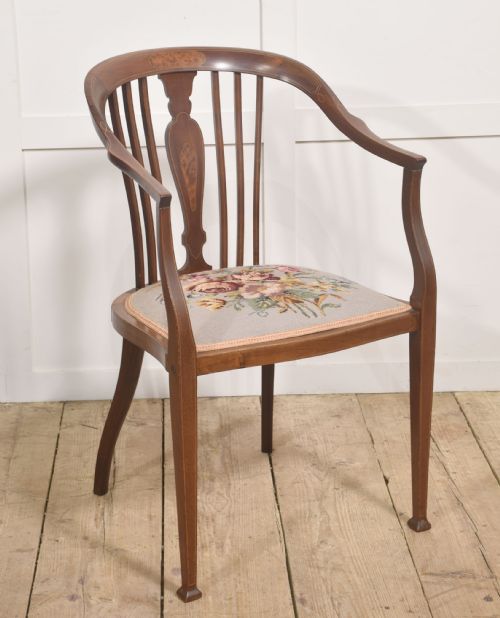
The forms range from salon chairs and occasional chairs to nursing chairs and specific armchairs. Edwardian mahogany versions with delicate floral or classical inlays dominate the selection, while Dutch walnut high back chairs and Syrian moorish designs offer alternative regional aesthetics.
How They Were Made
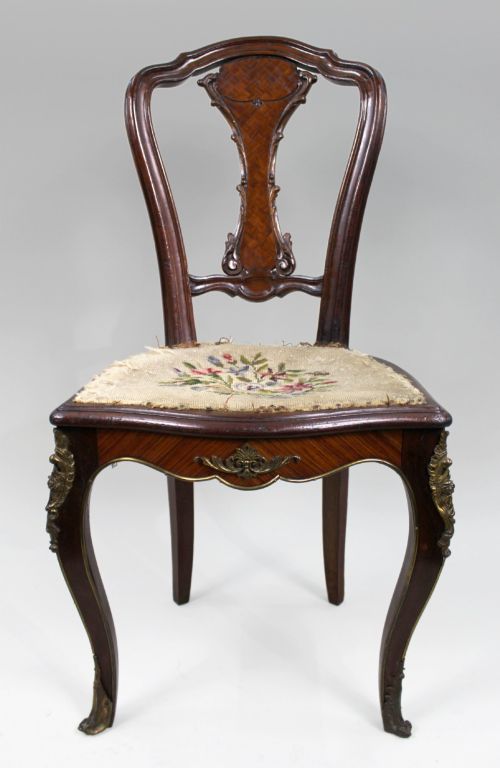
Cabinet makers constructed the frames primarily from timbers such as mahogany, walnut, rosewood, and beech, often utilising contrasting lighter woods for the decorative work. Satinwood, boxwood, and various dyed veneers were cut and fitted precisely into recessed channels to form pictorial or geometric marquetry patterns.
Additional detailing involved brass wire inlay, ormolu mounts, carved elements, and upholstery in silk, velvet, or woven fabric. The precision of the veneer placement dictates the overall visual sharpness of each finished seat.
Marquetry Accent Chair Retail Price Guide 2026
Typical asking prices for marquetry accent chair among the pieces listed under this phrase on Sellingantiques today, from the lower quarter to the upper quarter. They describe what is for sale here now, not the wider market.
Seating forms range from standard side chairs and dining chairs to specialised nursing chairs, corner chairs, and musical chairs.
What Varies in Quality
The standard of a marquetry accent chair depends on the crispness of the cutting and the complexity of the timber selection. Finer examples show tight joints between the contrasting veneers without excessive use of filler, maintaining clear botanical or architectural motifs.
Structural integrity also separates individual pieces, where substantial frame timber and retained original upholstery support systems elevate the piece above simpler decorative alternatives.
Shoolbred
The Marquetry Accent Chair Glossary
- Marquetry
- Decorative veneer work assembled in pictorial or geometric patterns on a wooden surface. This technique uses thin slices of various timbers to create images or motifs.
- Satinwood
- A durable, yellowish timber prized for its lustrous sheen and used extensively for contrasting inlay work. It provides a bright tone against darker woods like mahogany.
- Carver armchair
- An armchair designed with solid elbow rests, traditionally used at the head of a dining table or as a principal salon seat. These often match a set of smaller side chairs.
- Salon chair
- A light, decorative chair intended for formal reception rooms rather than heavy daily use. They often feature delicate proportions and ornate inlay.
- Ormolu
- Gilt bronze mounts applied to furniture for decorative enrichment. This French technique adds metallic contrast to polished timber frames.
Marquetry Accent Chair: Frequently Asked Questions
Where should I place a marquetry accent chair?
These chairs suit rooms where they can function as focal points, such as a corner of a drawing room, a bedroom dressing area, or beside a fireplace. Their decorative inlay ensures they contribute visually even when unoccupied.
Because they often feature delicate frames and intricate veneer work, positioning them away from direct heat sources and strong sunlight preserves the timber and the glue beneath the inlay.
How do I distinguish Edwardian marquetry chairs from older pieces?
Edwardian versions, frequently produced around 1900, often combine mahogany or satinwood with lighter boxwood stringing and tend to display a lighter, more delicate Edwardian Sheraton Revival aesthetic. Earlier 18th century or 19th century pieces, such as Dutch walnut high back chairs, generally exhibit heavier proportions and darker patination.
Examining the construction methods beneath the seat and the type of secondary timbers used inside the frame also helps clarify the period of manufacture.
Are these chairs suitable for daily seating?
Most occasional and salon chairs are built for light use rather than heavy lounging. Their slender legs and intricate frames require careful handling compared to sturdy modern armchairs.
Chairs designated as library armchairs or desk chairs offer more robust construction suited to regular sitting, while high back salon examples function best as decorative seating.
How do I care for the inlaid wood surfaces?
Maintaining the finish involves dusting gently with a dry cloth and applying traditional wax polish periodically to nourish the timber. Avoid liquid cleaners or excessive moisture which can loosen the delicate veneer.
Keeping the chair in a stable indoor environment prevents the wood from expanding or contracting, which protects the intricate marquetry from lifting at the edges.