




Marly Horse Figures
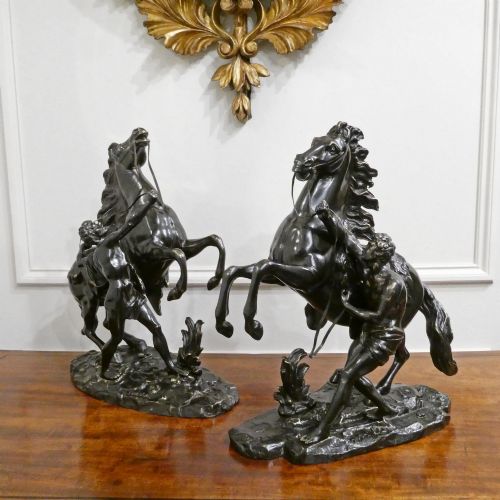
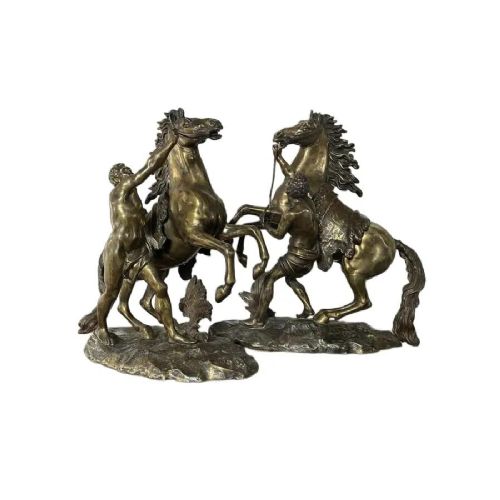
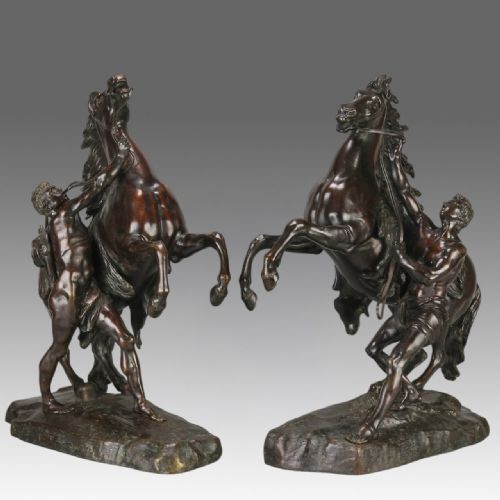
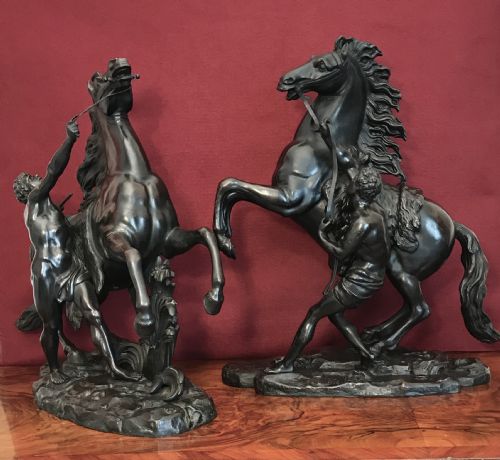
Marly horse figures are classical equine sculptures capturing rearing power, designed to bring drama and movement to any mantelpiece or hall.
Marly Horse Figures
Marly horse figures represent the famous monumental sculptures originally commissioned for the Chateau de Marly, depicting unruly steeds restrained by handlers. Buyers searching for marly horse figures encounter interpretations ranging from grand nineteenth century bronzes to later porcelain examples.
The pieces on this page appear in various forms including patinated bronze, gilt bronze, ormolu, and glazed porcelain. Victorian casting and modelling dominate the selection, reflecting a sustained nineteenth century British and European fascination with French neoclassical equine art.
Materials and methods
Foundry production relies on metal casting to capture the muscular tension and dynamic posture of the animals. Bronze, patinated bronze, and bronzed metal provide the necessary weight and durability for these rearing compositions.
Alternative interpretations utilise porcelain with detailed glaze finishes. Metal versions frequently employ mercury gilding or ormolu highlights to accentuate the harness details and the flowing manes of the horses.
Marly Horse Figures Retail Price Guide 2026
Typical asking prices for marly horse figures among the pieces listed under this phrase on Sellingantiques today, from the lower quarter to the upper quarter. They describe what is for sale here now, not the wider market.
Listings feature items from the Victorian period, the nineteenth century, and the year 1920.
Judging quality
Surface patination plays a significant role in visual success, with deep, even tones commanding greater appreciation than flat or uniform spray finishes. The handling of ancillary details, such as the naturalistic bases and restraint ropes, distinguishes superior Victorian workshop output from standard commercial production.
Charles Crozatier·Royal Dux
The Marly Horse Figures Glossary
- Ormolu
- Finely ground high-carat gold applied to a bronze base using a mercury amalgam technique. This creates a brilliant, durable golden surface characteristic of luxury French decorative arts.
- Patination
- The chemical or natural alteration of a metal surface over time, resulting in a coloured skin. Sculptors often apply artificial patination to enhance depth and shadow.
- Neoclassical
- A style reviving classical antiquity ideals, focusing on symmetry, proportion, and heroic subject matter. Marly horse figures embody this monumental aesthetic.
- Porcelain
- A ceramic material made by heating raw components to high temperatures, yielding a vitrified body. Glazed versions offer smooth, reflective surfaces suitable for detailed figurines.
Marly Horse Figures: Frequently Asked Questions
What are marly horse figures based on?
These figures replicate the famous marble sculptures created by Guillaume Coustou for the royal residence at Marly during the eighteenth century. They depict rearing horses held back by straining handlers.
The design became a staple of nineteenth century neoclassical interior decoration, reproduced across Europe in various sizes and materials.
How do I date a bronze marly horse?
Dating relies on examining the casting technique, the quality of the patination, and the style of the base. Nineteenth century pieces often show hand-chased surface details and heavier bronze construction.
Markings, signatures, or foundry stamps can also help pinpoint the period and workshop of origin.
Where should I display these sculptures?
Their dramatic silhouette makes them ideal as centrepieces on large sideboards, mantelpieces, or dedicated pedestals. Placing them where light can catch the patinated surfaces enhances their muscular definition.
Pairs look particularly striking when arranged symmetrically to frame a fireplace or a doorway.
Are porcelain versions as old as the bronzes?
Ceramic interpretations appeared alongside metal casts during the nineteenth and early twentieth centuries. Factories such as Royal Dux produced glazed porcelain models catering to domestic interior trends.
These ceramic pieces offer a lighter aesthetic while retaining the dramatic neoclassical posture of the original bronzes.