
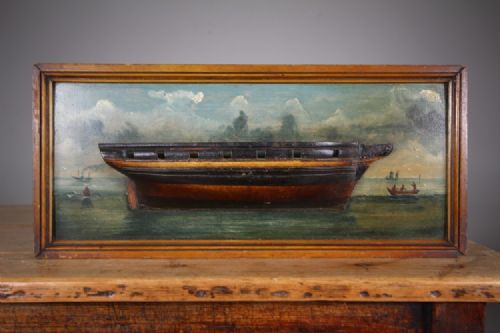


Maritime Folk Art Vessel
These maritime folk art vessel pieces bring authentic nautical history indoors, offering tactile craftsmanship shaped by sailors and coastal makers over the centuries.
Maritime Folk Art Vessel
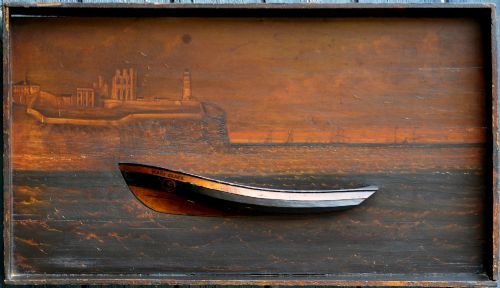
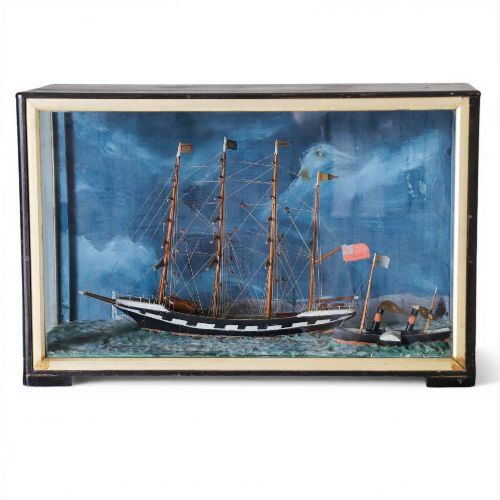
A maritime folk art vessel encompasses cased dioramas, ships in bottles, and carved containers representing sailing ships, steam barges, and naval scenes. These objects originate primarily from the nineteenth century and the early decades of the twentieth century, reflecting maritime traditions.
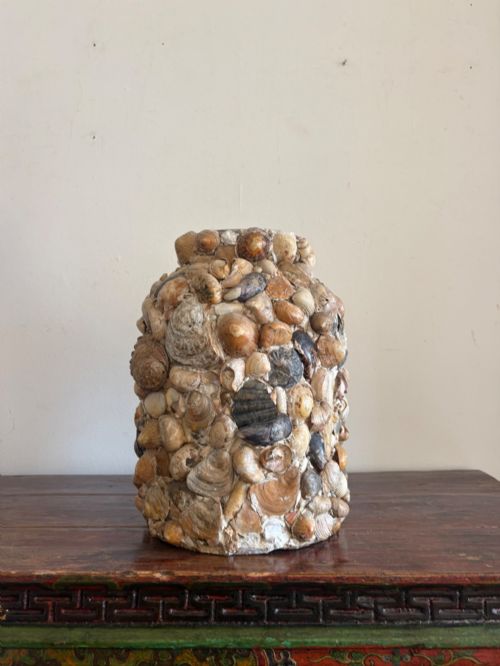
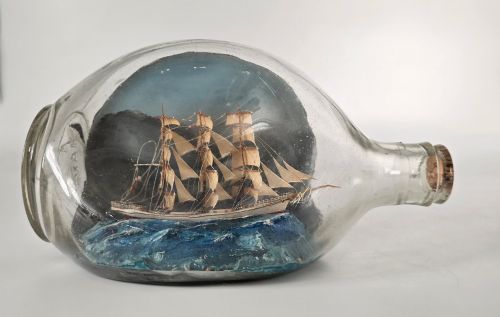
Forms range from wall-hanging shadow boxes and table models on wooden plinths to naive coconut flasks and glass bottles containing intricate rigging. The variety spans functional vessels adapted for display and pure decorative models built by hand.
Materials and construction methods
Maker construction relies on timber, wood, canvas, and glass, combined with thread for delicate rigging and paint to render seascapes. Artisans utilise scratch-built techniques to assemble miniature hulls and masts inside restricted openings or shallow display cases.
Unusual media such as coconut shell, plaster, and straw work appear in specific utilitarian and decorative objects, demonstrating resourceful material use. Glass jars and bottles house complex internal structures supported by wooden plinths.
Sailors carved fierce maritime scenes and nautical motifs onto humble coconut shells to create drinking flasks.
Distinctions in construction and detail
Quality rests in the precision of the miniature rigging, the painted depth of the Turneresque seascapes, and the structural integrity of the timber cases or glass bottles. Superior examples maintain intact original threads and stable painted surfaces without modern restoration.
The sophistication of the naive carving on wooden hulls, coconut flasks, and decorative jars separates standard decorative items from superior works. Compositional balance within cased dioramas determines the visual impact of competing vessels and steam barges.
The Maritime Folk Art Vessel Glossary
- Maritime Diorama
- A three-dimensional model depicting ships at sea within a fitted case or shadow box. These displays often incorporate painted canvas backgrounds to create depth.
- Ship in a Bottle
- A scale model of a sailing ship assembled inside a glass bottle through the neck using collapsible masts and thread. The vessel rests on a wooden plinth or internal base.
- Straw Work
- Decorative craft utilising split straw applied in geometric patterns to surfaces. This technique appears on specific nineteenth-century ship displays.
- Bug Bear Flask
- A carved drinking vessel fashioned from a coconut shell, historically produced by sailors. These objects feature naive maritime or figurative carvings.
Maritime Folk Art Vessel: Frequently Asked Questions
What is a maritime folk art vessel?
These pieces comprise handmade ship models, cased dioramas, and decorated containers created by sailors and coastal artisans during the nineteenth and early twentieth centuries.
They reflect maritime heritage through materials like timber, glass, coconut shell, and thread, capturing sailing ships and steam barges in miniature.
How were ships placed inside glass bottles?
Makers constructed the hulls and fitted the masts with hinged joints and long rigging threads that folded flat against the deck.
The entire assembly passed through the narrow bottle neck before the builder pulled the threads to raise the masts upright.
How should I display a diorama?
Display these cased dioramas and glass-housed ship models away from direct sunlight and damp environments to protect the fragile painted canvas and wooden components.
Stable indoor conditions preserve the original thread rigging and naive painted surfaces without requiring specialist mounting hardware.
How do I date a nineteenth-century model?
Dating relies on the vessel type, such as identifying four-masted sailing ships versus early steam barges, alongside construction materials like glass and timber.
Specific dates often appear in titling or inscriptions on the bottle labels and wooden display plinths.