

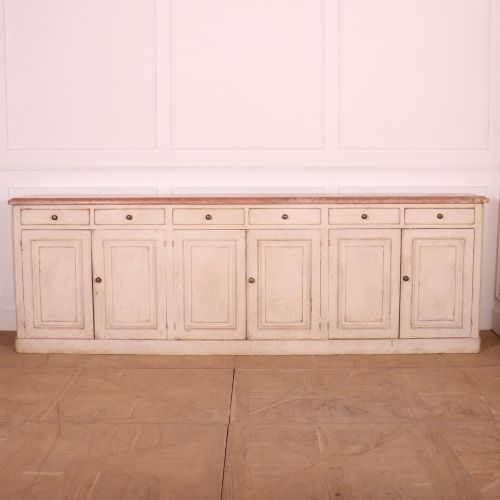
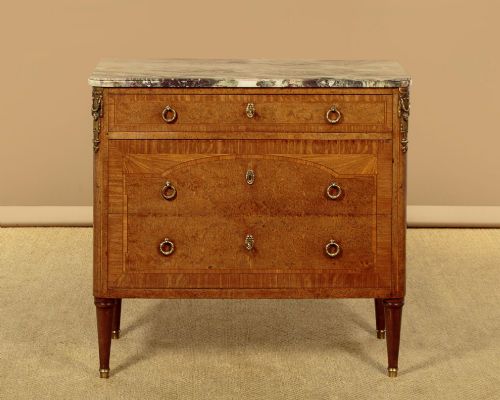
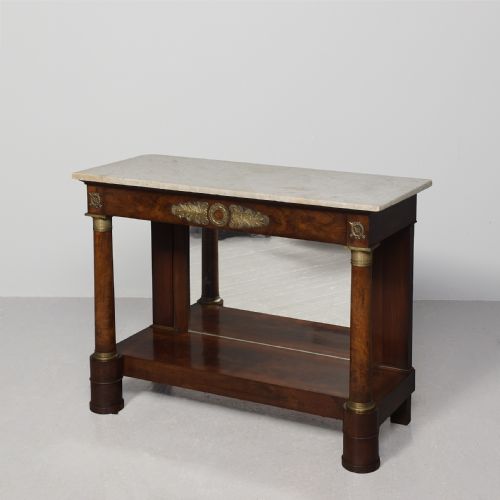
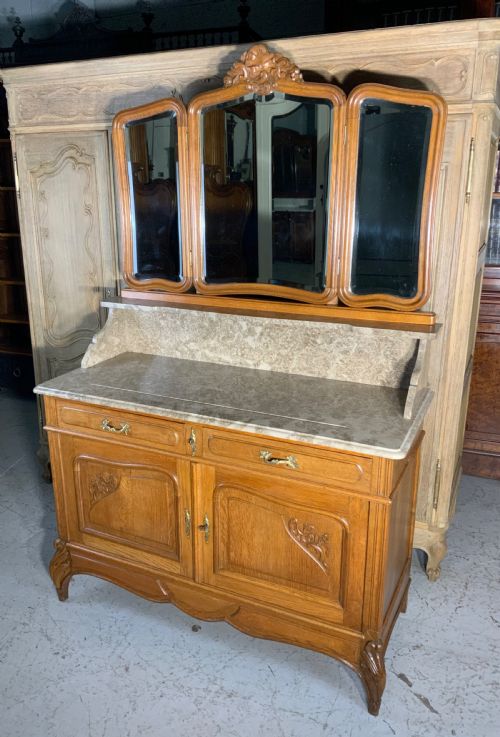
Marbled Top Sideboard
A marbled top sideboard brings together heavy stone and figured timber to anchor a room with serious presence.
Marbled Top Sideboard
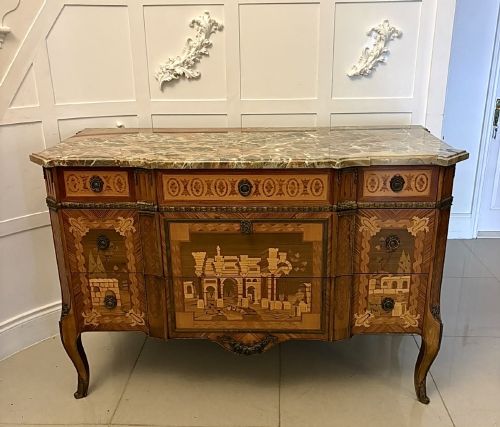
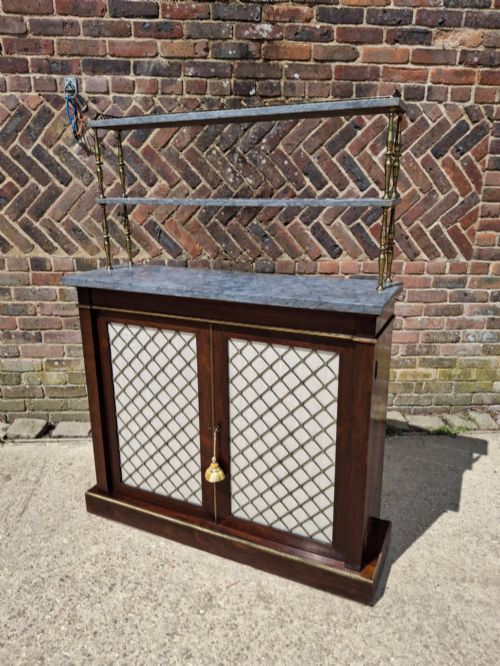
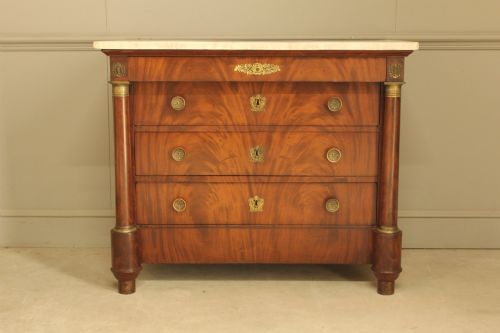
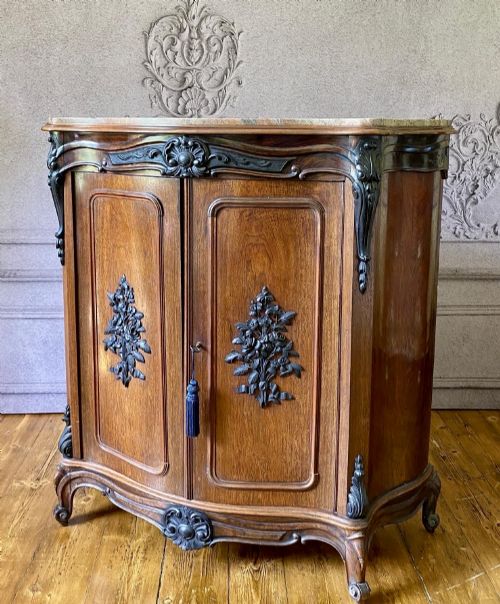
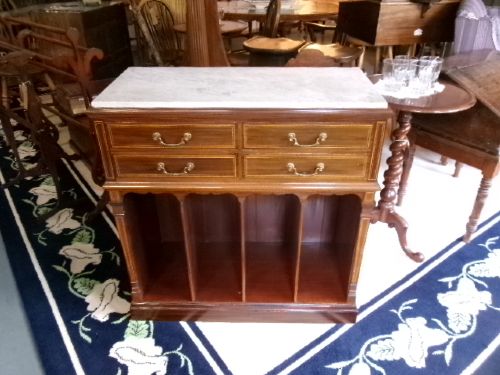
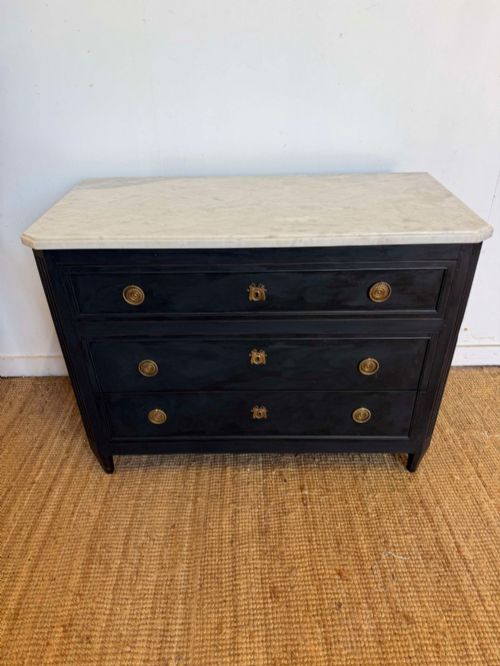
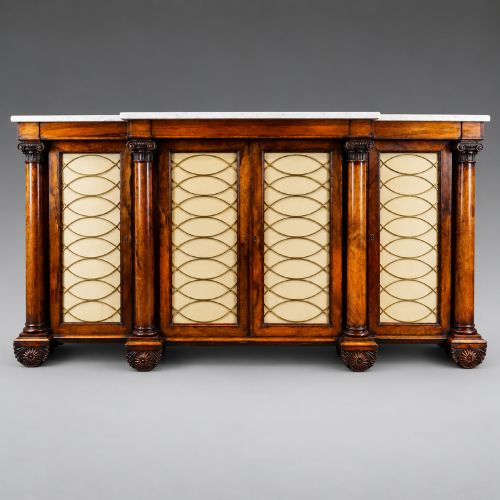
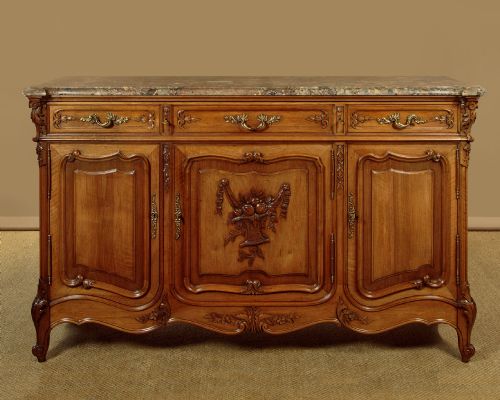
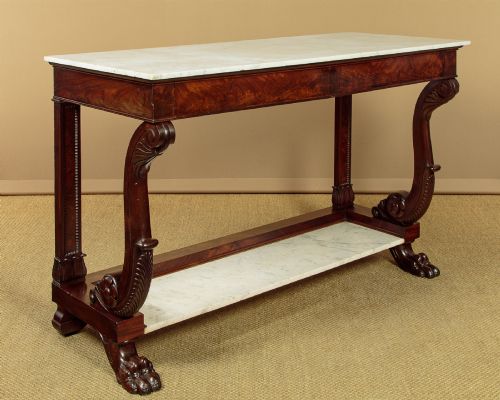
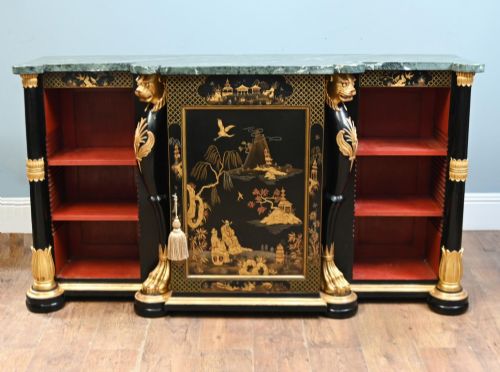
A marbled top sideboard combines substantial timber cabinetry with a solid stone surface, taking forms such as commodes, credenzas, and console tables. These pieces originate predominantly from the nineteenth century alongside eighteenth-century examples, reflecting both British and continental European cabinet-making traditions. Buyers encounter designs spanning Victorian walnut credentials to French Louis XVI style commodes and side cabinets.
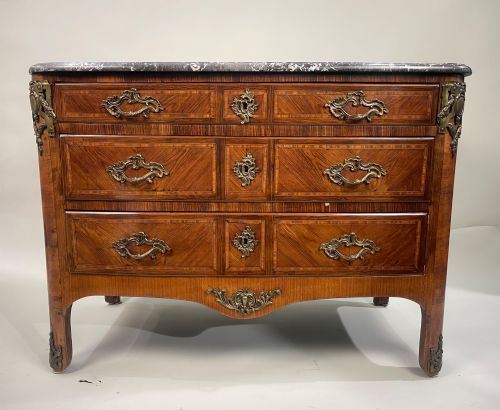
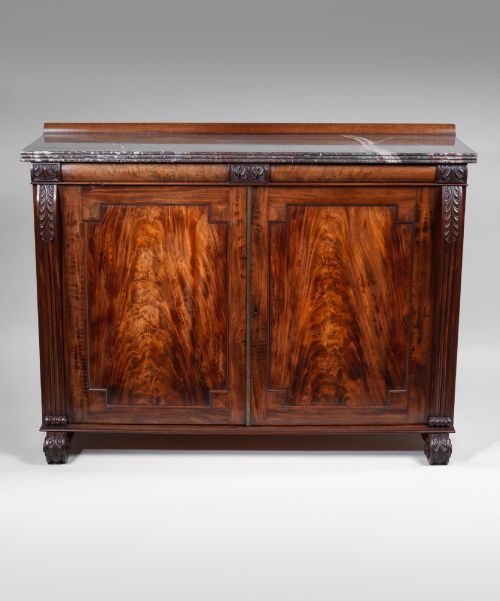
The integration of marble provides a durable, cool surface suited to serving, display, or washing, while the timber base offers enclosed storage behind panelled or glazed doors. The inventory leans heavily towards French models featuring shaped marble slabs paired with kingwood, mahogany, and walnut carcases. Regional variations also introduce painted finishes, oak, and specialised forms like patisserie display tables.
The form bridges utility and reception, serving equally in dining rooms, halls, and principal parlours. While standard sideboards and credenzas offer broad cupboards and mirror backs, smaller commodes and washstands adapt the same material combination to tighter footprints. This variety ensures a suitable proportion for almost any interior scheme requiring stone and wood texture.
How they were made
Cabinet makers constructed the foundational carcases from dense timbers including mahogany, walnut, kingwood, and rosewood, often applying intricate veneers or parquetry patterns across the exterior surfaces. Drawer fronts and door panels frequently incorporate marquetry or brass stringing, supported by structural elements of oak and deal. Ormolu mounts are pinned or screwed to corners and aprons, adding metallic contrast to the timber and stone.
The stone tops consist of heavy slabs of marble - ranging from white and grey varieties to pink and figured types - cut and polished to follow the contours of the cabinet beneath. These tops rest unattached or are bedded directly onto the timber framing, relying on their own weight to remain stable. Secondary woods inside drawers and carcass backs reveal traditional hand-cut dovetails and pegged joinery consistent with nineteenth-century and earlier workshop practices.
Marbled Top Sideboard Retail Price Guide 2026
Typical asking prices for marbled top sideboard among the pieces listed under this phrase on Sellingantiques today, from the lower quarter to the upper quarter. They describe what is for sale here now, not the wider market.
The listings on this site span the eighteenth, nineteenth, and twentieth centuries, uniting walnut, mahogany, and kingwood with polished marble surfaces.
What varies in quality
Quality rests in the precision of the cabinet work, from the tightness of the veneer joints and parquetry to the crispness of hand-carved details and ormolu mounts. Superior pieces display continuous grain matching across drawer fronts and doors, whereas lesser examples rely on simpler solid construction with minimal decorative embellishment. The integration between the stone and the timber carcase also dictates standard, with high-tier items featuring thick, finely figured marble cut specifically to fit the profile of the base.
The provenance and structural integrity of the secondary woods further distinguish workshop output, as does the survival of original hardware and interior fittings. Maker attribution, visible in signed bronzes or stamps on high-end French commodes, elevates the standing of a piece compared to anonymous workshop production. Conservation history matters too; an untouched surface with patinated timber and an original stone top holds greater integrity than heavily restored alternatives.
Jacques Bircklé·Henry Dasson·Weisweiler·Epstein
The Marbled Top Sideboard Glossary
- Commode
- A low chest of drawers or cabinet, typically French in origin, featuring a flat top designed for display or serving. These pieces often exhibit serpentine fronts and elaborate veneer work.
- Credenza
- A sideboard or buffet cabinet used for serving food or displaying plate, frequently incorporating central cupboards flanked by curved glass doors. Victorian iterations often include mirrored superstructures.
- Ormolu
- Gilded bronze mounts applied to furniture for decorative effect, prevalent on eighteenth and nineteenth-century continental pieces. The metalwork is cast and chased to highlight botanical and scroll motifs.
- Parquetry
- Geometric patterns of wood veneer laid down on a timber carcase to form floors or furniture surfaces. Artisans utilise contrasting timbers like kingwood, tulipwood, and walnut to create visual depth.
- Marquetry
- The art of applying pieces of veneer to a structure to form decorative pictures or ornamental designs. Craftsmen cut various coloured woods to fit together within a single sheet.
Marbled Top Sideboard: Frequently Asked Questions
Are marbled top sideboards heavy?
These pieces possess significant weight due to the solid stone slabs fitted to their upper surfaces. The combination of dense hardwood frames and thick marble requires multiple people for safe lifting and placement.
Buyers should ensure floor surfaces can support concentrated loads, particularly when positioning large credenzas or breakfront cabinets in upper-floor rooms.
How do I clean the marble top?
Maintenance requires mild soap and warm water applied with a soft cloth to avoid scratching the polished stone surface. Acidic substances like vinegar or wine can etch marble and must be wiped away immediately.
Routine dusting and occasional application of specialised stone soap help preserve the natural lustre of the material without harming adjacent timber veneers.
Can I use a sideboard for dining storage?
The deep cupboards and wide drawer spaces provide practical storage for tableware, linens, and dining accessories. The stone surface functions well as a serving area during meals.
Care should be taken with hot dishes placed directly on historic marble or polished wood to prevent thermal shock or ring marks.
How do I identify French styles?
French pieces often display curved cabriole legs, bombe profiles, and symmetrical ormolu mounts reflecting Louis XV and Louis XVI design vocabularies. Marquetry panels and exotic veneers like kingwood further signal continental workshop origins.
British equivalents tend toward straighter lines, heavier proportions, and darker woods such as Victorian walnut and mahogany.