


Marbled Top Dresser
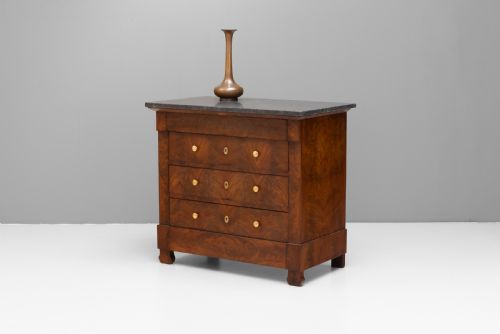
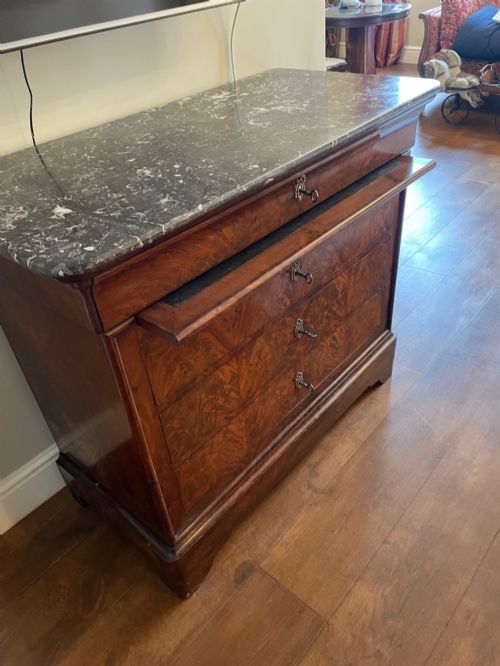
A marbled top dresser brings stone-topped solidity and polished timber to a room, offering a durable surface paired with deep drawer storage.
Marbled Top Dresser
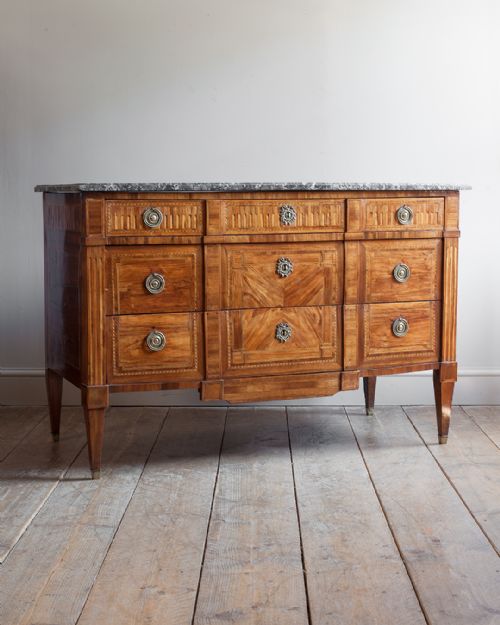
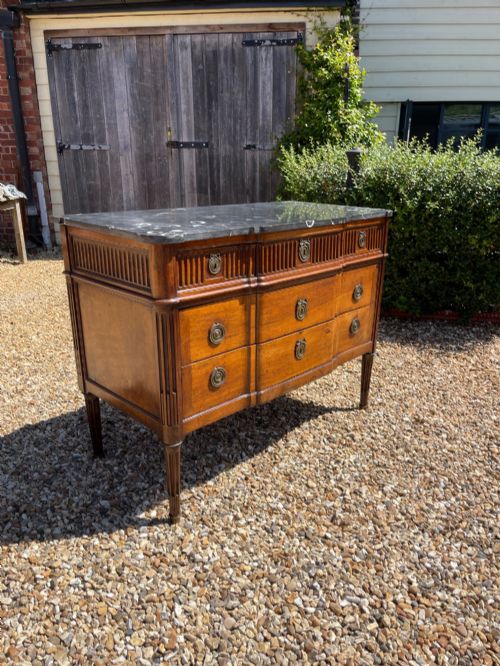
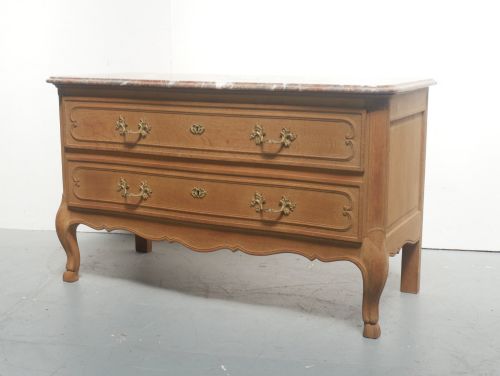
When you search for a marbled top dresser, you encounter pieces that function as commodes, washstands, and chests of drawers from eighteenth- and nineteenth-century Europe. These items combine a cool, hard stone slab with timber carcases designed to hold linens or personal items.
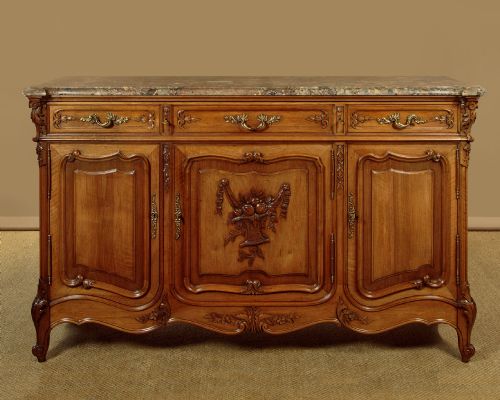
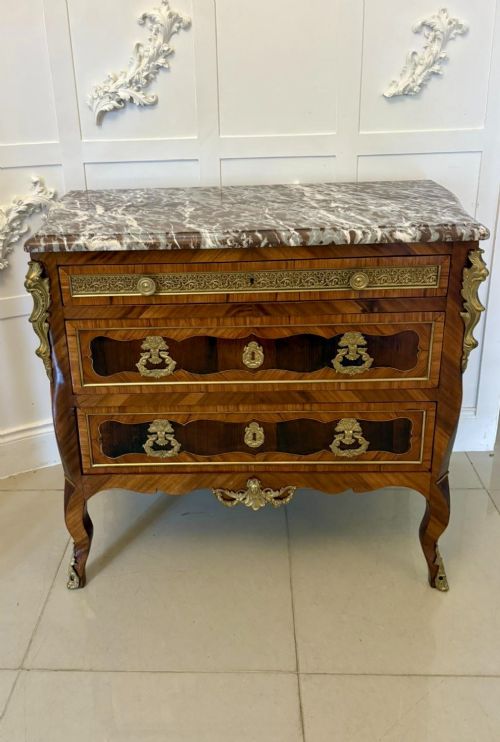
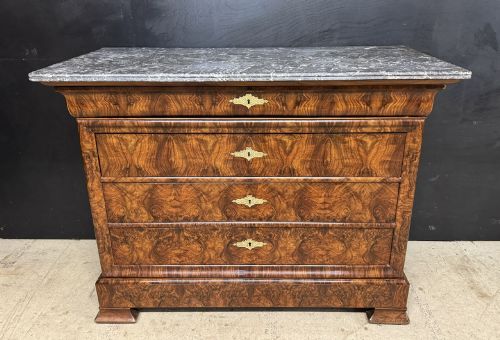
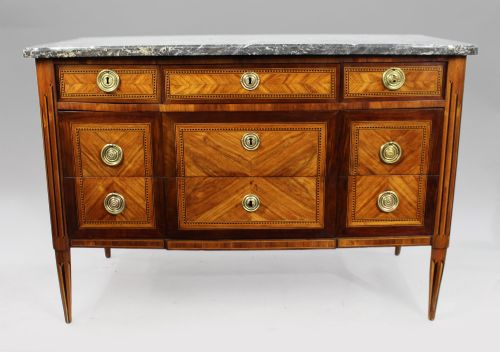
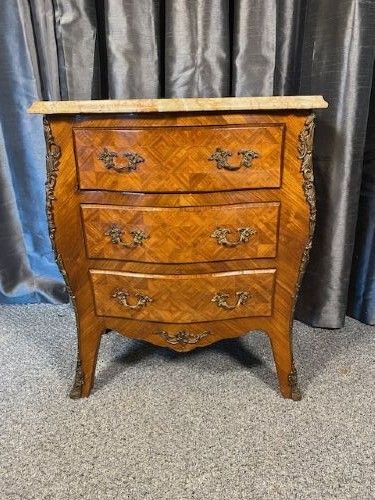
The version you meet most frequently on this page is the French commode, often styled in the manner of Louis XV or Louis XVI with serpentine or straight fronts. Walnut, mahogany, and cherrywood frequently form the body beneath the heavy marble slab.
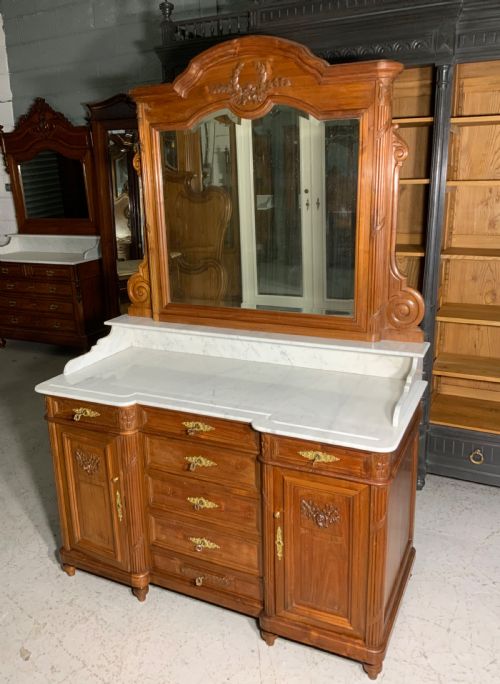
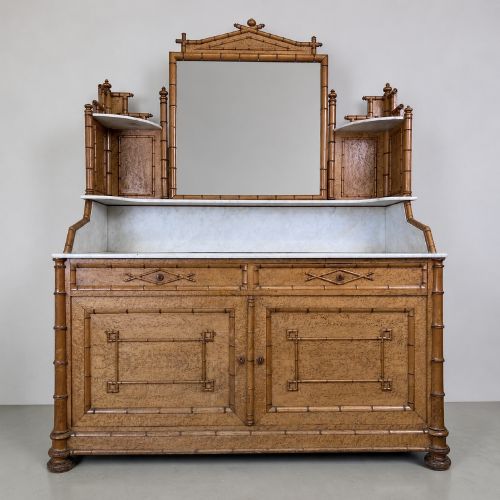
Beyond commodes, the selection includes washstands and dressing cabinets incorporating marble surfaces intended to resist water and daily wear. These functional items span periods from the eighteenth century through the early twentieth century, showing regional variations in timber and carving.
Materials and construction methods
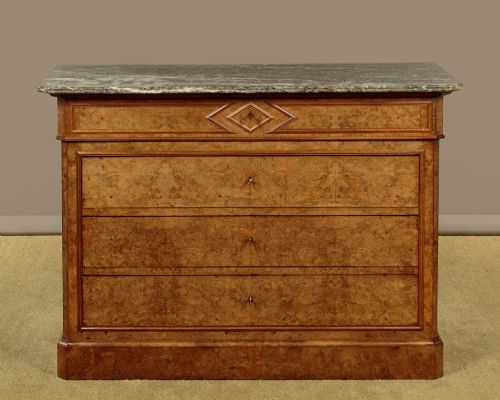
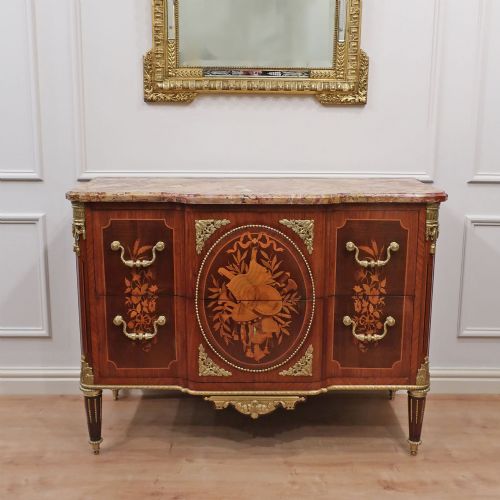
Cabinetmakers constructed the wooden carcases using dense hardwoods such as mahogany, walnut, oak, and cherrywood, frequently applying decorative veneers like kingwood, tulipwood, and burr walnut. Parquetry and marquetry inlay patterns create geometric or floral designs across the drawer fronts and sides.
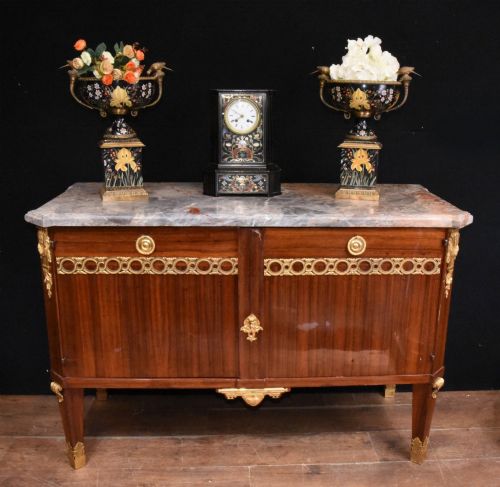
Heavy marble slabs rest directly upon the timber tops, sometimes secured by moulded wooden edges or shaped to follow serpentine contours. Brass, ormolu, and bronze mounts are fitted around keyholes, drawer pulls, and corners to accent the design.
Marbled Top Dresser Retail Price Guide 2026
Typical asking prices for marbled top dresser among the pieces listed under this phrase on Sellingantiques today, from the lower quarter to the upper quarter. They describe what is for sale here now, not the wider market.
Several pieces embrace botanical whimsy through hand-carved faux bamboo frames supporting cold, heavy slabs of stone.
Distinctions in quality and execution
Quality rests heavily on the precision of the timber matching and the intricacy of the parquetry or marquetry inlay. Superior examples display seamless grain continuity across multiple drawers and finely cast ormolu mounts rather than plain brass pressings.
The thickness and selection of the marble top also dictate grade, with matched serpentine slabs shaped specifically to the carcase representing higher execution than standard rectangular slabs.
The Marbled Top Dresser Glossary
- Commode
- A low chest of drawers, frequently French in origin, featuring a flat or serpentine top surface.
- Marquetry
- The art of applying pieces of veneer to a structure to form decorative patterns, often floral or pictorial.
- Ormolu
- Gilded bronze used for decorative furniture mounts and ornaments during the eighteenth and nineteenth centuries.
- Serpentine
- A furniture front or top shaped with a central concave curve flanked by two convex curves.
- Parquetry
- Geometric mosaic woodwork used for surfaces, resembling a tiled floor in miniature.
Marbled Top Dresser: Frequently Asked Questions
How were marbled top dressers used?
These pieces served primarily in bedrooms and parlours for storing clothing, linens, and personal possessions. The stone upper surface provided a practical, water-resistant area for washing basins, pitchers, and dressing items.
Over time, their function shifted from utilitarian bedroom storage to decorative display furniture in hallways and living spaces. The heavy top protected the wood beneath from spills and damp objects.
How do I live with a marble top?
Living with a marble surface requires basic care to prevent staining from acidic liquids such as wine, vinegar, or citrus. Wipe spills promptly and use protective coasters or mats beneath bottles and glasses.
Position the heavy piece securely against a wall, as the weight of the stone slab rests largely by gravity. Clean the marble gently with mild soap and warm water rather than harsh chemical abrasives.
How can I tell periods apart?
Eighteenth-century examples often display fluid lines associated with the Louis XV and Louis XVI reigns, utilising walnut, cherrywood, or rosewood with delicate marquetry. Proportions are frequently lighter, and hand-cut dovetails reveal early construction methods.
Nineteenth-century pieces tend toward heavier proportions, utilising mahogany, burr walnut, and ebonised finishes during the Victorian and Louis Philippe eras. Machine-cut elements and standardised brass hardware become more common in the later decades.
What is faux bamboo?
Faux bamboo is a decorative woodworking technique where solid timber is carved and turned to imitate the segmented stalks of natural bamboo. This style appeared frequently on late nineteenth-century dressing cabinets and washstands.
Makers combined this exotic aesthetic with bird's-eye maple and marble tops to satisfy Victorian tastes for imaginative, travel-inspired furniture.