
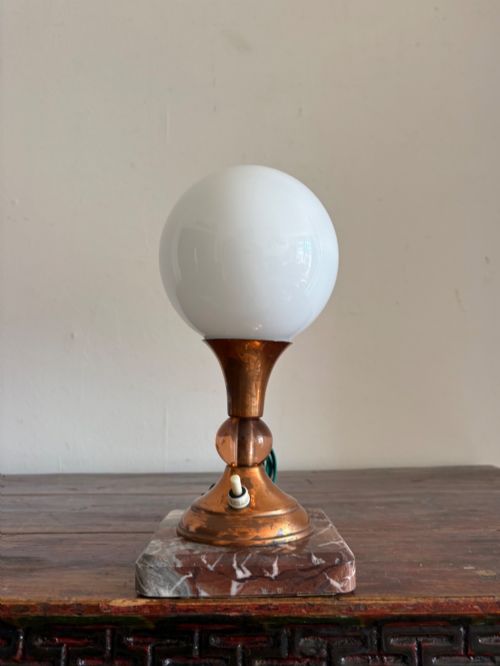


Marbled Glass Globe Lamp
A marbled glass globe lamp brings atmospheric illumination and striking modernist form to a room through its blend of distinctive glass and sculptural metal.
Marbled Glass Globe Lamp
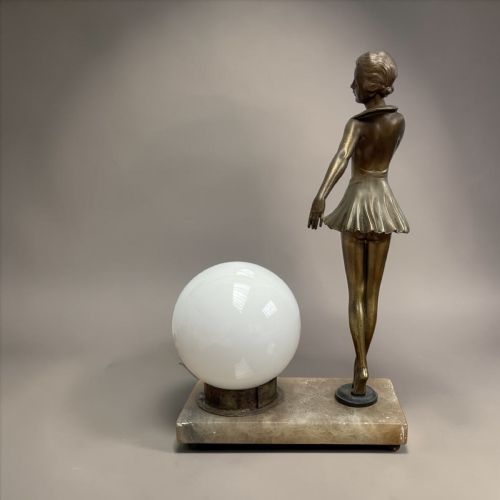
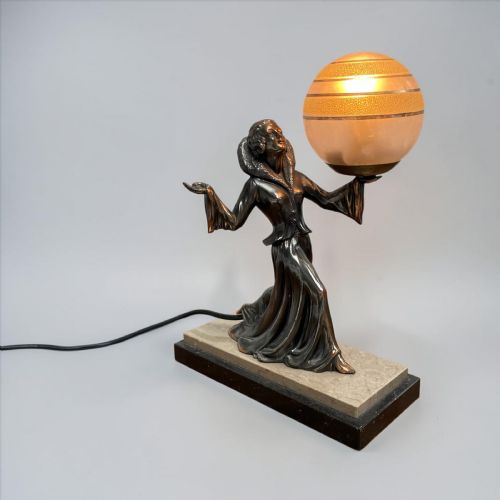
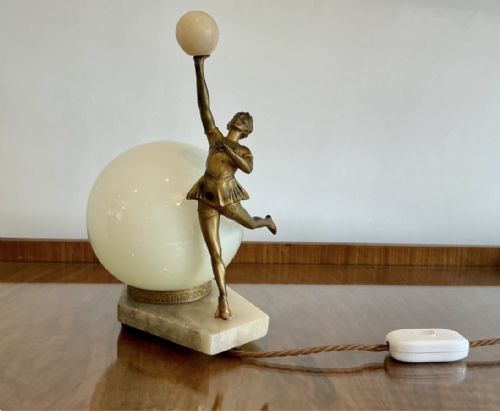
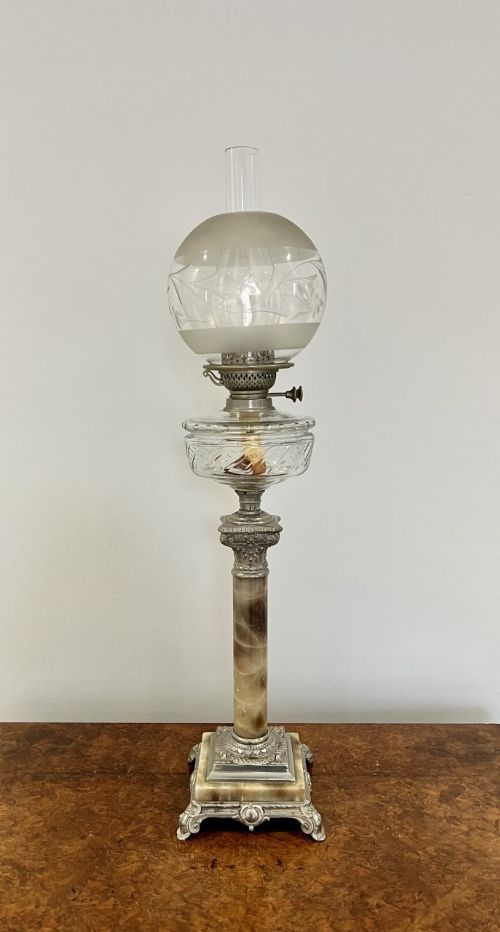
When you search for a marbled glass globe lamp, you are looking at domestic lighting forms predominantly from the early twentieth century, specifically spanning the Edwardian period through to the Art Deco era of the 1920s and 1930s. These pieces combine functional illumination with decorative figural or structural bases, drawing heavily on French Art Deco design sensibilities.
The objects listed typically manifest as table lamps, night lights, and converted oil lamps designed for interior display. You will frequently encounter figural compositions featuring ladies, animals such as dogs and greyhounds, or birds like seagulls mounted on substantial stone bases.
The materials defining these items range from opaline, crackle, and mottled glass shades paired with heavy foundations of marble, onyx, or granite. Metal components in brass, bronze, copper, spelter, and chrome complete the primary construction of these domestic objects.
Materials and construction
The manufacture of these lamps relies on the combination of cast metals and worked stone, where figures cast in spelter or bronze are mounted securely onto heavy marble or onyx bases. Artisans utilised patinated metal, brass, and chrome to shape the structural bodies and frames supporting the glass elements.
Shades and globes utilise specialised glass techniques including opaline, crackle, and mottled finishes to diffuse light evenly. The integration of stone, metal, and varied glass types required precise assembly to balance the weight of the heavy bases against delicate shade forms.
Materials documented across the pieces include marble, onyx, granite, opaline glass, crackle glass, bronze, spelter, and chrome.
Assessing quality and execution
Quality in these pieces is dictated by the fineness of the figural casting and the choice of base materials, where detailed bronze work on solid marble surpasses simpler cast spelter on composite bases. The execution of the metal patina and the crispness of the sculpting distinguish finer examples from standard production.
The integration between the glass shade and the metal or stone base determines the compositional success of the lamp. Superior examples display harmonious proportions between the glowing globe and the supporting figural or architectural mount.
The Marbled Glass Globe Lamp Glossary
- Opaline glass
- A type of semi-translucent glass that diffuses light with a milky appearance. It was frequently utilised for shades to soften the glow of early electric and oil illumination.
- Spelter
- An alloy of zinc and other metals used as an economical alternative to bronze for casting decorative figures. It is commonly found supporting lamp bases from the Art Deco period.
- Onyx
- A banded variety of chalcedony quartz used extensively for heavy decorative lamp bases. It provides a polished, variegated stone foundation that complements metal figures.
- Patinated metal
- Metal treated with chemicals or heat to produce a specific surface colour or finish. This technique highlights sculptural details on figural lamp mounts.
- Crackle glass
- Glass intentionally produced with a network of fine surface fractures for decorative texture. It creates distinctive light refraction when illuminated from within.
Marbled Glass Globe Lamp: Frequently Asked Questions
How do I date a marbled glass globe lamp?
Dating relies on stylistic markers from the periods represented, such as 1920s and 1930s Art Deco geometric forms or Edwardian onyx structures.
Examining the materials, including early chrome, spelter, and mottled opaline glass, helps narrow the decade of manufacture.
What materials were used for the bases?
Bases are predominantly constructed from heavy natural stones including marble, onyx, and granite.
These dense materials provide stability for the sculptural metal figures and glass elements mounted upon them.
Were these lamps used as night lights?
Many smaller examples function as night lights, designed to emit a soft, glowing ambiance in domestic interiors.
They often feature figural subjects like animals or children paired with mottled or opaline shades.
How do I identify French Art Deco styles?
French Art Deco pieces are characterised by stylised figural work, such as dancers or greyhounds, paired with refined metal and glass.
The aesthetic emphasises streamlined modernity combined with luxurious materials like bronze and marble.