
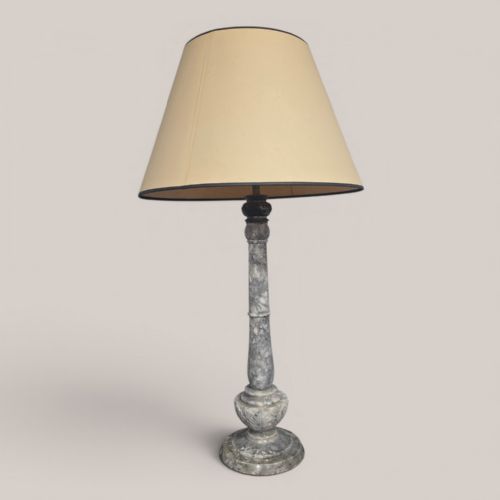
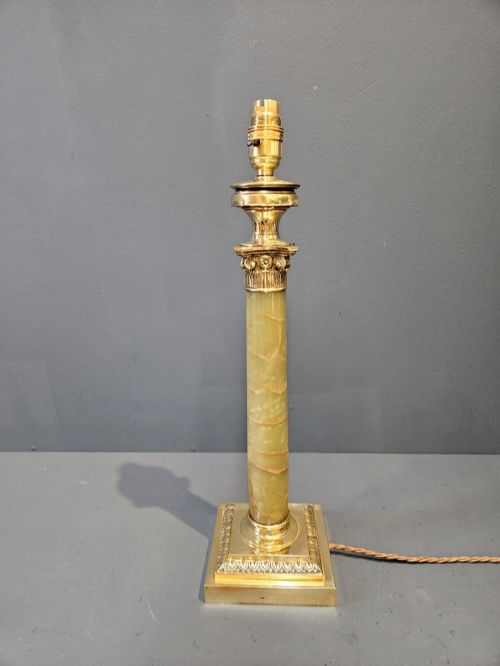
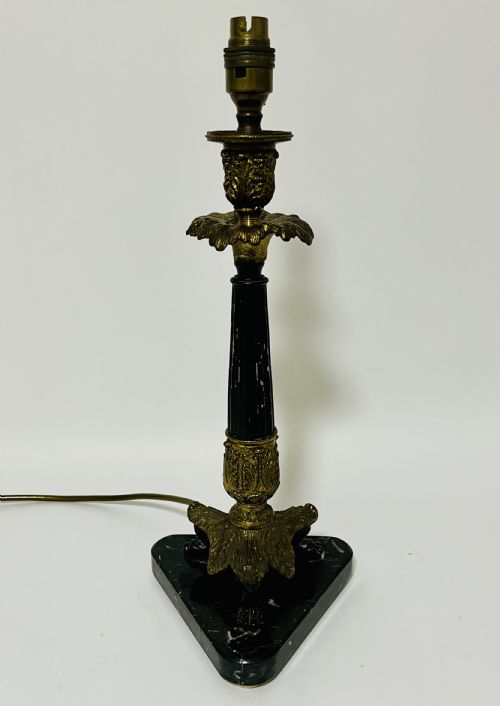


Marbled Column Table Lamp
A marbled column table lamp brings weighty classical proportion and stone texture into a room, combining architectural dignity with warm domestic light.
Marbled Column Table Lamp
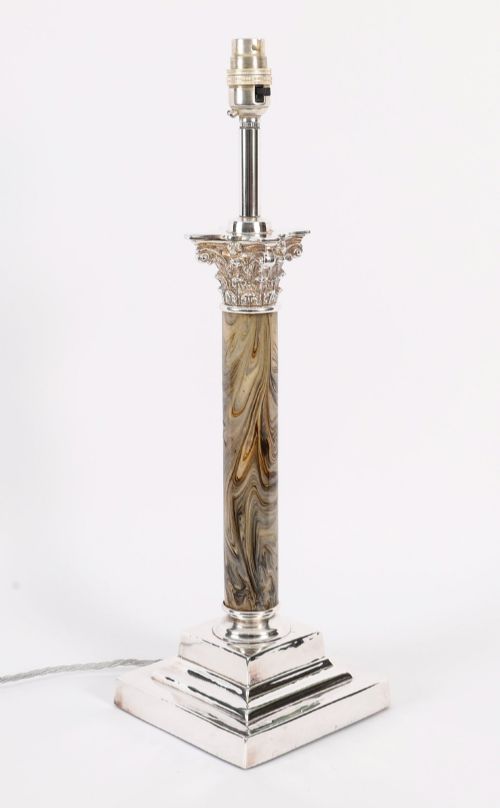
When you search for a marbled column table lamp, you find lighting pieces built from turned stone pillars paired with metal mounts and bases. These pieces draw heavily on classical architectural forms like the Corinthian order, often scaling down ancient stone columns to sit on a sideboard or desk.
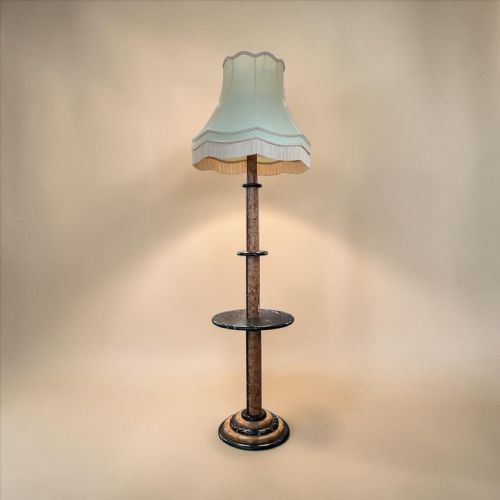
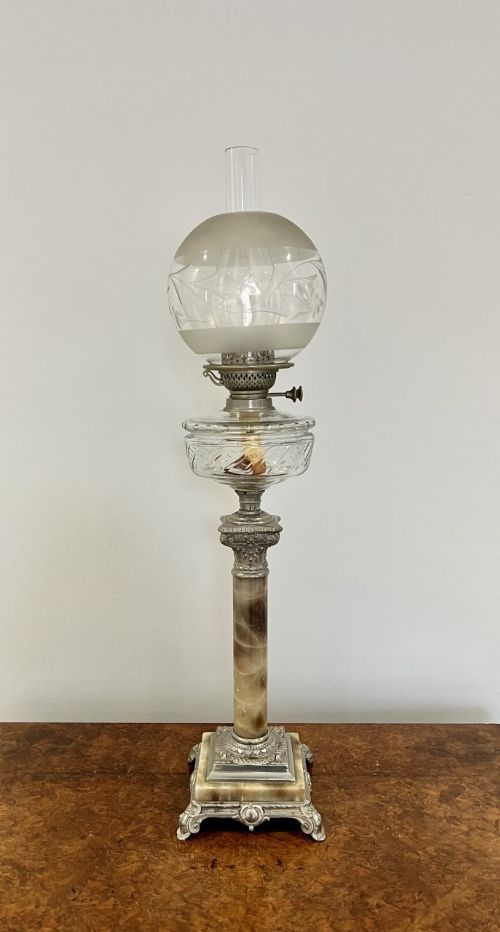
The versions most common on this page date from the Victorian period through the early twentieth century, spanning styles from French Empire to Art Deco. Many started life as oil lamps or candlesticks before conversion to electricity, while others were built as standard lamps or table pieces from the outset.
How they were made
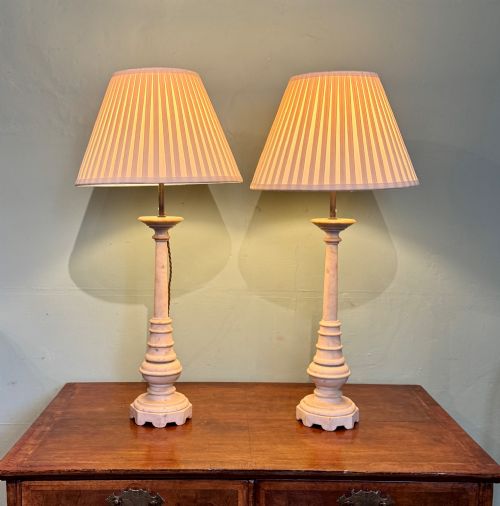
These lamps rely on a combination of turned natural stone and cast metal components. Workshops used white marble, onyx, and alabaster for the central columns, shaping the stone on lathes before polishing the surface to a smooth finish.
Makers integrated brass, gilt bronze, ormolu, and silver-plated mounts to cap the stone columns and form stepped bases. These metal elements often featured classical leaf motifs, beaded borders, and decorative collar bands fixed securely through central threaded rods.
Some heavier marble columns double as sturdy bookends when parked temporarily on a crowded study desk.
What varies in quality
Quality in these pieces rests primarily on the selection and working of the stone. Finer examples display lively natural veining, consistent polish without resin filler, and substantial weight in the marble or onyx blocks.
The standard of metalwork also sets pieces apart, seen in the crispness of cast ormolu mounts and the thickness of silver plating over brass. Well-executed pieces show precise alignment between stone shafts and metal bases without gaps or loose collars.
The Marbled Column Table Lamp Glossary
- Ormolu
- Gilt bronze produced by applying a mercury-gilding process to cast bronze objects. It provides a rich, durable gold-coloured surface on classical mounts.
- Corinthian column
- A classical architectural column style featuring an ornate capital decorated with acanthus leaves. This motif appears frequently on the tops of tall table lamps.
- Guéridon
- A small occasional table supported by one or more central columns. Several variations of this form appear alongside standard lamp pieces in stone and wood.
- Toleware
- Painted and lacquered metalware used for shades, bodies, or bases. It offers a contrasting matte finish against polished marble and bright brass.
Marbled Column Table Lamp: Frequently Asked Questions
Are these lamps converted from oil lamps?
Many of these pieces began as nineteenth-century oil lamps or candlesticks that were subsequently wired for electricity during later decades.
Conversion methods vary, but most retain their original burner galleries or font collars adapted to hold modern lamp holders and shades.
How do I clean marble and onyx?
Stone columns require gentle dusting with a dry microfibre cloth to protect the polished surface from scratches.
Avoid household chemical cleaners or excessive moisture, which can penetrate unsealed stone or damage old metal mounts.
What styles influence these designs?
The dominant influences include French Empire, Neoclassical revival, and Edwardian interpretations of classical antiquity.
These styles emphasise symmetry, architectural columns, and classical decorative motifs drawn from Greek and Roman architecture.
How do I date a marble lamp?
Dating relies on examining the assembly methods, metal casting quality, and wiring components alongside the overall style.
Late nineteenth-century examples often feature heavy brass castings and patinated bronze, while 1920s and 1930s pieces lean towards streamlined Art Deco forms.