

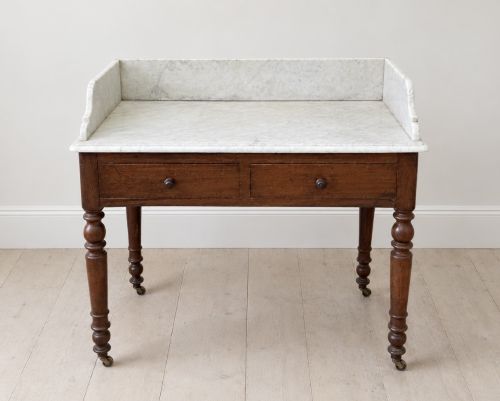
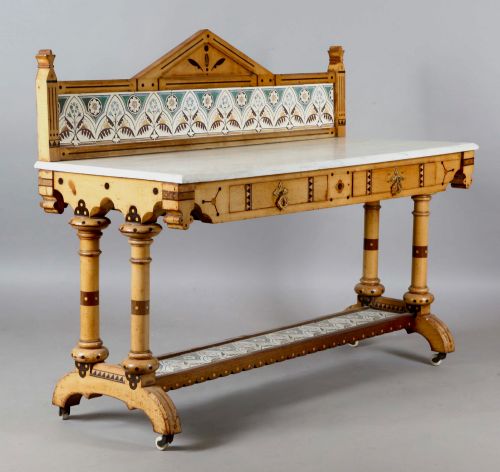
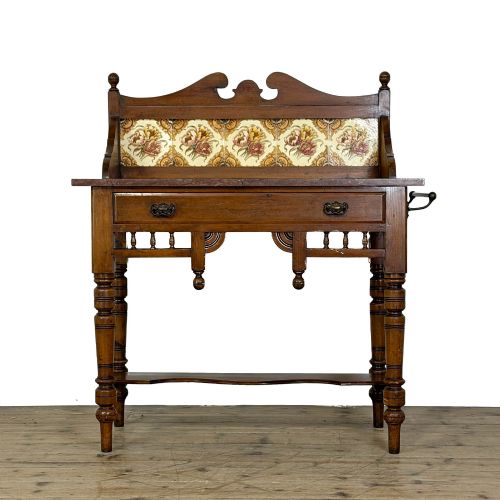
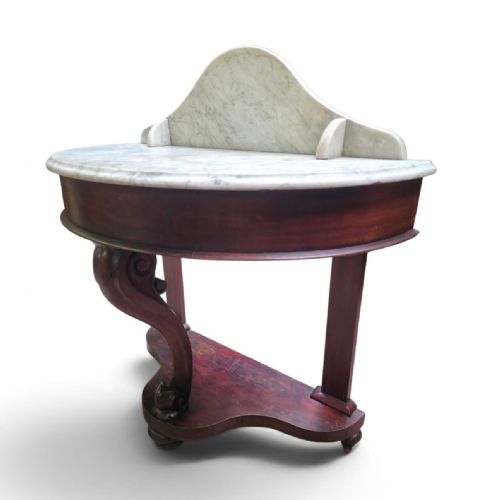
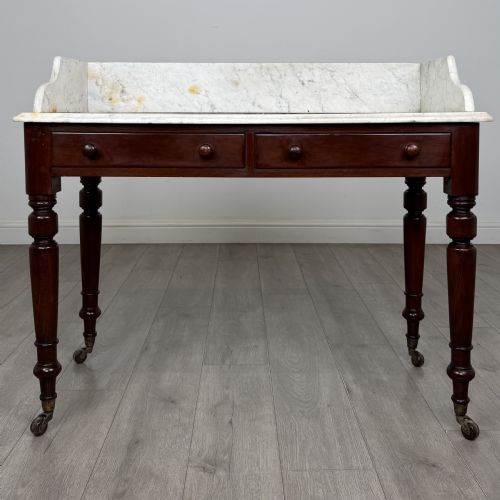
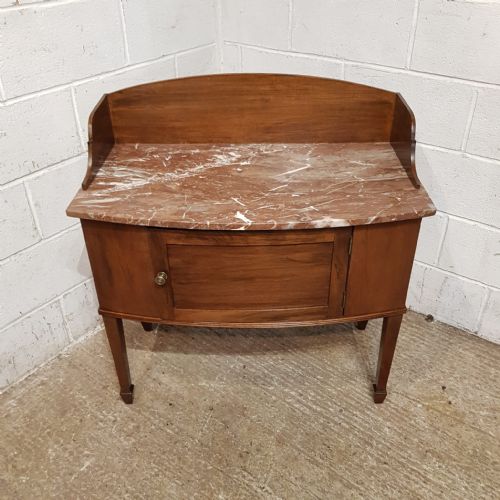
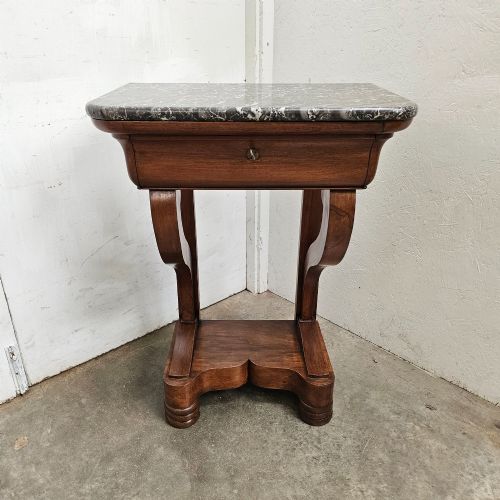
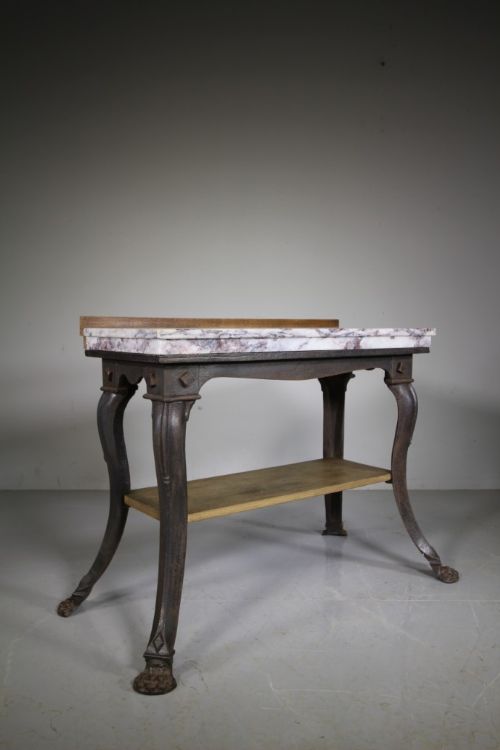


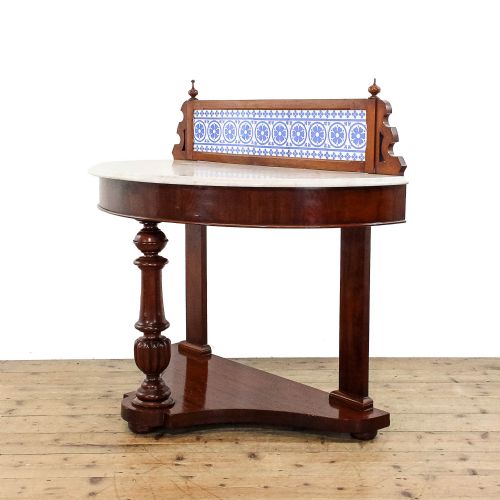
Marble Washstand Console
These marble washstand console pieces bring solid timber and cool stone together for practical daily utility in any bedroom or hall.
Marble Washstand Console
A marble washstand console combines a sturdy wooden frame with a heavy stone slab designed to handle daily washing routines. These functional pieces range from simple pine and painted frames to finer walnut, satinbirch, and mahogany builds from the nineteenth and early twentieth centuries.
Most examples seen here date from the Victorian and Edwardian eras, spanning straightforward utilitarian wash stands to elegant bow fronted console tables. Makers adapted standard washstand forms into side tables by pairing timber frames with smooth marble tops that resisted water and wear.
Buyers will encounter various formats including freestanding washstands, side tables, and console tables featuring materials like brass fittings and ceramic elements. The selection shifts between straightforward English designs and continental Louis Philippe influences, reflecting the diverse domestic needs of the period.
Construction and materials
Carpenters built the structural frames using solid hardwoods like mahogany, walnut, and burr walnut alongside softer timbers such as pine and satinbirch. These timber carcasses provided the necessary strength to support heavy stone surfaces without buckling under daily loads.
The defining feature is the fitted marble top, selected for its imperviousness to water splashes during washing. Workshops combined this stone with secondary elements including ceramic basins, brass hardware, and painted surface finishes.
Marble Washstand Console Retail Price Guide 2026
Typical asking prices for marble washstand console among the pieces listed under this phrase on Sellingantiques today, from the lower quarter to the upper quarter. They describe what is for sale here now, not the wider market.
Victorian households relied on these marble slabs to keep washing water from ruining the family sideboard.
Distinctions in construction and finish
Quality rests primarily in the choice of timber and the precision of the joinery within the frame. Dense hardwoods like mahogany and figured walnut indicate a higher grade of production than simple painted pine.
The refinement of the marble slab and the integration of bow fronted or curved cabinetry separate standard utilitarian washstands from finer console tables. Finer examples display careful attention to secondary timbers such as satinwood and balanced proportions across the entire piece.
Maples
The Marble Washstand Console Glossary
- Console table
- A table designed to stand against a wall, frequently featuring decorative brackets or legs. These pieces often serve an ornamental function in hallways and living spaces.
- Bow front
- A convex, outward-curving front section on a cabinet or table. This curved profile requires skilled carpentry to shape the timber frame and fit the stone top.
- Satinbirch
- A pale, lustrous timber derived from birch trees, featuring a natural sheen. Cabinetmakers utilised this wood for light-toned Edwardian and Victorian bedroom furniture.
- Washstand
- A piece of furniture designed to hold a basin, jug, and washing accessories. These items typically incorporate splashbacks and stone tops to protect surrounding walls.
- Burr walnut
- Timber taken from the wart-like growth on a walnut tree, producing swirling grain patterns. This decorative veneer elevates the visual appeal of side tables and console frames.
Marble Washstand Console: Frequently Asked Questions
How do I clean a marble top?
Wipe the stone surface using a damp cloth and mild, pH-neutral soap to remove everyday dust and marks.
Avoid acidic cleaning agents or harsh scrubbing pads that can etch the polished finish of the marble.
Can I use these as side tables?
These pieces function well as hallway console tables or side tables in living rooms and bedrooms.
The sturdy stone top easily supports lamps, books, and decorative objects while providing a distinct period surface.
How do I date a piece?
Examine the secondary timbers, construction joints, and overall style to establish the manufacturing period.
Victorian pieces often display heavier mahogany or walnut builds, whereas Edwardian examples frequently feature lighter pine, satinwood, or satinbirch frames.
Are marble tops removable?
Most marble slabs rest freely on top of the timber frame rather than being permanently fixed down.
Lifting the stone requires care due to the heavy weight, but this loose fit allows for easier transport and repositioning of the furniture.