



Marble Wash Basin
These marble wash basin listings bring practical nineteenth-century stone and wood utility straight into the modern home, offering solid surfaces built for daily use.
Marble Wash Basin
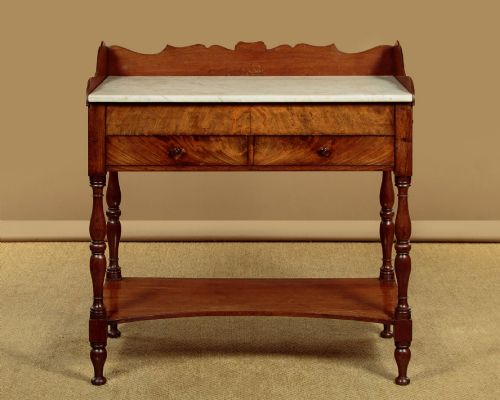
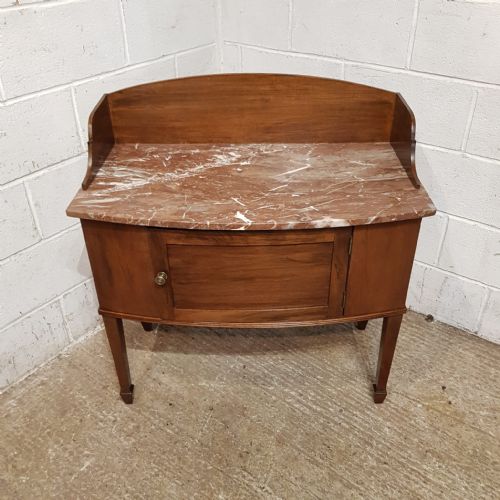
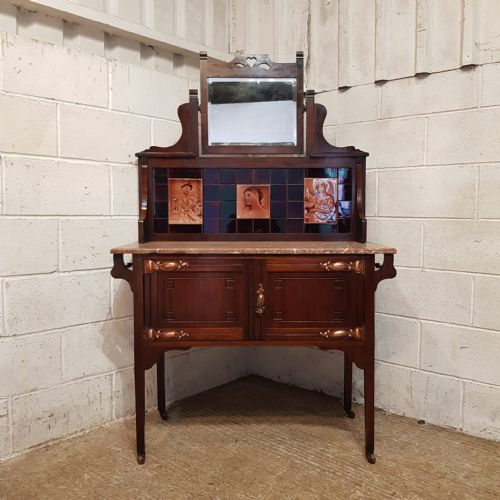
A marble wash basin setup typically combines a heavy stone surface with a wooden washstand framework to support washing vessels. These pieces date across the Victorian and Edwardian periods, stretching back into the early nineteenth century.
Most examples encountered here are complete washstands featuring fitted marble tops designed to hold ceramic basins, pitchers, and jugs safely. Woods like mahogany, walnut, satinbirch, and painted pine provide the structural support beneath the stone.
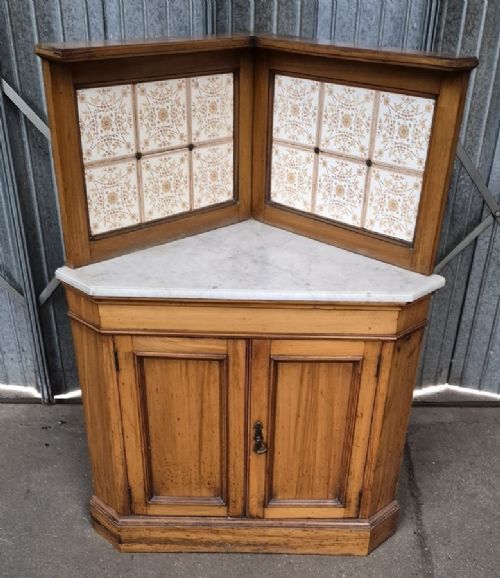
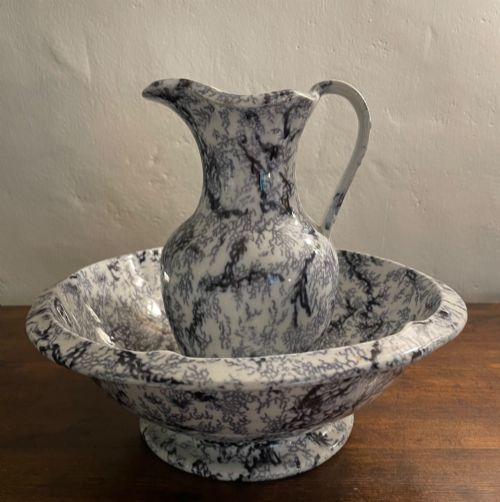
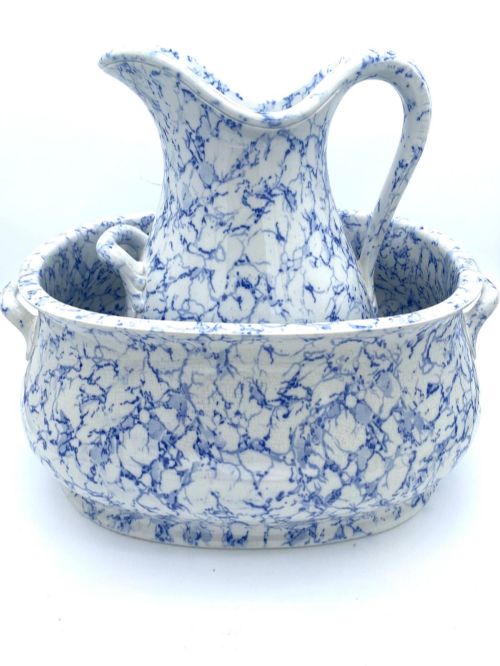
Buyers will also find associated water jugs, footbaths, and ceramic wash sets that complement the main washstand furniture. The forms range from corner configurations and bow fronts to straightforward rectangular tables.
How they were made
Cabinetmakers constructed the main stands using sturdy timbers such as mahogany, walnut, and satinbirch, alongside painted pine. These frames required solid joinery to support the immense weight of the thick marble slabs fitted to their tops.
Ceramic components like basins and jugs were formed from earthenware, finished with specialised glazes and decorative techniques such as flow blue transfer printing. The marble slabs were cut, levelled, and polished to create a durable, waterproof counter.
Marble Wash Basin Retail Price Guide 2026
Typical asking prices for marble wash basin among the pieces listed under this phrase on Sellingantiques today, from the lower quarter to the upper quarter. They describe what is for sale here now, not the wider market.
The listings here span the Victorian and Edwardian eras, utilising materials like marble, mahogany, walnut, satinbirch, and earthenware.
What varies in quality
The choice of cabinet wood and the intricacy of the stand's design define the upper tier of these pieces. Dense hardwoods like mahogany and walnut, paired with finely figured marble, mark out the more substantial items.
Decorative detailing on both the wooden frame and the accompanying ceramic wash sets distinguishes standard utility furniture from finer artistic examples. Art Nouveau influences or named ceramic factories elevate the overall significance of an ensemble.
Walker And Sons·Minton
The Marble Wash Basin Glossary
- Washstand
- A piece of bedroom furniture designed to hold a basin, pitcher, and related washing equipment before indoor plumbing became universal. These items often feature marble tops to protect the wood from water splashes.
- Flow blue
- A nineteenth-century transfer printing technique where the cobalt blue pigment blurred slightly into the white glaze during firing. This effect created a soft, misty appearance popular on earthenware jugs and basins.
- Satinbirch
- A pale, lustrous timber derived from birch trees, used during the late Victorian era for bedroom furniture. It provided a bright, uniform grain pattern favored in lighter decorative schemes.
- Footbath
- A deep, wide ceramic vessel intended for soaking feet, often produced as part of a larger sanitary set. They frequently match the patterns found on water jugs and wash basins of the same period.
Marble Wash Basin: Frequently Asked Questions
What is a marble wash basin?
A marble wash basin setup is a nineteenth-century bedroom furnishing that pairs a stone-topped wooden stand with ceramic washing vessels.
These pieces were essential for personal hygiene before plumbed bathrooms became standard in homes.
How were these washstands used?
They served as the primary washing station in bedrooms, holding water pitchers and basins for daily grooming.
The stone top provided a durable, water-resistant surface that handled splashes easily.
How do I date a washstand?
Dating relies on the prevailing furniture styles, such as Victorian bow fronts or Edwardian simplicity, combined with timber choices.
Makers' marks on accompanying earthenware or the specific profile of the woodwork also help narrow down the decade.
How do I live with one?
These pieces fit well into modern bathrooms or hallways as console tables, offering useful flat surfaces and lower storage.
The marble top requires basic care to avoid staining, much like any natural stone counter.