





Marble Urn Desk Lights
These marble urn desk lights combine classical stone bodies with metal mounts, bringing sculptural weight and period warmth to a workspace.
Marble Urn Desk Lights
Marble urn desk lights are practical illumination pieces formed from carved stone bodies mounted with metal work, serving as functional table lamps and decorative objects. When you search for marble urn desk lights, you encounter table lamps and converted candlesticks that translate classical urn and cassolette forms into desk lighting.
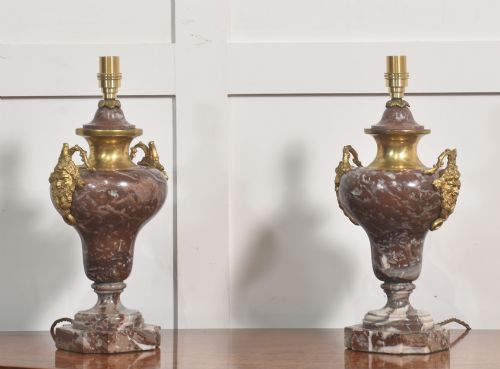
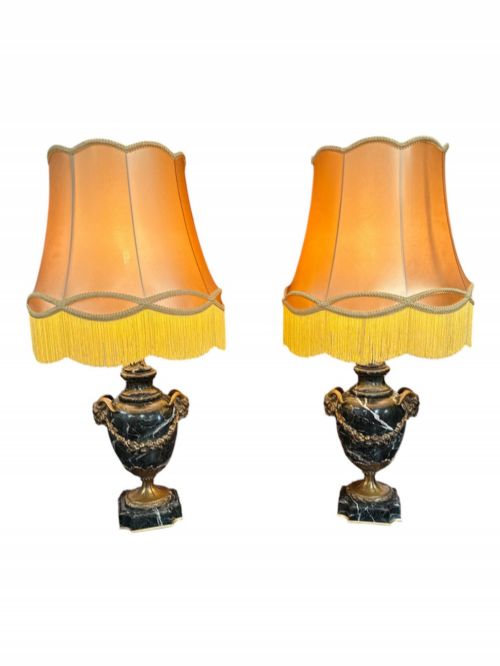
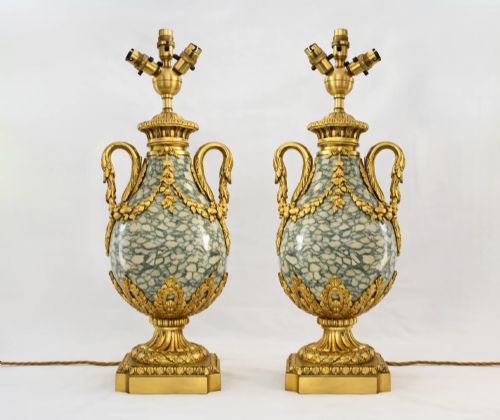
The selections on this page stem predominantly from the nineteenth century and the early twentieth century, spanning Edwardian and Victorian eras. French Neoclassical, Louis XVI style, and Empire designs dominate the offerings, often appearing as matched pairs utilising rouge marble, white marble, alabaster, or green marble effects.
How they were made
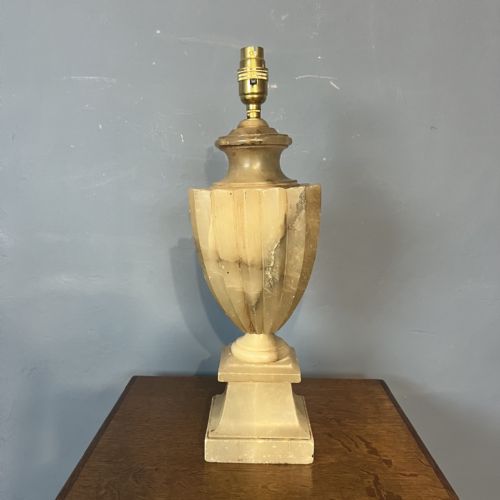
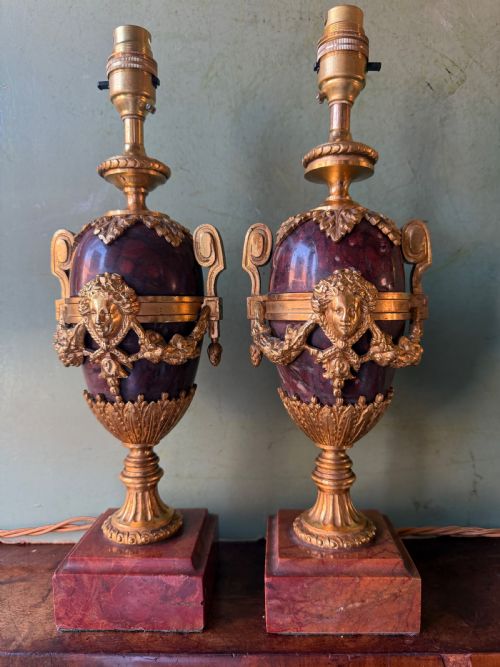
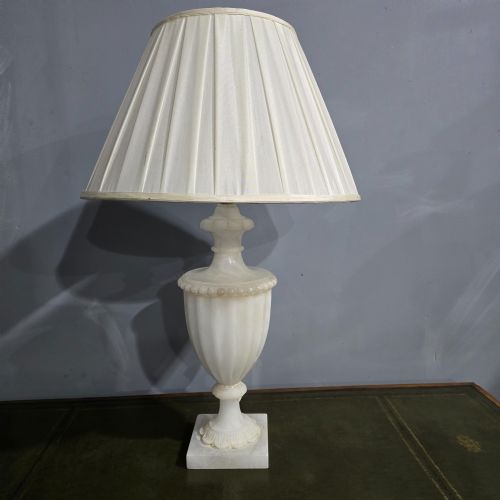
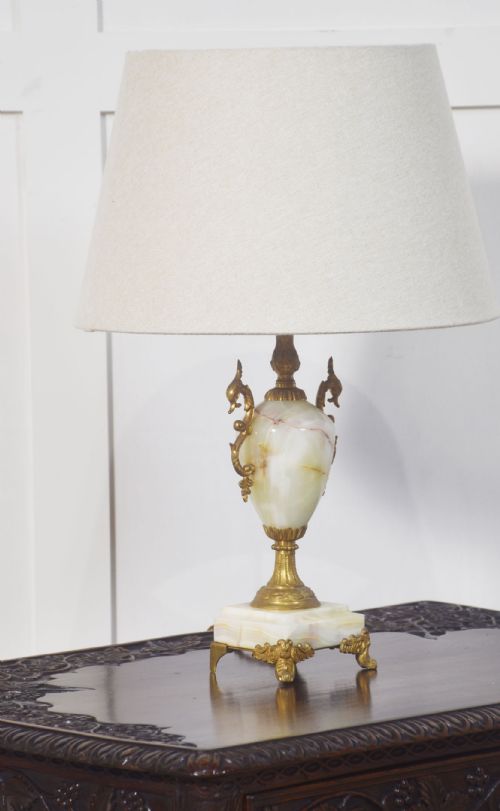
The body of each piece relies on turned and polished stone, utilising varieties such as rouge marble, Siena marble, and alabaster for the main urn structure. Craftsmen mounted these stone vessels with cast metals, employing ormolu, gilt brass, and gilt bronze for handles, collars, and bases.
Makers integrated metal mounts through threading, pins, or bronze casting techniques, frequently incorporating classical motifs like paw feet or foliate appliques. Wiring was added later during conversions, adapting these decorative vessels and candlesticks into functional desk lamps while retaining their original sculptural integrity.
Several lamps stand proudly on tiny gilt metal paw feet, ready to pounce across the partner desk.
What varies in quality
Quality rests in the crispness of the metal casting and the depth of the stone figuring. Finer examples display finely chased ormolu mounts with sharp detail, whereas simpler pieces utilise plain spun brass or standard metal stampings.
The choice of stone also dictates the grade of the piece, with richly veined rouge marble and translucent alabaster commanding greater visual weight than basic marble-effect composites. Heavier bronze mounts and well-proportioned classical lines separate standard utility lighting from superior decorative works.
The Marble Urn Desk Lights Glossary
- Cassolette
- A decorative vase or urn featuring a reversible lid that functions either as a solid vessel or an incense burner. In lighting, these bodies are drilled and wired to form lamp bases.
- Ormolu
- Finely ground high-carat gold mercury-gilded onto a bronze base metal. This technique creates a rich, lasting metallic lustre on nineteenth-century mounts.
- Rouge Marble
- A deep red, variegated limestone featuring white or grey calcite veins. French makers utilised this stone extensively for neoclassical garnitures and lamps.
- Alabaster
- A fine-grained, translucent stone often resembling white marble but softer and more easily carved. It allows light to diffuse softly when near a bulb.
- Neoclassical
- A revival style drawing inspiration from classical Greek and Roman art. It relies on symmetry, urn silhouettes, and disciplined bronze ornamentation.
Marble Urn Desk Lights: Frequently Asked Questions
Are these wired for modern desks?
Most examples have been adapted for modern electrical standards while keeping their original bodies intact.
Buyers should check the lampholder type and cord length to suit their specific desk setup upon arrival.
How do I clean the marble?
Dust the stone gently with a dry, soft cloth to prevent grit from scratching the polished surface.
Avoid chemical cleaning solutions or excess water, particularly around gilded metal mounts where moisture can cause tarnishing.
Can I find matching pairs easily?
Many listings consist of matched pairs originating from nineteenth-century French drawing rooms or studies.
Symmetry is common in these forms, though individual lamps also appear among the selections.
How do I identify Louis XVI style?
Louis XVI style pieces feature restrained classical geometry, straight tapered lines, and crisp ormolu mounts like acanthus leaves and beaded collars.
This aesthetic shuns heavy baroque curves in favour of architectural balance and refined symmetry.