






Marble Top Sofa Table
A marble top sofa table brings solid stone and rich timber together for a room that needs a sturdy surface with presence.
Marble Top Sofa Table
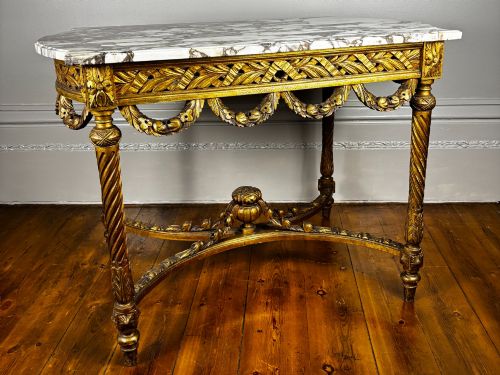
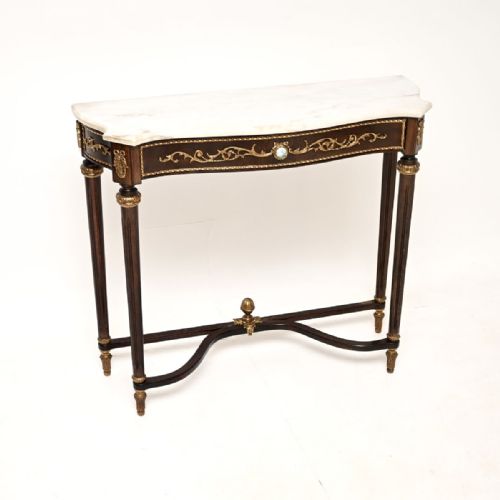
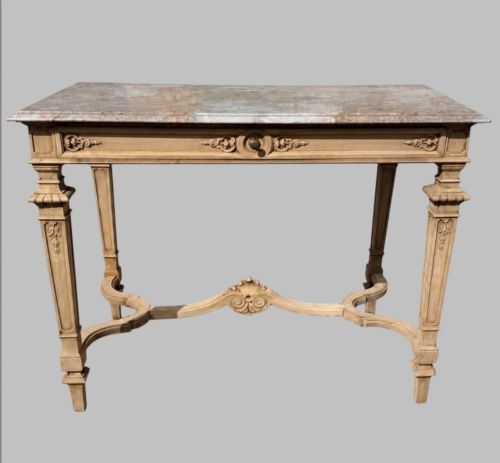
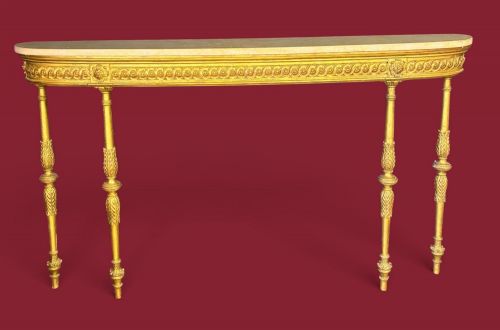
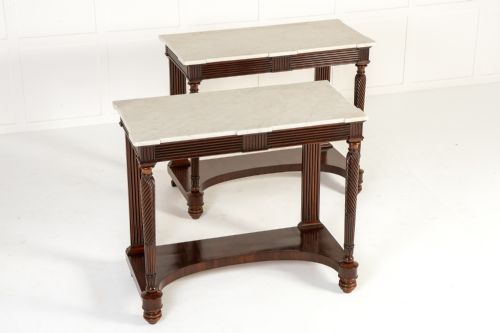
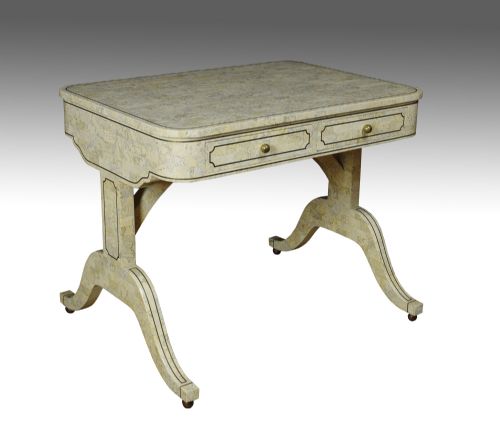
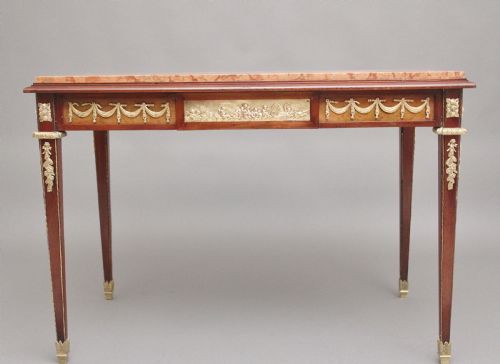
When you search for a marble top sofa table, you encounter a selection spanning the eighteenth to the early twentieth century, drawing on French Rococo, Louis XVI Revival, French Empire, Regency, Neoclassical, and Victorian styles. The forms appearing on this page include console tables, side tables, centre tables, and sofa tables.
The most common examples you meet are nineteenth-century console and centre tables featuring inset marble slabs above timber frames. These pieces originate from English and French workshops, utilising woods such as mahogany, rosewood, walnut, and oak alongside decorative giltwood and gesso.
Proportions vary from intimate lamp tables designed for country houses to large flame mahogany console tables meant for formal reception rooms. The integration of stone and wood creates a firm surface suited to daily use in a hallway, drawing room, or reception space.
How they were made
Cabinetmakers constructed the foundational frames using dense timbers like mahogany, rosewood, walnut, and oak, often shaping the wood to match prevailing architectural tastes. Carved details, parcel gilt finishes, and painted surfaces added visual depth to the structural woodwork.
Slabs of marble, including white varieties and Siena stone, were shaped to fit the recesses of the wooden upper frames. Giltwood and gesso elements were applied for decorative effect, while brass fittings and mounts completed the assembly of these tables.
Marble Top Sofa Table Retail Price Guide 2026
Typical asking prices for marble top sofa table among the pieces listed under this phrase on Sellingantiques today, from the lower quarter to the upper quarter. They describe what is for sale here now, not the wider market.
Listings feature mahogany, rosewood, walnut, and oak paired with marble across eighteenth, nineteenth, and early twentieth-century periods.
What varies in quality
The distinction between standard examples and exceptional pieces rests upon the precision of the timber carving and the selection of the stone top. Finely figured mahogany, burr walnut, and richly carved giltwood frames indicate careful workshop production.
The integration between the stone slab and the wooden base determines the structural integrity of the table. High-grade items display carefully fitted marble that rests flush within moulded wooden borders, supported by robust joinery.
The Marble Top Sofa Table Glossary
- Console table
- A table designed to stand against a wall, frequently secured to the vertical surface with brackets. These pieces often feature decorative legs at the front.
- Giltwood
- Timber coated with a thin layer of gold leaf or powder over a preparation of gesso. This finish appears frequently on Neoclassical and Revival frames.
- Siena marble
- A distinctive yellow Italian marble featuring dark grey or purple veins. It is found on select nineteenth-century centre and console tables.
- Flame mahogany
- Mahogany timber exhibiting a distinct, flamelike grain pattern produced by cutting through the branch junctions of the tree. Cabinetmakers utilised this veneer for prominent surfaces.
- Centre table
- A freestanding table finished on all sides for placement in the middle of a room. These items often incorporate marble tops and elaborate pedestals.
Marble Top Sofa Table: Frequently Asked Questions
Where should I place a marble top table?
These tables suit hallways, drawing rooms, and reception spaces where a sturdy surface is practical.
Freestanding centre versions work well in open rooms, while console variants sit flat against walls.
How do I clean the stone top?
Wipe the marble surface with a soft, damp cloth using mild soap if necessary.
Avoid acidic cleaners and harsh chemical agents that can etch or dull the polished stone finish.
Can these tables support heavy lamps?
The combination of solid timber frames and heavy stone slabs provides substantial weight and stability.
Objects such as heavy lamps and decorative ceramics sit securely on the marble surfaces.
How do I identify Regency pieces?
Regency items often display classical architectural motifs, dark rosewood or mahogany timbers, and restrained ornamentation.
Look for geometric lines and proportions influenced by ancient Greek and Roman design.