
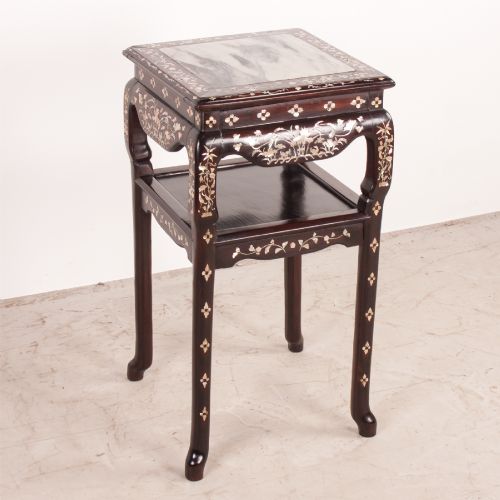
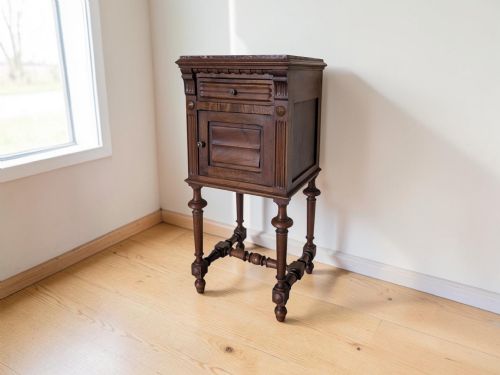
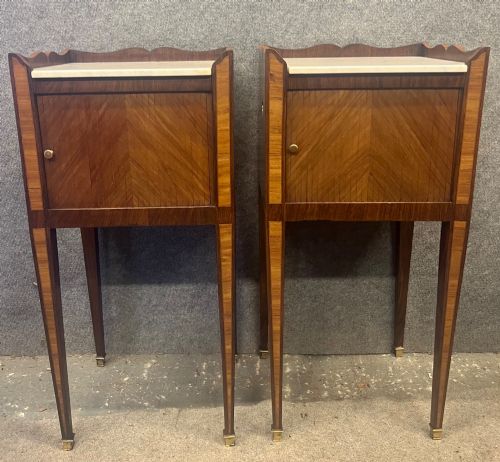
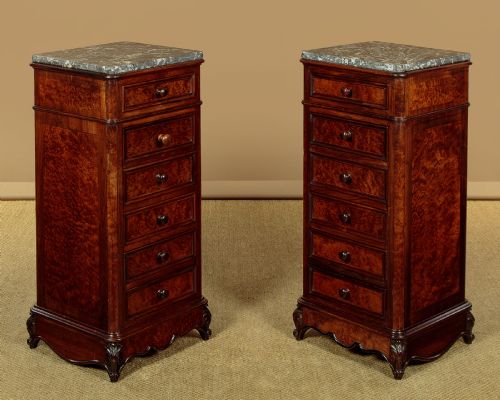



Marble Top Pedestal Cabinets
These marble top pedestal cabinets bring functional stone surfaces and enclosed storage together, spanning Victorian and continental workshops.
Marble Top Pedestal Cabinets
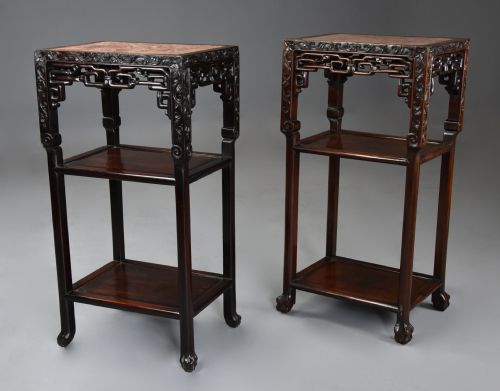
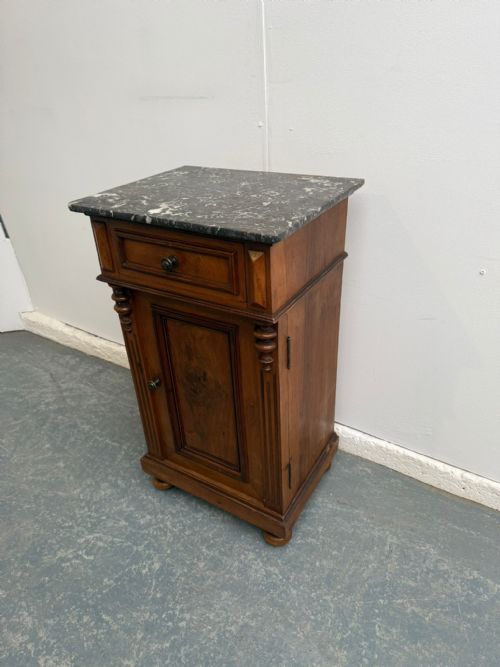
Marble top pedestal cabinets combine a solid stone slab with a vertical wooden body designed to hold washware, bedside items or lamps. The form encompasses cylindrical carcases, square cupboards, and columnar supports spanning the nineteenth and early twentieth centuries.
You will most frequently encounter French and English examples from the Victorian era onwards, executed in mahogany, walnut, or exotic veneers. These pieces serve practical needs in bedrooms and reception rooms while offering durable stone tops.
What varies in quality
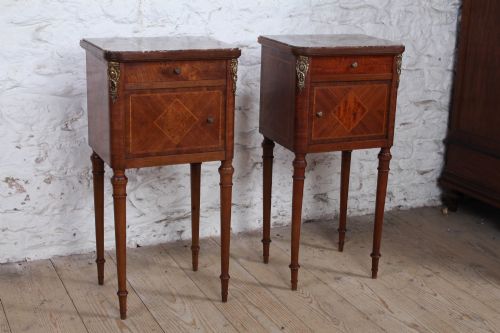
Quality rests upon the selection of timber veneers, the precision of cabinet joinery, and the thickness and figure of the marble top. Superior pieces display harmonious grain matching across curved doors and drawers, alongside finely cast ormolu or brass mounts.
Simpler pine or oak items finished with painted surfaces or faux marble represent utilitarian production, whereas cabinets utilising satinwood, kingwood, or amboyna reflect higher expenditure and more meticulous workshop execution.
The listings feature woods ranging from common mahogany and walnut to exotic kingwood, amboyna, satinwood, and rosewood.
The Marble Top Pedestal Cabinets Glossary
- Ormolu
- Gilt bronze mounts applied to furniture for decorative accent. These metal elements were cast and chased by hand before gilding.
- Pedestal cabinet
- A freestanding vertical furniture piece with enclosed storage accessed via a door. They often feature a single column or cupboard body.
- Cylindrical
- Having a circular cross-section with curved doors that follow the round profile. These bodies require specialised joinery to maintain shape.
- Washstand
- A furniture form designed to hold washing basins and jugs, frequently fitted with stone tops to resist water damage. They form a large subset of marble-topped pieces.
Marble Top Pedestal Cabinets: Frequently Asked Questions
Where were marble top pedestal cabinets used?
These cabinets primarily served in bedrooms as bedside storage for lamps, water jugs, and night items. Their durable stone surfaces resisted spills from washing accessories.
They also functioned in reception rooms and hallways as plant stands or lamp tables. The enclosed cupboards provided discreet storage out of sight.
How do I care for the marble top?
Wipe the stone surface regularly with a soft, damp cloth and neutral soap to prevent staining from liquids. Avoid acidic cleaners or harsh chemicals that etch polished marble.
Waxing the wooden carcase periodically preserves the finish while keeping moisture away from veneers. Lift the marble slab rather than dragging it when moving the cabinet.
Are cylindrical cabinets harder to find?
Cylindrical forms require specialised curved doors and matching round stone tops, making them less common than square or rectangular variants. English mahogany cylinders appear alongside French equivalents from the mid-nineteenth century.
Pairs of cylindrical cabinets remain particularly scarce compared to single examples. Their unusual shape suits compact bedside spaces efficiently.
What is the difference between French and English styles?
French cabinets frequently incorporate exotic timbers like kingwood, burr walnut, and fruitwood veneers paired with elaborate ormolu mounts. They often lean towards Empire, Louis XVI, or chateau aesthetic influences.
English pieces tend to focus on dense flame mahogany, satinwood, or turned columns within Victorian frameworks. Their design prioritises structural timber quality and understated classical proportions.