
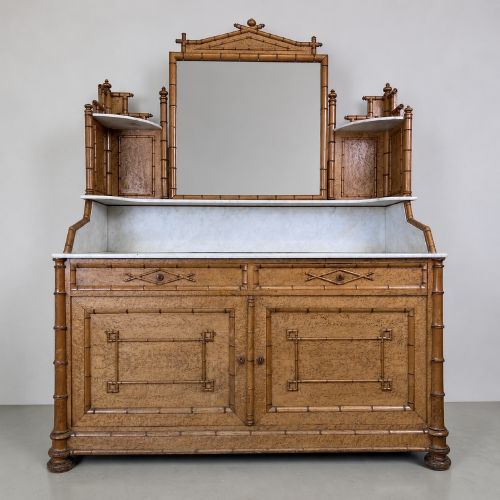
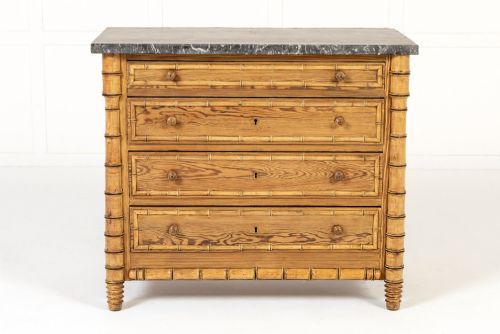
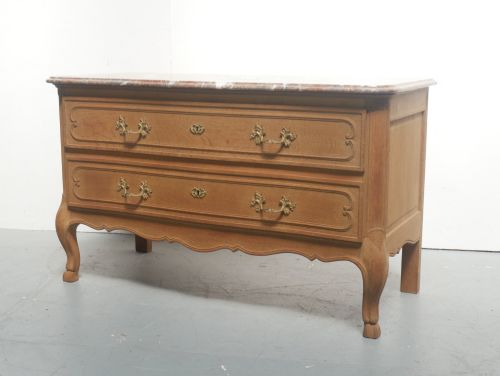
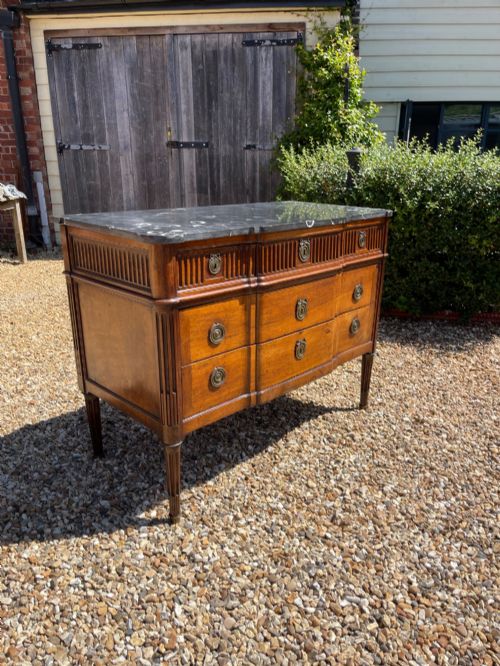
Marble Top Dresser
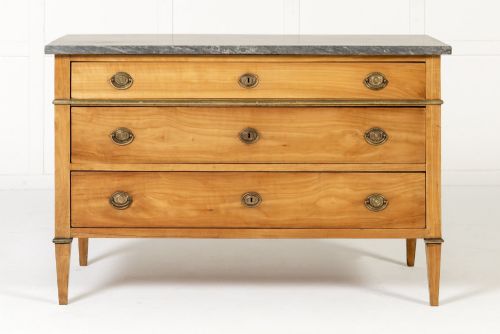
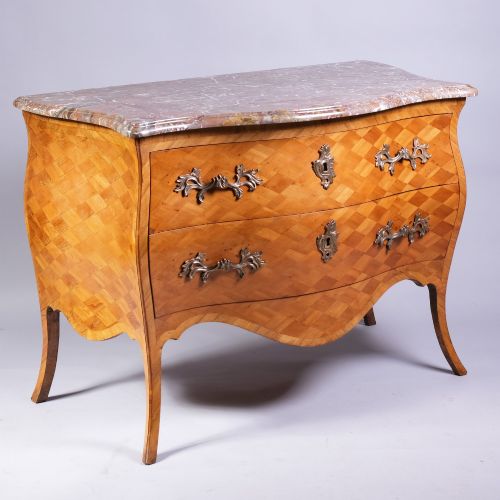
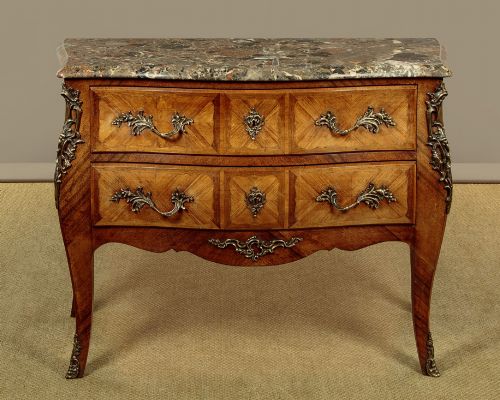
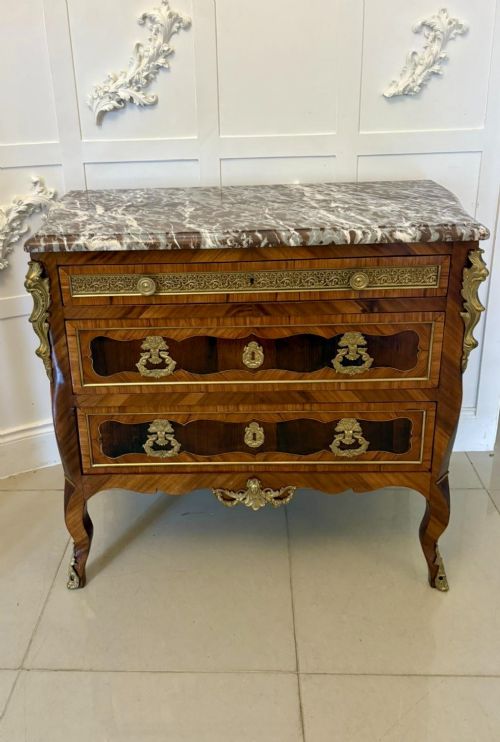
These marble top dresser examples combine solid cabinet work with cool stone surfaces, offering practical weight and enduring utility.
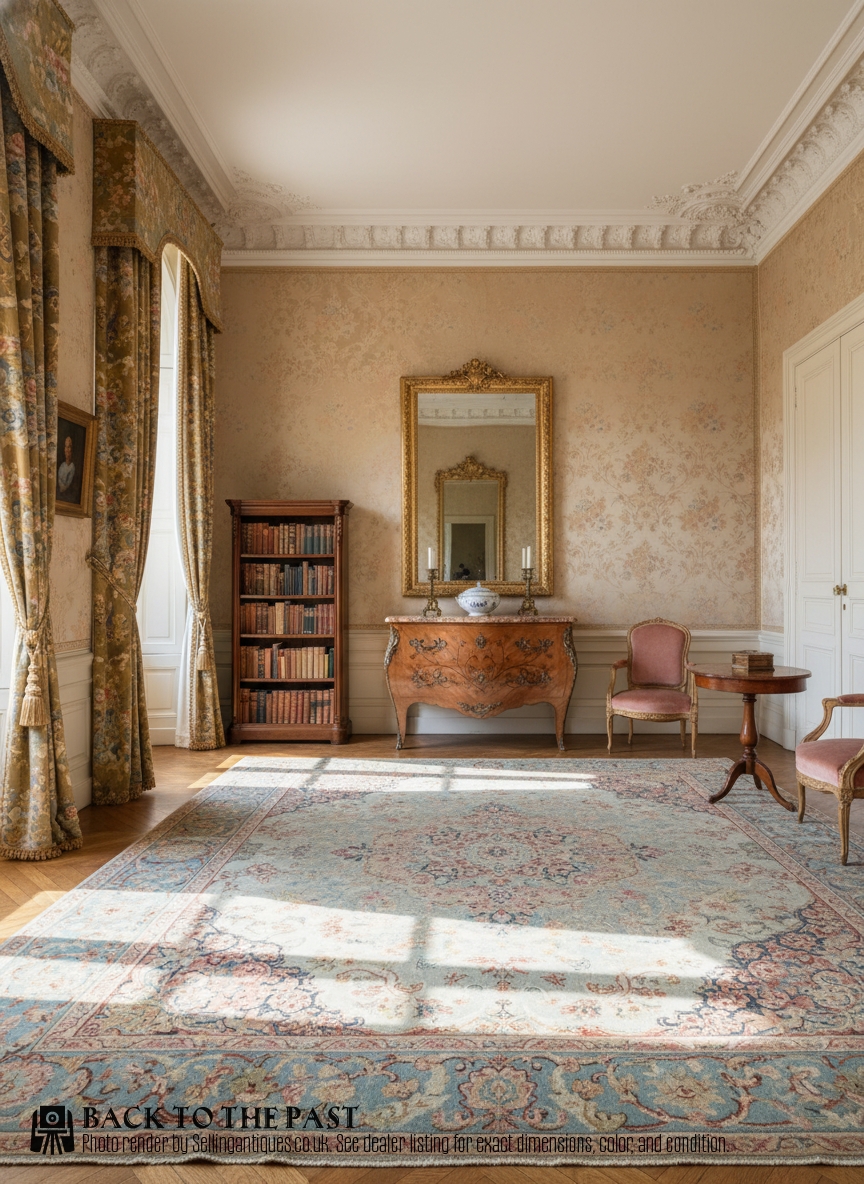
What these pieces are
A marble top dresser operates as a functional storage cabinet topped with stone, merging the utility of a chest of drawers or commode with a durable surface. These pieces appear across the nineteenth and early twentieth centuries in various regional forms.
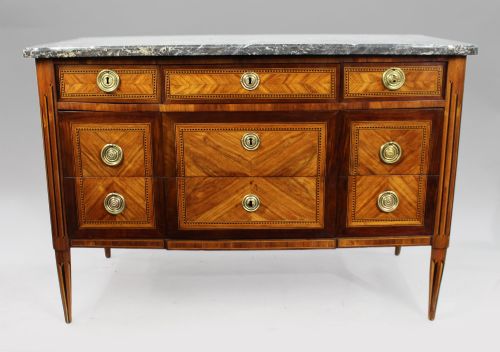
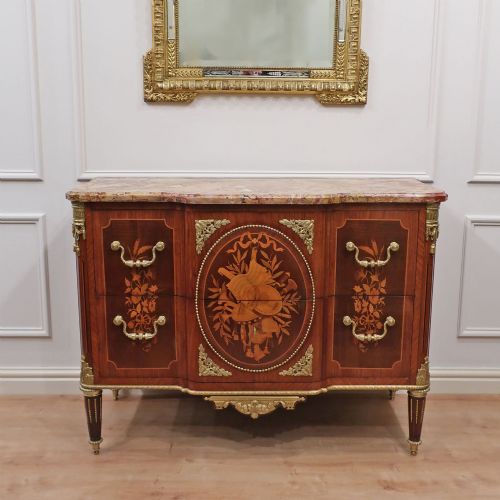
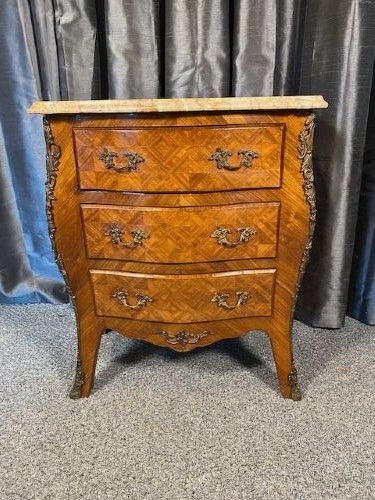
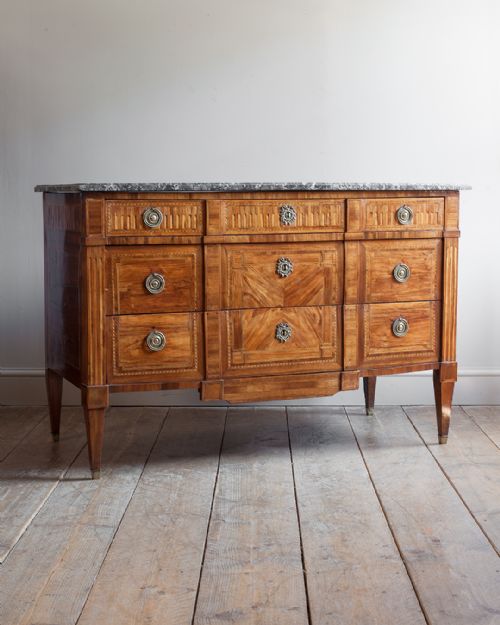
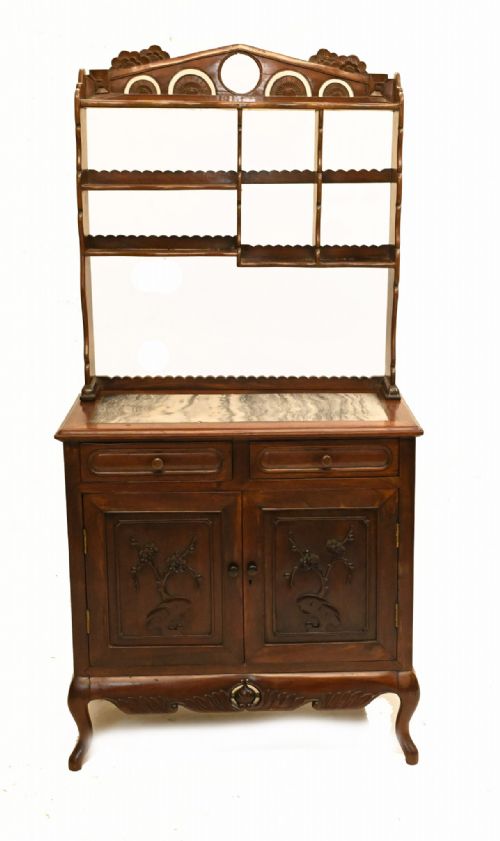
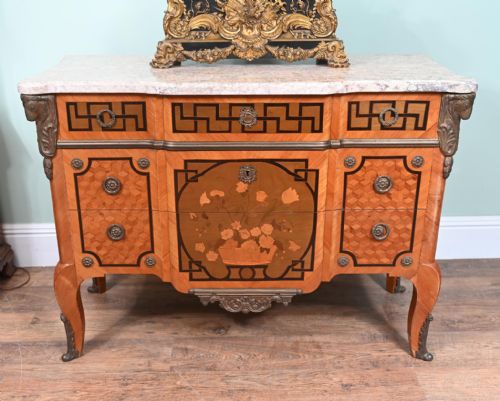
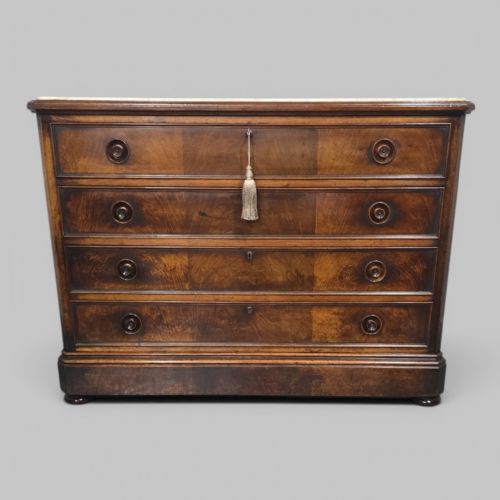
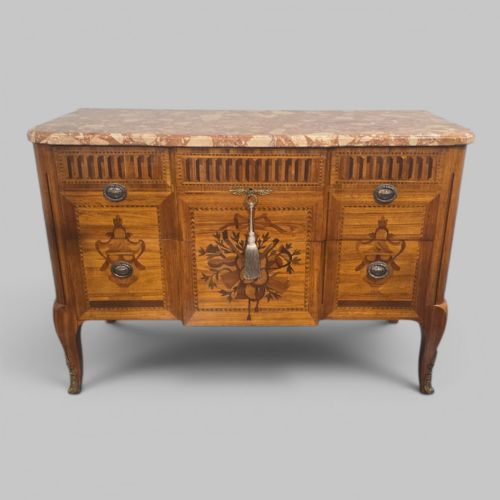
The inventory includes French Louis XVI, Neoclassical, and Louis XV revival commodes alongside Chinese Qing dynasty hardwood cabinets and Italian neoclassical examples. French walnut and mahogany chests form a large portion of the available items.
Buyers also encounter side cupboards, breakfront cabinets, and dresser bases in pine, oak, and kingwood. Each configuration provides surface utility paired with enclosed storage compartments or drawers.

How they were made
Cabinet makers utilised dense hardwoods including mahogany, walnut, kingwood, and oak alongside pine for structural carcases and drawer linings. Joinery techniques varied by region, supporting heavy stone slabs without warping the timber framework.
Marble slabs in grey, white Carrara, and other varieties were cut, shaped, and polished to fit precisely over the timber bases. Metal fittings such as brass handles, mounts, and ormolu details complemented the stone and timber combinations.
Retail Price Guide 2026
Typical UK retail prices for marble top dresser, calculated from the Sellingantiques database of over a million retail prices indexed since 2003. This retail price guide relies exclusively on Sellingantiques data; no external sources or auction records are used, so the figures do not describe the wider market.
French commodes often hide secret top drawers just beneath the heavy stone slab.
What varies in quality
The refinement of the timber carcase and the selection of the marble slab determine the standing of each piece. Finely figured mahogany and walnut veneers or solid hardwoods indicate superior workshop standards.
The integration between the stone top and the wooden base reveals the maker's hand, particularly where mouldings, brass mounts, or carved details meet the marble edge. Heavier or more dynamic Revival styles demand precise structural support within the drawer frames.
The Marble Top Dresser Glossary
- Commode
- A low chest of drawers or cabinet with legs, commonly associated with French furniture design. This form frequently carries a shaped stone slab on the upper surface.
- Ormolu
- Gilt bronze ornamentation applied to furniture mounts and decorative accents. It appears alongside brass on various nineteenth-century pieces.
- Breakfront
- A cabinet or sideboard design where the central section projects forward from the flanking sides. This form adds architectural depth to larger storage units.
- Carrara marble
- A type of white or blue-grey marble quarried in the city of Carrara in Italy. It frequently tops European side cupboards and commodes.
- Hardwood
- Timber derived from broad-leaved trees, including mahogany, walnut, and oak. These dense woods provide the structural strength required for heavy stone tops.
Frequently Asked Questions
What is a marble top dresser?
A marble top dresser is a storage cabinet or chest of drawers fitted with a solid stone surface on top.
These pieces combine wooden cabinetry with heavy stone slabs to create durable, water-resistant surfaces suitable for domestic use.
How do I clean the marble?
Cleaning requires simple wiping with a damp cloth and mild, non-acidic soap to protect the polished surface.
Avoid harsh chemicals or citrus cleaners that can etch or dull the natural stone over time.
Are these pieces heavy?
The inclusion of solid stone slabs and dense hardwoods makes these cabinets substantially heavy.
Moving them typically requires at least two people and careful separation of the loose marble top where applicable.
How do I identify the period?
Period identification relies on observing timber choices, construction methods, and stylistic cues such as neoclassical brass mounts or Art Nouveau carving.
Comparing the hardware and dovetailing against known nineteenth and early twentieth-century examples helps confirm the era.