




Marble Splashback Washstand
A marble splashback washstand brings the solid craftsmanship of Victorian and Edwardian bedrooms into modern rooms.
Marble Splashback Washstand
A marble splashback washstand is a substantial piece of bedroom furniture designed to hold a basin and protect the wall from water during a morning wash. These utilitarian pieces date from the nineteenth and early twentieth centuries, spanning the Victorian and Edwardian eras, along with the years around nineteen hundred.
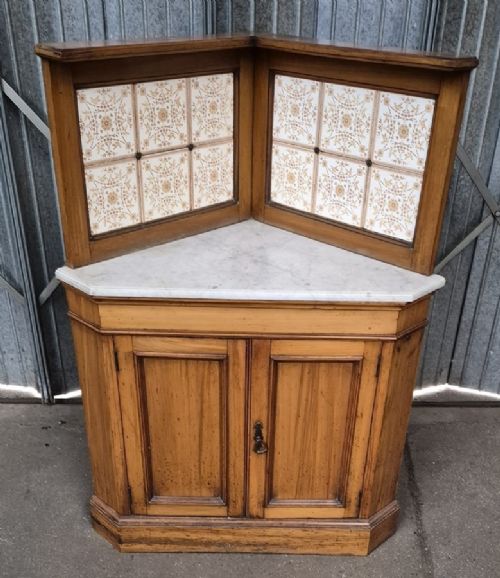
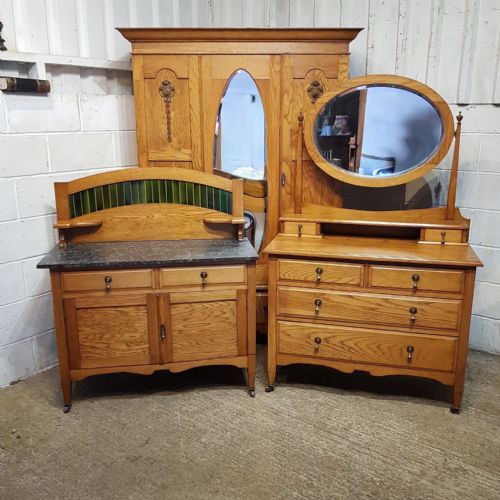
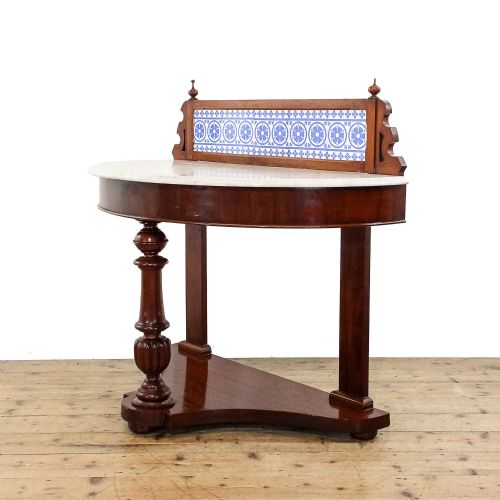
You will encounter various forms on this page, ranging from mahogany and walnut corner models to large tiled bedroom furniture suites and painted pine wash stands. Some pieces incorporate ceramic tiles alongside the stone, while others take the form of French commodes or Duchess washstands.
The styles reflect the design shifts of the period, taking in Arts and Crafts simplicity, Art Nouveau curves, and Sheraton Revival inlaid mahogany. They survive as practical items that double as striking surfaces for modern hallways and bathrooms.
How They Were Made
Cabinetmakers built the frames of these pieces using timbers such as mahogany, walnut, oak, satinwood, satinbirch, and pine, often adding brass fittings and glass elements. The construction relied on traditional joinery to support the immense weight of the stone slabs fitted to the top.
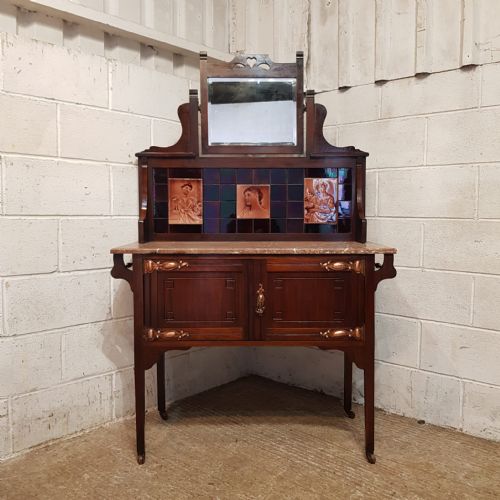
The defining feature is the marble slab, which usually includes an integral upright splashback to shield the wall behind. Many examples also integrate decorative ceramic tiles into the wooden superstructure to provide further protection against daily moisture.
Listings feature timbers including mahogany, walnut, oak, satinwood, and pine, paired with marble and ceramic tiles across Victorian and Edwardian periods.
What Varies in Quality
The distinction between standard utility bedroom furniture and superior examples lies in the selection of timber and the quality of the stone. Dense marbles, such as rouge varieties, paired with figured mahogany or inlaid satinwood indicate a workshop producing for wealthier clients.
Subtleties in construction also set pieces apart, such as finely turned galleries, precise marquetry inlay, and the harmonious integration of ceramic tiles with the main wooden frame. The weight and thickness of the marble slab reflect the original ambition of the commission.
Walker And Sons·Gillows
The Marble Splashback Washstand Glossary
- Splashback
- The upright slab of marble rising above the counter to protect the wall from water splashes. It forms a single structural unit with the horizontal top on better examples.
- Duchess washstand
- A grander form of washstand featuring an elevated tier of small drawers or mirrors above the marble surface. It borrows its layout from the dressing tables of the period.
- Marquetry
- The art of applying pieces of veneer to a structure to form decorative patterns. Edwardian pieces frequently utilise this technique on mahogany and satinwood surfaces.
- Commode
- A low cabinet or chest enclosing cupboard space, sometimes adapted to house washing equipment. French examples from the early twentieth century often feature heavy marble tops.
- Corner washstand
- A space-saving form designed to fit neatly into ninety-degree room angles. They are frequently constructed in walnut or mahogany for Victorian bedrooms.
Marble Splashback Washstand: Frequently Asked Questions
How were marble washstands originally used?
These pieces served as the washing station in the bedroom before plumbed bathrooms became standard. A ceramic basin and jug sat on the stone top for daily routines.
The marble and any tiled back provided a durable, waterproof surface that easily wiped clean after use.
Can I use a washstand in a modern bathroom?
Many people adapt these stands as vanity units by mounting a modern basin onto the marble top. The stone naturally resists water damage from daily use.
You may need to work with a plumber to adjust the internal wooden framing to accommodate modern waste pipes.
How do I tell Victorian from Edwardian pieces?
Victorian examples tend to use heavy dark timbers like mahogany and walnut, often with deep mouldings and thick rouge marble tops. They feel solid and imposing.
Edwardian pieces frequently showcase lighter woods, satinwood inlay, or painted finishes, reflecting a preference for airier bedroom decoration.
What is an Arts and Crafts washstand?
Arts and Crafts washstands emphasise simple construction and visible quality of materials over applied ornamentation. They often feature plain oak frames and hand-painted tiles.
This movement valued honest manual labour and utility, resulting in sturdy furniture that resisted mass-produced factory aesthetics.