



Marble Mounted Bronze Bust
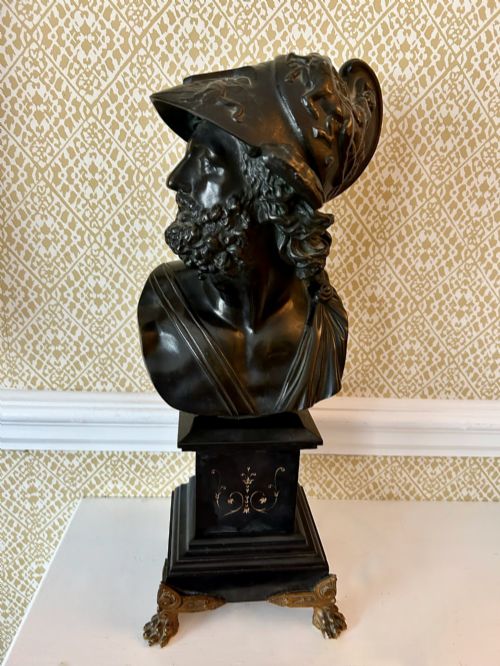
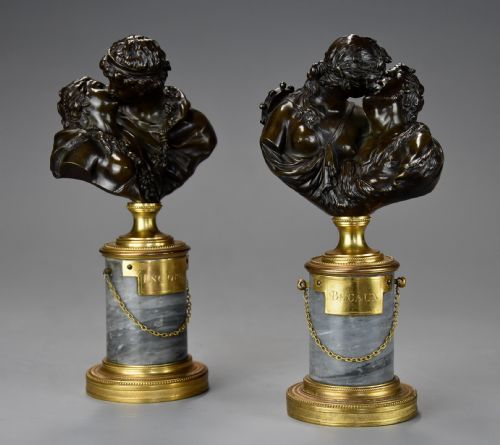
These marble mounted bronze bust pieces and related stands bring classical dignity and heavy historical presence straight into a room.
Marble Mounted Bronze Bust
When you search for marble mounted bronze bust pieces, you encounter sculptural works and architectural supports that span the nineteenth century and the Edwardian era. The selection draws heavily upon Neoclassical, French Rococo, Louis XVI, and French Empire styles, alongside Grand Tour souvenirs and Victorian classical revivals.
Materials and construction
The pieces rely on a dense combination of natural stone, such as marble and onyx, paired with cast metals including bronze, gilt bronze, ormolu, and brass. Certain furniture forms also incorporate timber carcases in walnut, mahogany, and kingwood.
Metal components undergo casting and chasing, while stone columns and stands are turned and polished. Ormolu collars, mounts, and rotating mechanisms are then fitted precisely to the stone and timber structures.
Marble Mounted Bronze Bust Retail Price Guide 2026
Typical asking prices for marble mounted bronze bust among the pieces listed under this phrase on Sellingantiques today, from the lower quarter to the upper quarter. They describe what is for sale here now, not the wider market.
William Shakespeare shares shelf space with classical heroes and French actors atop nineteenth-century mantel clocks and columns.
Judging the quality
The distinction between tiers rests upon the crispness of the metal chasing and the depth of finish in the ormolu and gilt bronze mounts. Heavier gauge metalwork and finely figured stone pillars elevate the visual weight of the piece.
Proportion and decorative coherence dictate the standing of each item, particularly where classical motifs meet structural stone columns and pedestals.
Jean Antoine Houdon
The Marble Mounted Bronze Bust Glossary
- Ormolu
- Gilt bronze applied to decorative hardware and furniture mounts. The technique involves treating brass or bronze with a gold amalgam.
- Neoclassical
- A revival style drawing inspiration from classical antiquity. It favours restraint, symmetry, and classical architectural motifs.
- Grand Tour
- A traditional trip through Europe undertaken by upper-class young men in the eighteenth and nineteenth centuries. Travellers collected antiquities, bronzes, and sculptures as souvenirs.
- Plinth
- A heavy base supporting a statue, vase, or column. These often feature decorative stone and metal mounts.
Marble Mounted Bronze Bust: Frequently Asked Questions
What periods do these pieces come from?
The listings span the nineteenth century, including specific dates around eighteen eighty and the Edwardian era.
They reflect aesthetic revivals such as French Rococo, Louis XVI, and Neoclassical design.
How were these stone columns used?
Pillars and pedestals served to elevate sculptures, busts, urns, and mantel clocks within a grand interior.
Rotating stands allowed viewers to inspect sculptural subjects from multiple angles.
What metals appear on these stands?
Makers utilised bronze, gilt bronze, and brass alongside mercury-gilded ormolu mounts.
These metals contrast sharply against polished onyx and marble columns.
How do I spot Louis XVI style?
This style employs classical restraint, symmetrical lines, and refined ormolu mounts on stone or timber.
It avoids the heavier curves of earlier rococo designs in favour of architectural dignity.