





Marble Lion Statue
A marble lion statue brings ancient strength and neoclassical grandeur directly into a room, offering the enduring weight of stone shaped by master hands.
Marble Lion Statue
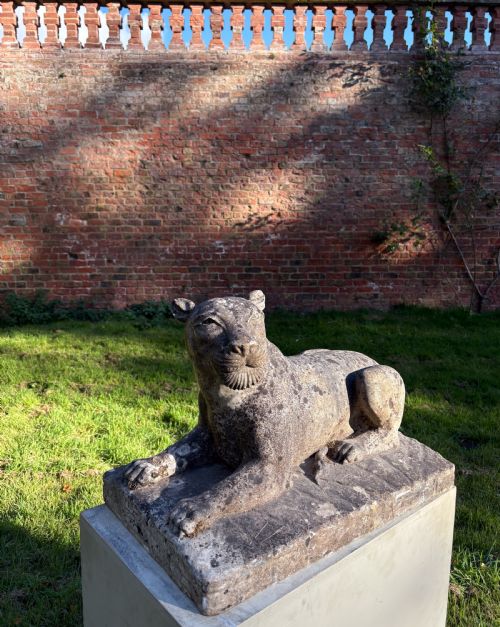
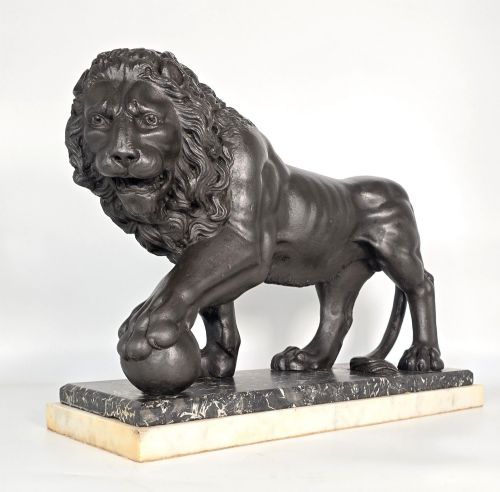
A marble lion statue commands space through classical forms, appearing frequently as grand tour souvenirs, garden statuary, and desk accessories from the nineteenth century. These sculptures draw heavily from canonical antiquities like the Medici and Capitoline lions, translating monumental civic guardians into domestic or garden ornaments.
Buyers encounter diverse interpretations spanning seventeenth-century Italian carving, Victorian garden statuary, and later art deco variations paired with bronze or wood. Desk pieces incorporate the feline form into functional inkstands and bookends, while larger garden pairs sit ready to flank entrances and pathways.
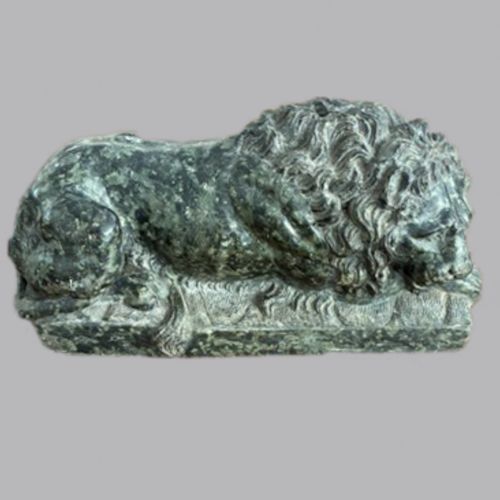
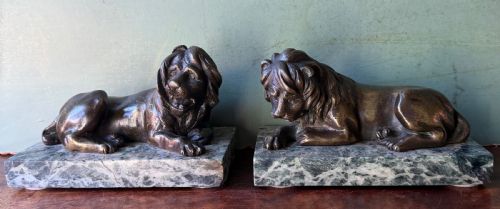
The aesthetic heritage leans firmly into neoclassical and Italian baroque traditions, often placing the carved beast upon contrasting plinths of serpentine or green marble. Whether recumbent or roaring, each piece captures a distinct posture of watchfulness derived from classical prototypes.
Materials and construction methods
Composite pieces integrated cast bronze or carved wood resting upon shaped marble bases, securing the figures through pinned joints or hidden internal screws. Garden statuary required weather-resistant stone capable of withstanding outdoor placement, whereas interior Grand Tour reductions focused on meticulous surface polish and anatomical precision.
Marble Lion Statue Retail Price Guide 2026
Typical asking prices for marble lion statue among the pieces listed under this phrase on Sellingantiques today, from the lower quarter to the upper quarter. They describe what is for sale here now, not the wider market.
Listings feature materials spanning white marble, green marble, serpentine, alabaster, bronze, gilt bronze, and wood.
Markers of sculptural distinction
Superior examples reveal a deep understanding of feline anatomy, where muscle, sinew, and expression are rendered with lifelike conviction rather than rigid symmetry. The crispness of the chisel work in the mane and claws separates master carvers from routine commercial workshops.
The selection and preparation of the mineral base dictate the visual harmony of the finished object. High-quality pieces feature rich veining in the serpentine or green marble plinths, fitted seamlessly to the sculpture above without awkward gaps or mismatched repairs.
Eugene Emile Borga·Le Courtier
The Marble Lion Statue Glossary
- Grand Tour
- A cultural journey undertaken by wealthy young Europeans in the eighteenth and nineteenth centuries to collect classical antiquities and miniature copies. These souvenir sculptures formed the basis of many private neoclassical collections.
- Medici Lion
- One of a pair of marble sculptures of lions, one original and one sixteenth-century pendant, guarding the Loggia dei Lanzi in Florence. Replicas of these iconic beasts became standard motifs for nineteenth-century sculptors.
- Capitoline Lion
- A famous antique marble sculpture housed in the Capitoline Museums in Rome, depicting a lion mauling a horse. Its dramatic posture inspired numerous bronze and marble reductions.
- Serpentine
- A dark green silicate mineral resembling jade, frequently utilised for decorative bases and architectural ornaments. Its mottled surface provides a striking contrast to white marble carvings.
- Recumbent
- Lying down or resting with the head raised, a common posture for monumental guardian lions placed at gates and tombs. This horizontal format suits fireplace hearths and long console tables.
Marble Lion Statue: Frequently Asked Questions
Where do these marble lions come from?
The pieces originate primarily from European workshops, with a strong emphasis on nineteenth-century Italian and French production centres catering to collectors.
Craftsmen drew inspiration directly from ancient Roman and Florentine monuments, adapting civic prototypes into portable works of art for domestic interiors.
Are these statues suitable for outdoor gardens?
Certain heavy stone and marble examples are designed specifically for garden statuary and architectural placement out of doors.
Interior decorative pieces, particularly those incorporating alabaster, gilt bronze mounts, or delicate wooden elements, require protection from moisture and frost.
How do I identify a Grand Tour piece?
Grand Tour pieces typically date from the nineteenth century and scale down famous monumental antiquities into tabletop formats.
They often feature characteristic materials like white marble figures mounted on distinct green marble or serpentine bases.
What functional forms do these lions take?
Beyond standalone sculptures, the feline form appears incorporated into practical library and desk accessories.
Common functional adaptations include bronze and marble inkstands designed with hinged lids, as well as heavy bookends meant to support library volumes.