

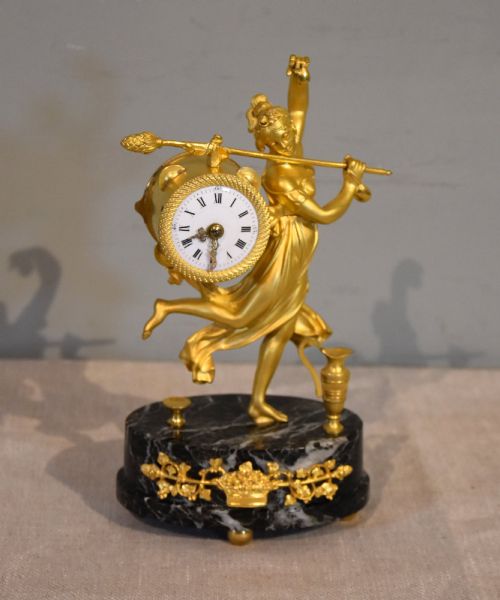


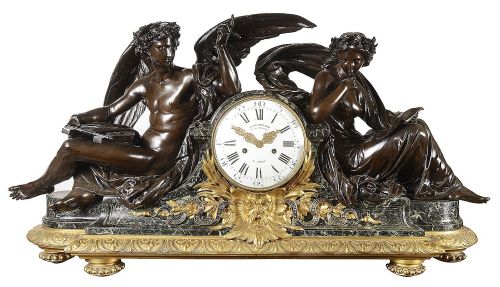

Marble Gilt Figural Clock
A marble gilt figural clock brings together sculpted bronze figures, polished stone bases, and precise French movements.
Marble Gilt Figural Clock
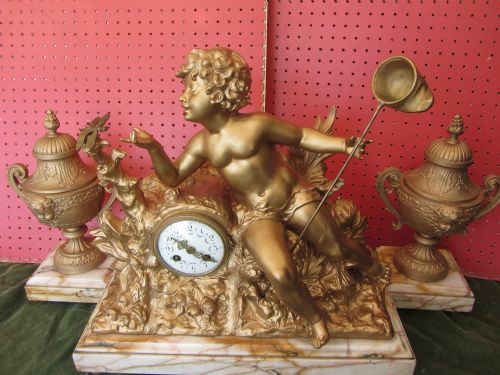
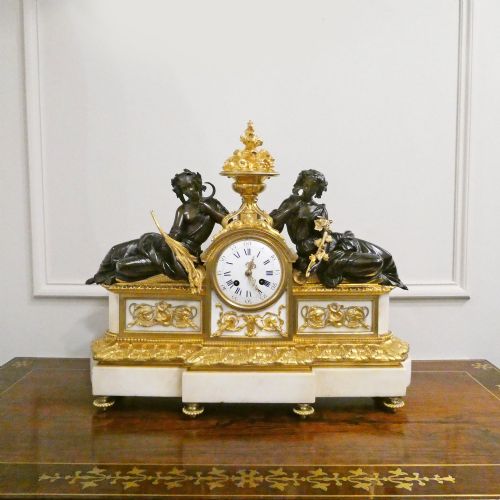
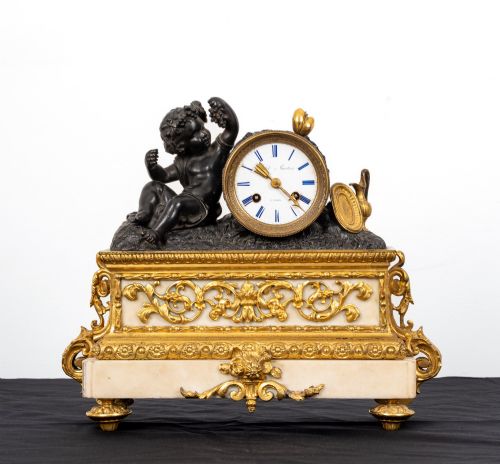
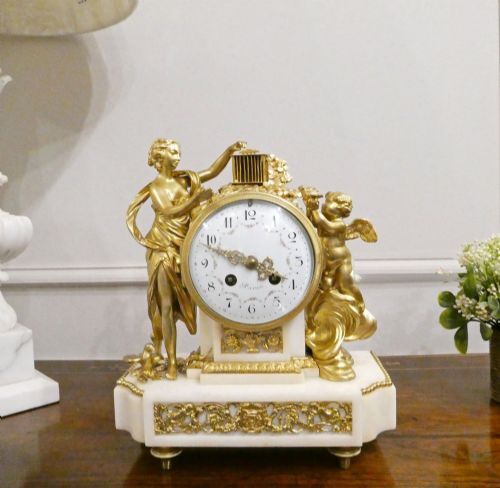
A marble gilt figural clock combines carved stonework with gilded metal castings and mythological or allegorical figures. These heavy decorative objects sit upon mantelpieces and console tables, marking time while doubling as sculptural centrepieces.
Most examples found here originate from nineteenth-century France, spanning the Empire, Louis XVI Revival, and Victorian periods. Makers favoured white, green, or rouge marble fitted with enamel dials and mechanical movements.
Some pieces form part of larger garniture sets accompanied by matching side urns or candelabra. Figures of cherubs, astronomers, and classical deities frequently dominate the upper composition of the case.
Materials and construction
Foundries cast bronze elements using traditional lost-wax or sand-casting methods before applying a surface mercury gilding or ormolu finish. These gilded mounts contrast sharply against heavy slabs of turned and polished marble.
Movements rely on brass gear trains, often driven by coiled springs with pendulum or silk suspension regulation. Enamel dials feature delicate painted numerals, protected behind bevelled glass bezels set into the metal case.
Marble Gilt Figural Clock Retail Price Guide 2026
Typical asking prices for marble gilt figural clock among the pieces listed under this phrase on Sellingantiques today, from the lower quarter to the upper quarter. They describe what is for sale here now, not the wider market.
Many of these gilded timepieces feature tiny, watchful dragonflies perched near resting cherubs, keeping a permanent eye on the passing hours.
Distinctions in quality
The crispness of the bronze chasing determines the overall calibre of the piece, separating sharp hand-finished surface detail from softer mass-produced castings. Heavier ormolu layers retain a richer warmth and resist rubbing better over generations.
The selection of the marble base also signals status, with dense, flawless mineral blocks scoring higher than lesser stones with visible fissures. Signed movements by notable Parisian makers elevate the horological importance of the clock.
Vincenti·Siffel and Cartier·Japy Freres·Victor Paillard·Deniere and Cailleaux·Henry Berkeley·F Marti
The Marble Gilt Figural Clock Glossary
- Ormolu
- Gilt bronze created by applying a mercury and gold amalgam to a bronze base and heating it. This technique produces a deep, lasting golden lustre characteristic of nineteenth-century French pieces.
- Garniture
- A set of matching decorative objects designed to be displayed together on a mantelpiece. A clock garniture typically includes the central timepiece accompanied by matching side urns or candelabra.
- Silk suspension
- An early method of hanging the pendulum from a fine loop of woven silk inside the movement. It offers precise regulation but remains vulnerable to snapping if handled roughly.
- Enamel dial
- A metal watch face coated in fused glass powder and fired in a kiln to produce a smooth, white glossy surface. Numerals are painted onto this vitrified layer before firing.
- Clock movement
- The internal mechanical assembly of springs, gears, and escapements that drives the hands. French movements of this era frequently struck the hours and half-hours on a cast bronze bell.
Marble Gilt Figural Clock: Frequently Asked Questions
How do I set the correct time?
Move the minute hand forward by hand until the clock displays the correct hour. Avoid turning the minute hand backwards, as this can jam the striking mechanism and gear train.
Allow the clock to strike out its sequence fully if you pass an hour during adjustment. If the pendulum has been removed for transport, reattach it to the suspension spring before starting the clock.
Where should I place a marble clock?
Position the clock on a sturdy, level surface such as a marble-topped sideboard or a heavy mantelpiece. Unlevel placement causes the anchor escapement to tick unevenly and eventually stop the movement.
Keep the piece away from direct sunlight, damp walls, and active heat sources to protect the delicate mercury gilding and the polished stone base.
How do I identify the period?
Examine the stylistic cues of the bronze figures and the shape of the marble housing to determine the era. Pieces following classical drapery and architectural symmetry usually date to the early nineteenth-century Empire or Louis XVI Revival periods.
Check the backplate of the brass movement for stamped foundry medals or maker initials. These punch marks often provide a reliable clue to the decade of manufacture.