

Marble Desk Light
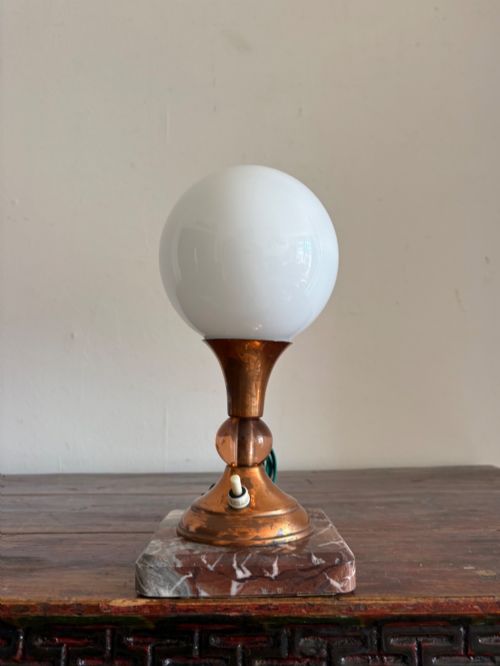
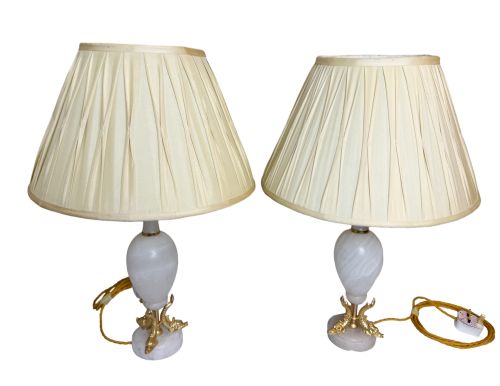
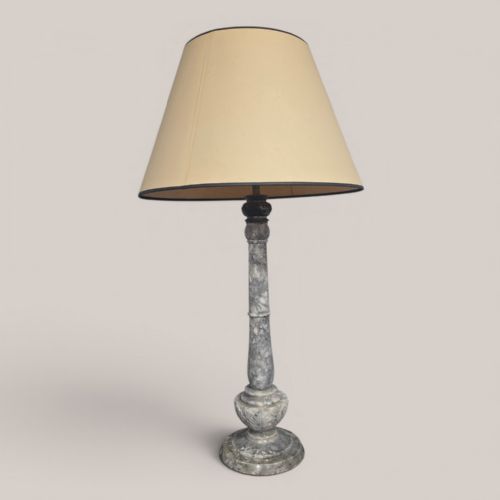
These marble desk light examples bring stone bases and metal mounts into a workspace, offering period illumination with weight and presence.
Marble Desk Light
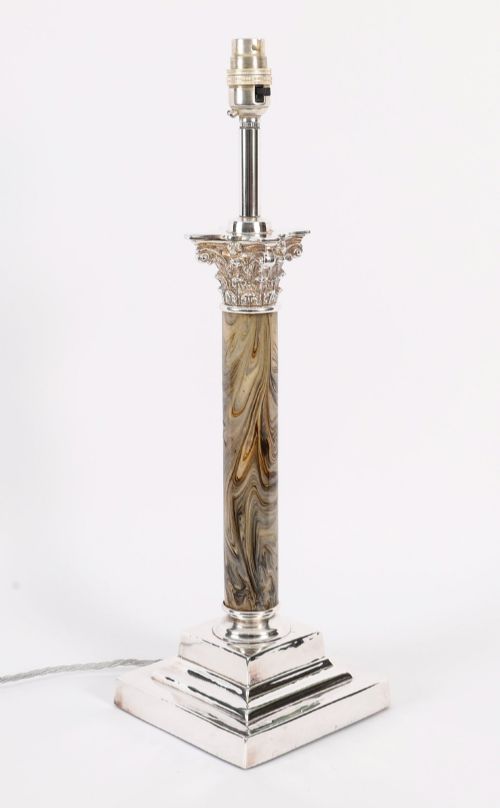
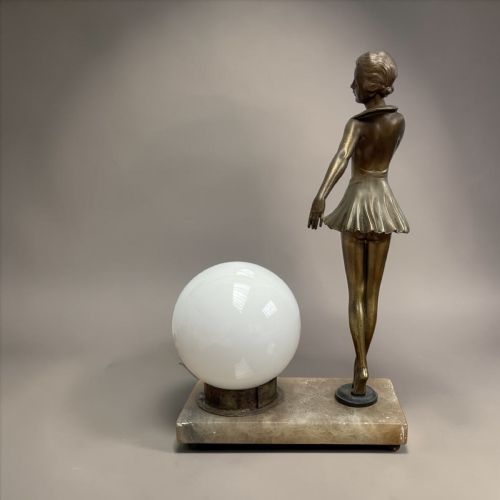
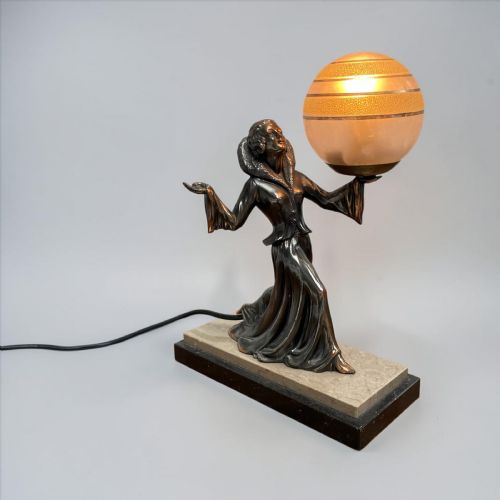
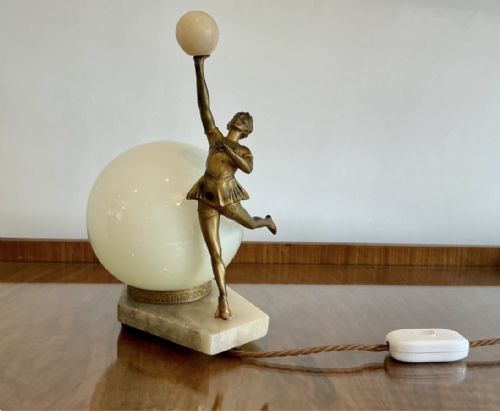
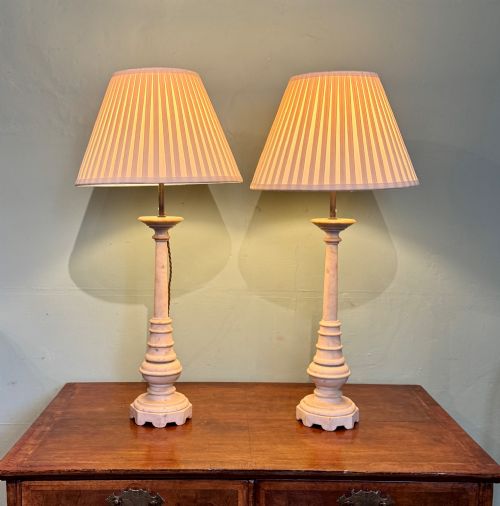
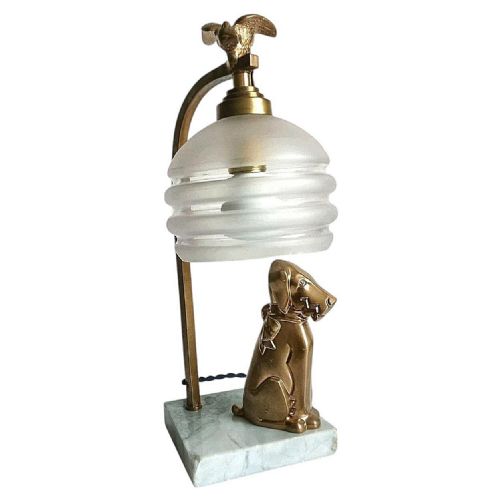
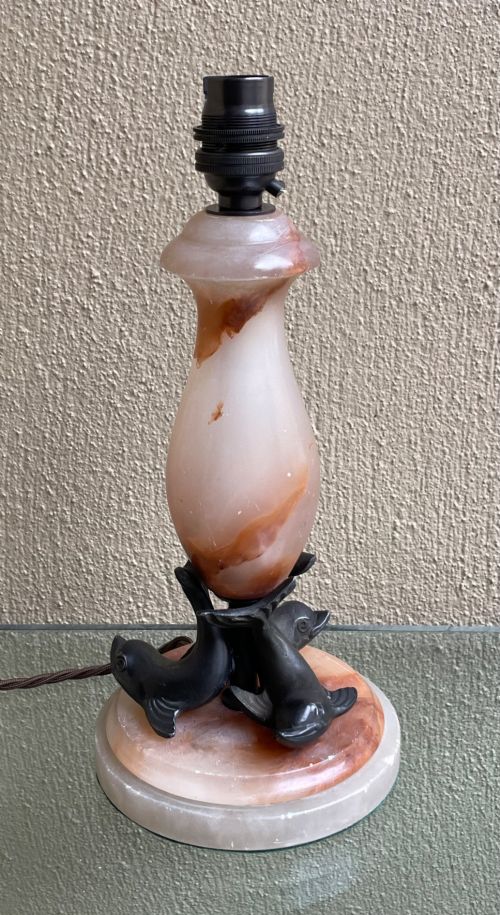
A marble desk light combines a heavy stone footing with an upright standard for illumination, often taking the form of a table lamp or converted candlestick. The selection ranges from Victorian brass and marble combinations to French Art Deco designs featuring figural subjects.
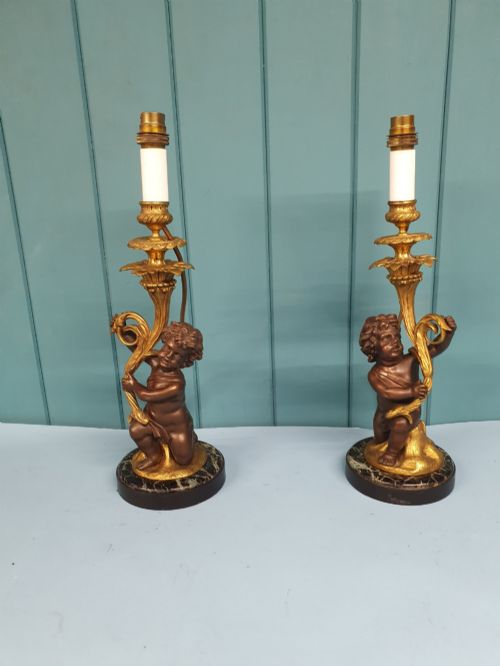
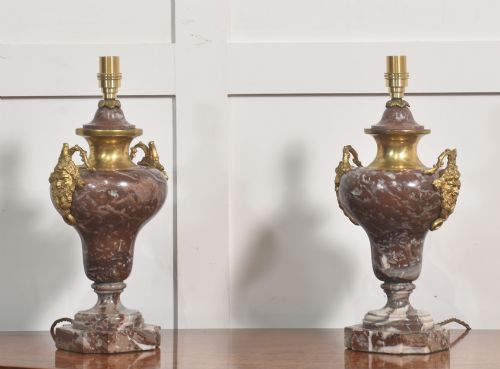
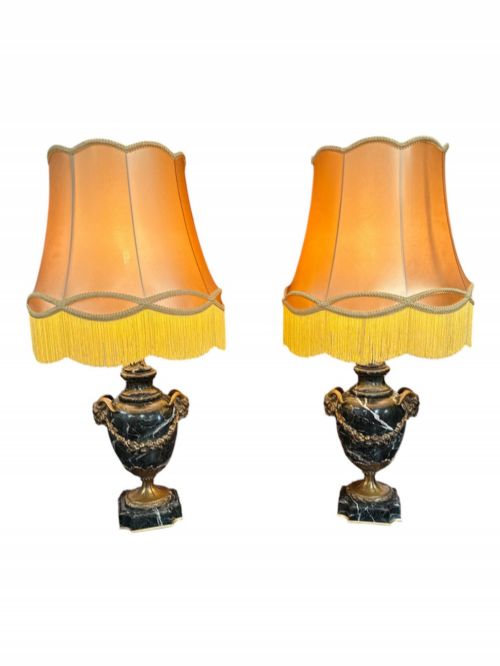
Buyers will frequently encounter table lamps and desk lamps mounted on white marble, rouge marble, or onyx bases. Many pieces incorporate patinated bronze, gilt brass, or ormolu mounts that reflect nineteenth-century and early twentieth-century decorative tastes.
The objects span multiple eras, with Victorian, Edwardian, and Art Deco periods well represented. French workshops produced numerous variants involving classical urns, figural motifs, and architectural columns adapted for lighting.
How they were made
Makers cut and polished natural stone such as marble, alabaster, and onyx to form solid weighted bases and pedestals. These stone elements were then combined with cast metals including brass, bronze, gilt bronze, and ormolu.
Metal components often underwent casting and chasing, followed by silver plating, cold painting, or gilding to create contrasting textures against the smooth stone. Wiring and electrical fittings were subsequently integrated into older structures, such as candlesticks or oil lamps, during conversions.
The listings encompass materials including marble, brass, fabric, gilt bronze, glass, bronze, onyx, and ormolu across several decades.
What varies in quality
The refinement of the metal castings dictates the visual clarity of mounts, cherubs, and foliate details. Finer examples display crisp chasing and substantial bronze or ormolu rather than lighter plated metals.
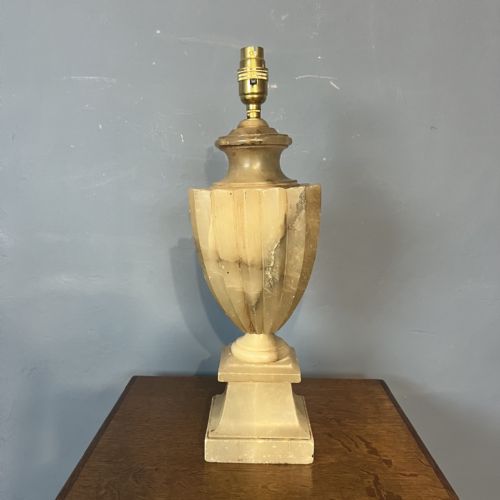
The choice of mineral determines the visual depth of the base, with selected rouge marble, banded onyx, and translucent alabaster commanding attention. Weight and stability further separate solid structural forms from simpler assemblies.
The Marble Desk Light Glossary
- Ormolu
- Gilt bronze mounted on decorative objects, created by applying finely ground gold to a bronze base. This technique was widely utilised by French makers during the eighteenth and nineteenth centuries.
- Cassolette
- A decorative vessel shaped like an urn, often featuring a reversible lid that functions as a burner or display piece. These forms frequently appear converted into nineteenth-century lamp bases.
- Spelter
- A zinc alloy used as a cost-effective alternative to bronze for sculptural figures. It often received a bronze-coloured patina to imitate heavier metal work.
- Onyx
- A banded variety of chalcedony quartz valued for its layered translucency. It served as a popular base material during the Art Deco period.
Marble Desk Light: Frequently Asked Questions
Are these lamps safe to use today?
Many older lamps have undergone rewiring to meet contemporary electrical standards, though professional inspection of vintage cords and lampholders remains prudent before regular use.
Buyers should consult a qualified electrician to verify the internal wiring of any antique lighting fixture.
How do I clean marble and brass bases?
Dust stone surfaces gently with a dry microfibre cloth and avoid harsh chemical cleaners that can etch polished marble or alabaster. Brass and ormolu mounts require minimal intervention to preserve their historic patination.
Applying mild soapy water on a damp cloth is sufficient for general maintenance, provided the stone is dried immediately.
How do I date a marble desk light?
Stylistic indicators such as Neoclassical columns, Victorian proportions, or Art Deco geometric figures help narrow down the period of manufacture. Materials like cast brass, gilt bronze, and specific types of marble also align with particular decades.
Examining the construction methods underneath the base often reveals historical assembly techniques.
What is the difference between marble and alabaster?
Marble is a metamorphic rock formed from recrystallised carbonate minerals, offering dense veining and opacity. Alabaster is a softer mineral composed of gypsum, known for its milky translucence.
Alabaster items often allow light to pass through the stone body when illuminated from within.