



Marble Base Dog Sculpture
A marble base dog sculpture brings heavy stone and finely cast metal together to capture hounds, gundogs, and companions in permanent form.
Marble Base Dog Sculpture
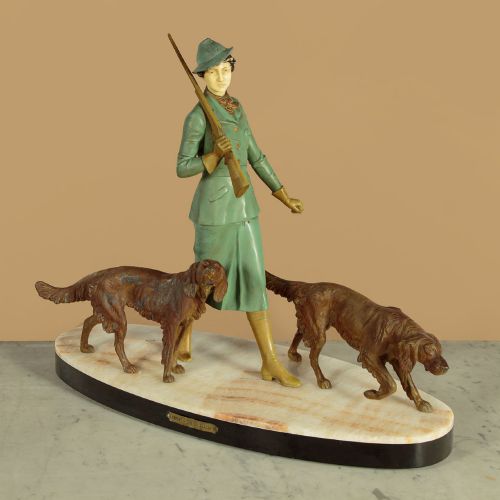
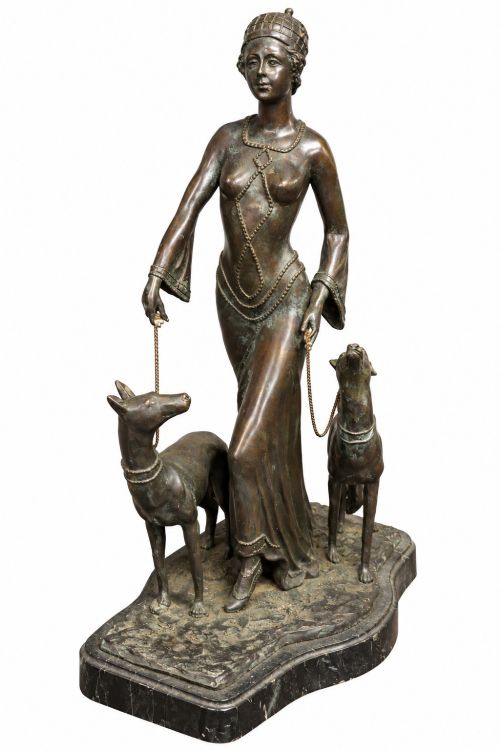
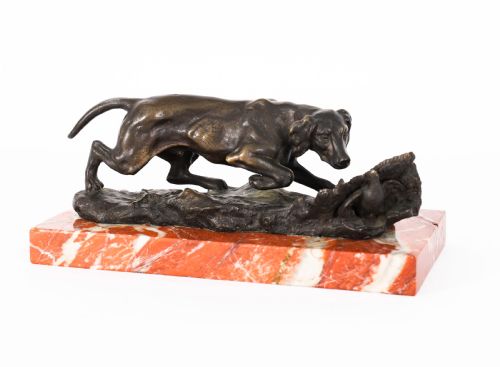
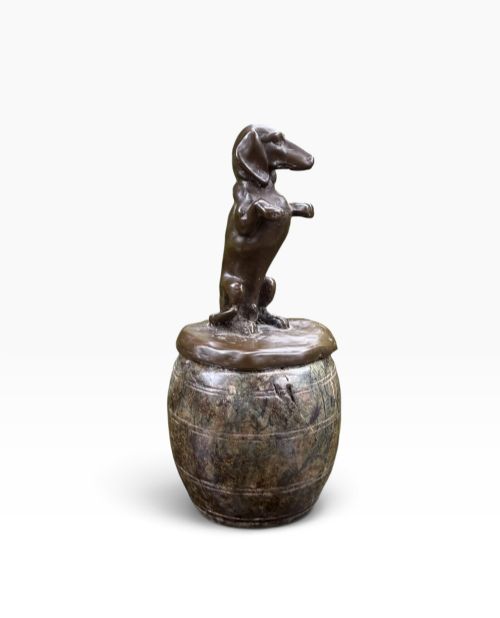
A marble base dog sculpture combines a solid stone plinth with a metal figure of a canine, ranging from hunting hounds to family pets. These pieces emerge predominantly from the nineteenth century and the Art Deco period of the nineteen twenties and thirties. You will frequently encounter French animalier studies alongside stylised figures associated with twentieth-century domestic interiors.
The subjects span from single resting hounds and working gundogs to elaborate figure groups involving children or figures with multiple dogs. Many examples utilise contrasting stones like onyx or alabaster alongside the primary marble support. The scale shifts from modest night lights to substantial table sculptures designed as focal points.
Nineteenth-century works lean towards naturalistic anatomical precision, whereas later twentieth-century iterations often adopt the streamlined geometries of the Art Deco movement. Both traditions anchor the metal animal firmly to a polished stone foundation to add weight and presence.
Materials and Construction
Foundries typically produced the canine figures using the lost-wax casting method for bronze or utilised spelter as a more accessible alternative. Patinated bronze surfaces were carefully treated to achieve dark brown, green, or gilded finishes that highlighted the musculature and coat of the animal. Ormolu details occasionally appear alongside the main cast elements to provide metallic contrast.
The supporting bases were cut and polished from blocks of marble, onyx, or alabaster, creating a heavy plinth that stabilized the heavier metal figures. Artisans secured the metal sculptures to the stone using threaded bolts or pins inserted through the base. This dual-material construction required precise fitting so the metal rested flush against the polished stone surface.
Marble Base Dog Sculpture Retail Price Guide 2026
Typical asking prices for marble base dog sculpture among the pieces listed under this phrase on Sellingantiques today, from the lower quarter to the upper quarter. They describe what is for sale here now, not the wider market.
Markers of Quality
The sharpness of the metal casting dictates the fidelity of the fur, facial expression, and anatomical structure. Superior examples retain crisp chiselling and detailed hand-finishing that survive the transition from molten metal to solid form, while lesser pieces appear soft and blurred.
The choice and preparation of the stone foundation distinguish workshop tiers, with dense, evenly veined marble or onyx elevating the piece above standard utilitarian bases. A tight, secure fit between the heavy metal hound and the stone plinth indicates careful assembly by skilled makers.
Carl Kauba·Pierre Jules Mene·Prosper Lecourtier·Alexandre Kelety·Geo Maxim
The Marble Base Dog Sculpture Glossary
- Animalier
- A nineteenth-century artistic movement dedicated to the realistic representation of animals, particularly predators and hounds. Practitioners of this style focused on accurate anatomy and dynamic movement.
- Spelter
- A zinc alloy commonly used as a cost-effective substitute for bronze in nineteenth and twentieth-century figures. It accepts patination readily but possesses a lighter weight than true bronze.
- Patinated bronze
- A copper alloy treated with chemical solutions to produce a specific surface colour or aged finish. This process protects the metal and accentuates sculptural detail.
- Ormolu
- Gilded bronze produced by applying a gold amalgam to the metal surface and heating it. This technique adds bright metallic highlights to decorative sections.
- Plinth
- The heavy slab of marble, onyx, or alabaster that supports the metal sculpture. It provides physical stability and frames the artwork.
Marble Base Dog Sculpture: Frequently Asked Questions
What animals appear most often?
Greyhounds, borzois, and various hunting hounds dominate the surviving sculptural works. Gundogs and working breeds also feature prominently alongside domestic companions.
Artists frequently paired these dogs with figures, children, or game to create narrative scenes.
How do I date these pieces?
Nineteenth-century examples generally display naturalistic animalier styling with detailed bronze casting. Pieces from the nineteen twenties and thirties adopt Art Deco geometries and often incorporate night light fixtures.
The choice of stone plinth and the signature style help narrow the period of origin.
Were these used as lamps?
Many twentieth-century examples function as night lights or desk lamps incorporating electrical fittings. The glowing elements illuminate the stone and metal figures from beneath or behind.
Plain sculptural models without lighting elements also remain common across all periods.
How do I clean the marble base?
Dust the stone regularly with a soft, dry cloth to prevent grime accumulation. Avoid abrasive cleaners or excess moisture that could penetrate unsealed stone.
Treat the metal components separately with appropriate non-chemical methods to preserve the original patination.