

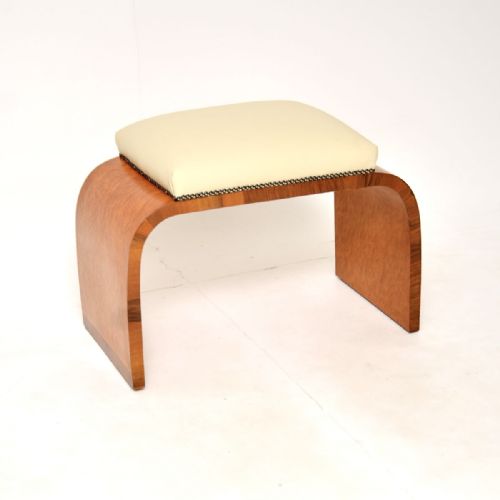
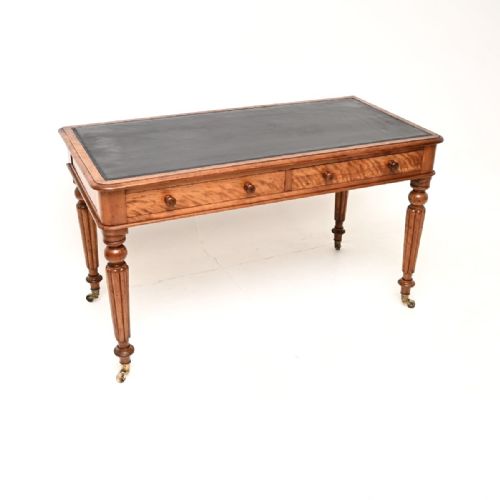
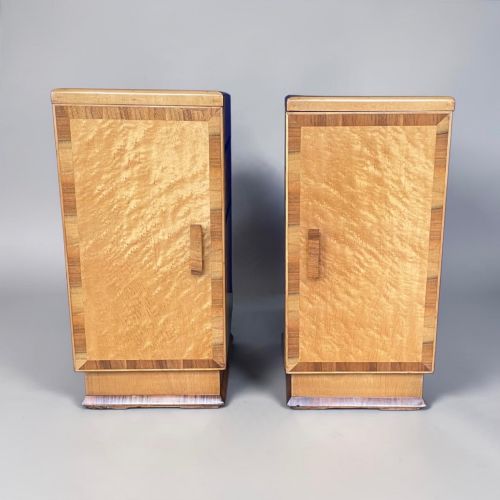
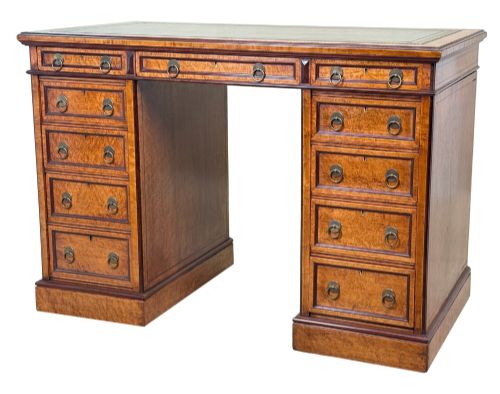
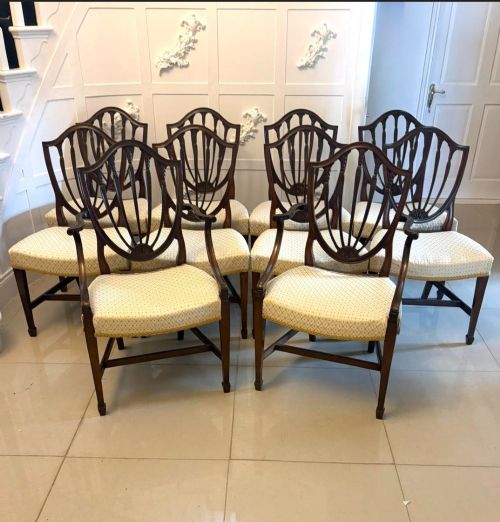
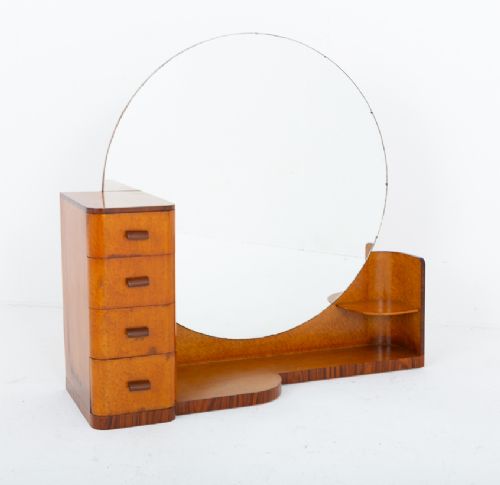
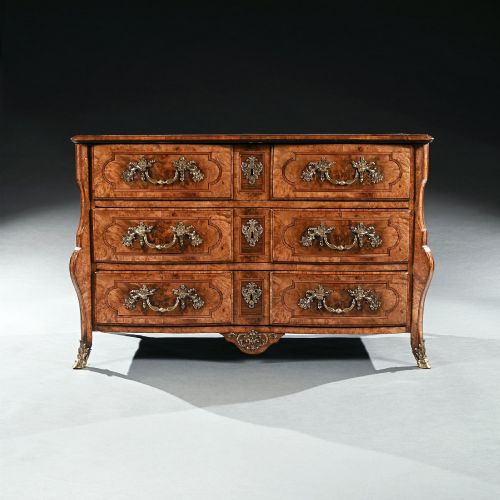
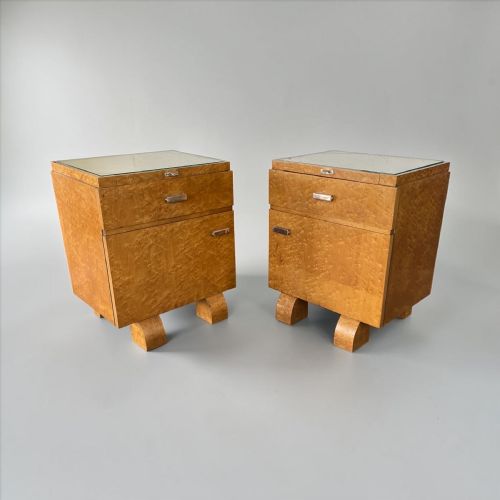


Maple Wood Furniture
Maple wood furniture spans centuries of craftsmanship, offering distinct figured grains across everything from dressing tables to cocktail bars.
Maple Wood Furniture
Maple wood furniture encompasses a broad selection of domestic and bedroom items, frequently appearing in forms such as wardrobes, chests of drawers, and bedside cabinets. Pieces emerge from periods ranging through the eighteenth, nineteenth, and twentieth centuries, demonstrating styles from William and Mary to Art Deco.
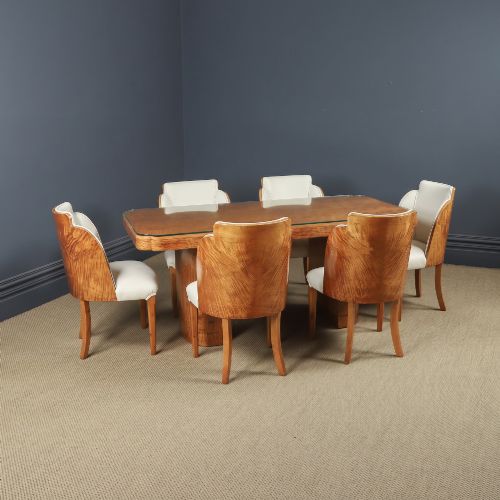
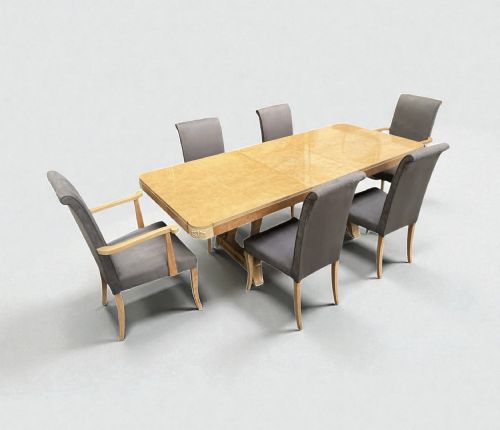
The buyer encounters considerable variety in function, including dining suites, desks, occasional tables, and armoires. Art Deco examples in blonde birds eye maple feature prominently alongside earlier Victorian and Regency pieces.
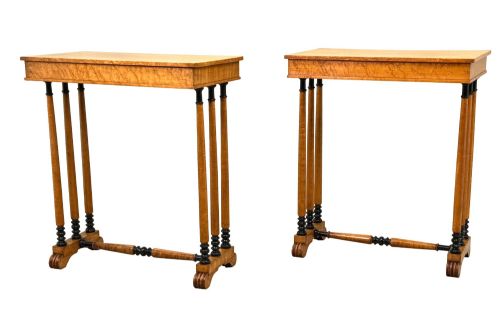
Origins span English, French, and Swedish workshops, incorporating distinct regional treatments of the timber. Cabinets, dressing tables, and beds display the characteristic figuring of the wood within varied historical contexts.
How maple wood furniture was made
Craftsmen utilised plain maple, burr maple, and birds eye maple veneers over supportive secondary timbers to display the decorative grain patterns. Artisans selected specialised cuts of timber to create symmetrical patterns across large surfaces such as wardrobe doors and table tops.
Construction frequently incorporated secondary materials like brass handles, glass tops, and leather inserts to complement the pale tone of the wood. Cabinet makers combined traditional joinery with curved Art Deco forms, occasionally applying black lacquer to contrast with blonde maple surfaces.
Maple Wood Furniture Retail Price Guide 2026
Typical asking prices for maple wood furniture among the pieces listed under this phrase on Sellingantiques today, from the lower quarter to the upper quarter. They describe what is for sale here now, not the wider market.
Listings feature periods spanning from the seventeenth-century William and Mary era through to the nineteen-forties.
What varies in quality
Quality rests upon the selection and matching of the grain figures across prominent surfaces, where skilled makers aligned veneer patterns for visual impact. The harmony of secondary elements, such as original brass hardware and glass inserts, distinguishes finer items.
Construction integrity dictates durability, seen in the precision of cabinet drawers and the stability of large dining tables and wardrobes. Pieces attributed to documented firms demonstrate superior structural execution alongside careful timber selection.
Thomas Hache·Fortnum and Mason·Hille Furniture Company·Harry and Lou Epstein·Maple and Co
The Maple Wood Furniture Glossary
- Birds Eye Maple
- A figure in maple wood where the grain wraps around small eye-like inclusions, creating a dotted pattern prized by cabinet makers.
- Burr Maple
- A growth on the tree resulting in distorted, highly swirly grain configurations utilised for decorative veneer surfaces.
- Art Deco
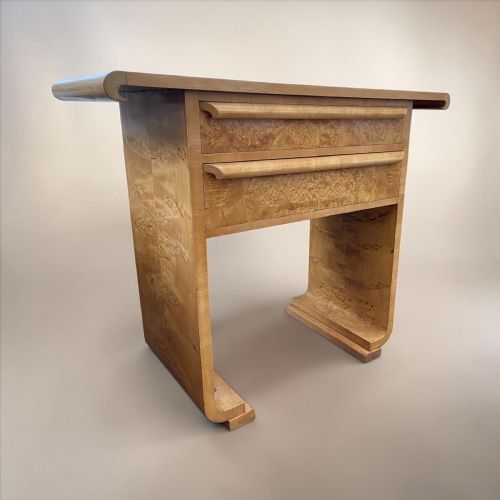
- A design style prevalent in the nineteen-thirties emphasising streamlined geometric forms, frequently rendered in blonde maple.
- Armoire
- A large wardrobe or cupboard used for clothing storage, often fitted with mirrored doors in nineteenth and twentieth-century examples.
- Compactum
- A multi-functional wardrobe designed with internal compartments, drawers, and hanging space for efficient garment organisation.
Maple Wood Furniture: Frequently Asked Questions
How do I care for maple furniture?
Keep wooden pieces away from direct sunlight and steady heat sources to protect the polished surface and natural grain.
Dust regularly with a soft dry cloth and avoid harsh chemical sprays that might damage the antique finish.
What is birds eye maple?
Birds eye maple is a specialised natural figuring in the timber where small circular patterns resemble tiny eyes.
Cabinet makers valued this decorative grain for dressing tables, wardrobes, and bedroom suites during the nineteenth and twentieth centuries.
How do I identify Art Deco maple?
Art Deco pieces typically display blonde maple or birds eye maple veneers formed into smooth, streamlined, or skyscraper silhouettes.
These twentieth-century items often feature contrasting black lacquer or geometric proportions distinct from earlier Victorian designs.
Where were these pieces made?
The listings include examples originating from English workshops, French cabinet makers, and Swedish designers.
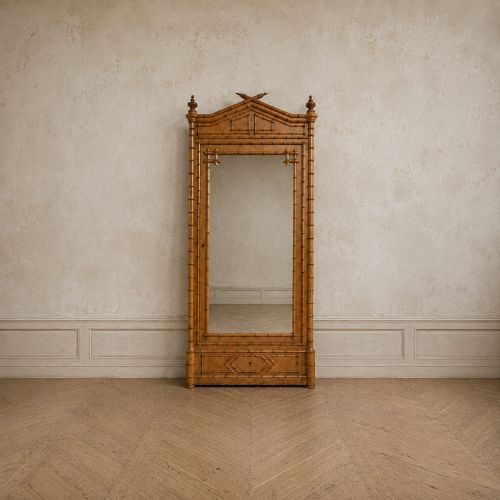
Different regions applied distinct decorative methods, ranging from faux bamboo turnings to sleek modernist curves.