
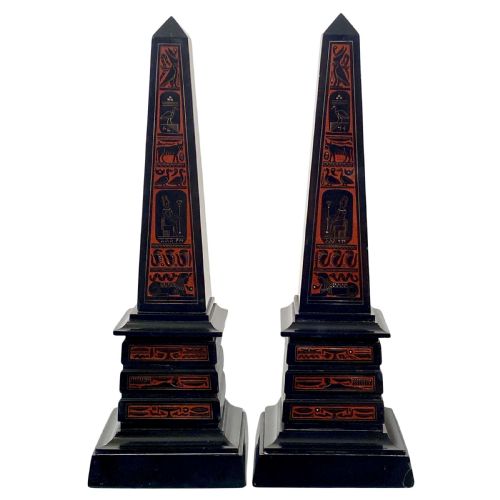


Mantelpiece Marble Ornaments
Mantelpiece marble ornaments bring weight and classical form to a room, spanning Egyptian Revival obelisks and Art Deco figures.
Mantelpiece Marble Ornaments
When you search for mantelpiece marble ornaments, you are looking at sculptural works and decorative objects designed to anchor a fireplace. The selection encompasses nineteenth-century Grand Tour souvenirs alongside twentieth-century Art Deco figural groups.
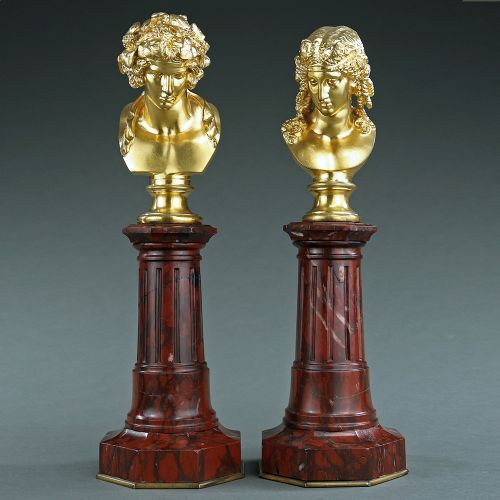
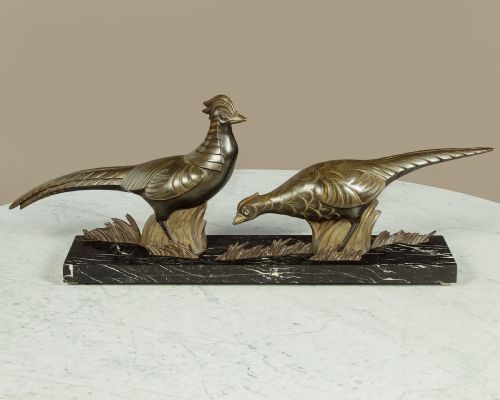
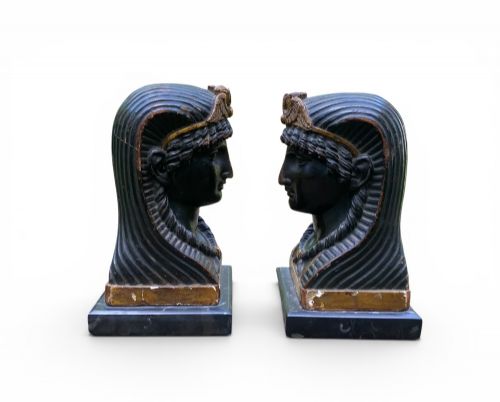
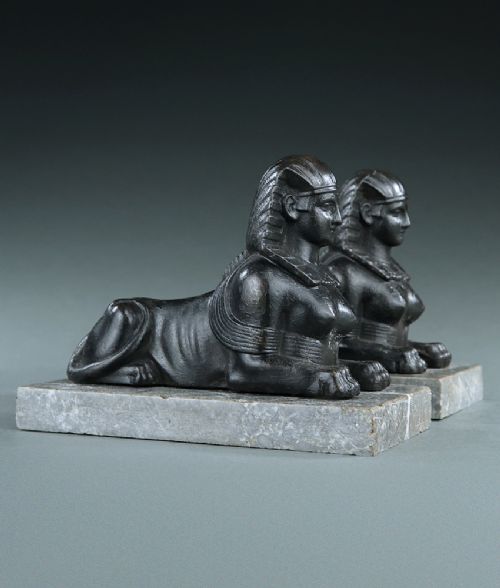
You are most likely to meet Italian specimen obelisks and French figural compositions set upon marble and onyx bases. These pieces draw on Neoclassical, Egyptian Revival, and Empire styles to create balanced focal points.
The forms range from architectural obelisks and lidded urns to patinated metal and bronze figures of animals and humans. Each object combines stone bases with varied metallic elements to suit formal mantel displays.
Materials and construction
Makers utilised solid blocks of marble and onyx, often turning or carving them into geometric obelisks and classical urns. Veined varieties such as Rouge Griotte provide rich colour and pattern across the stone surfaces.
Figures and decorative mounts were cast in bronze, spelter, cast iron, and brass. These metal components were then patinated, gilt, or combined directly with multi-coloured stone bases.
Listings feature materials including marble, onyx, bronze, spelter, and cast iron across styles from Regency to Art Deco.
Judging quality in stone and metal
The standard of a piece rests upon the crispness of the stone carving and the fidelity of the metal casting. Sharp detailing in cast bronze or spelter figures separates finer workshop output from simpler commercial production.
The choice and integration of materials dictate the refinement of the object. High-grade works feature carefully matched marble types and secure, balanced fixings between the stone bases and upper sculptures.
Thomas Hope
The Mantelpiece Marble Ornaments Glossary
- Grand Tour
- A nineteenth-century tradition where travellers collected souvenirs such as marble obelisks and bronze busts in Italy. These items were brought home to display on mantelpieces and desks.
- Obelisk
- A tall, four-sided, narrow tapering monument which ends in a pyramid-like shape at the top. In decorative ornaments, these are typically carved from specimen marbles.
- Spelter
- An alloy of zinc and lead, often used as a cost-effective substitute for bronze in twentieth-century figures. It accepts patination well to resemble heavier metals.
- Cassolette
- A decorative vase or urn featuring a pierced lid that allowed scented perfumes to diffuse into a room. Many nineteenth-century French examples serve purely decorative functions on marble bases.
- Rouge Griotte
- A deep red, multi-coloured French limestone or marble characterised by white or grey fossil inclusions. It appears frequently in nineteenth-century decorative obelisks and urns.
Mantelpiece Marble Ornaments: Frequently Asked Questions
What periods do these ornaments cover?
The pieces span from the early nineteenth century through to the Art Deco period of the nineteen-thirties.
Earlier examples often reflect Regency and Grand Tour influences, while later items embrace geometric forms and stylized metal figures.
How were marble obelisks displayed?
Obelisks were commonly placed in pairs on mantelpieces, sideboards, or desks as decorative architectural statements.
They served as souvenirs of travel or expressions of classical taste within nineteenth-century interiors.
What is the difference between bronze and spelter?
Bronze is a durable copper alloy that allows for extremely fine casting detail and rich patination over time. Spelter is a softer zinc alloy utilised extensively for twentieth-century figures mounted on marble bases.
Both materials were used for sculptural ornaments, but bronze generally indicates a higher tier of production.
How do I care for marble and onyx?
Dust the stone regularly with a soft, dry cloth to prevent surface grime from accumulating in the natural crevices. Avoid using chemical cleaners or excessive water, which can damage polished stone surfaces and vulnerable metal patinas.